A massive number of users—millions—feel more comfortable browsing in their language. Local language content feels more personal and trustworthy, whether Assamese, Marathi, Tamil, or Odia. And businesses that fail to recognize this are quietly missing out.
That's where a website translation API becomes essential, especially one designed for cross-platform integration. If you want your app, website, and admin panel to all speak your audience's language without having to rewrite everything manually, you need an intelligent system working behind the scenes.
Let's explain why building such a system matters, especially if you're starting with something like English to Assamese translation, and how it can be expanded to support broader Indian language translation efforts.
Why Regional Language Support Is Now Important for Business?
India isn't only a multilingual country—it's a digital space filled with users who prefer local languages over English. This isn't a rural thing, either. Even in urban areas, people are more likely to read, trust, and engage with content in their native language.
Let's take Assamese, for example. Over 15 million people speak Assamese. But how many apps or websites offer English to Assamese translation as an option? Very few. And that means a vast, underserved market is waiting for better access.
Also Read: How are AI Translation and Machine Translation Different?
What Is a Website Translation API?
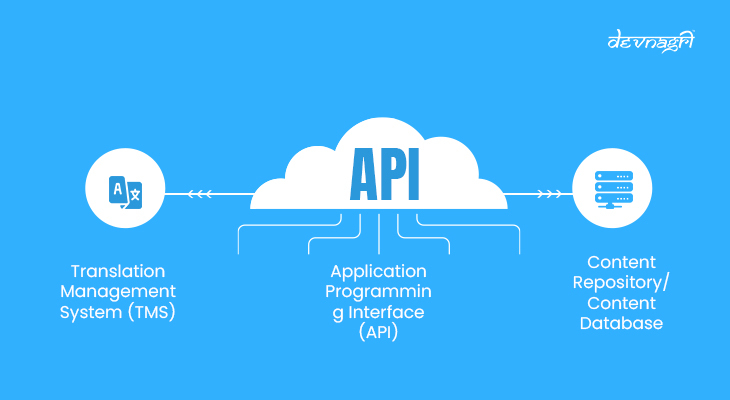
In plain terms, a translation API is a tool that helps you automatically convert your content from one language to another. But it's more than a copy-paste tool—it's more like a bridge between your content management system (CMS) and your multilingual audience.
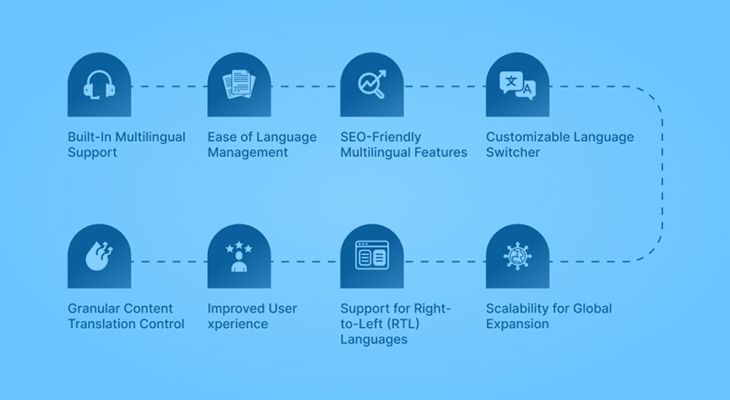
A good API lets you convert every aspect of your digital experience—product pages, blog entries, checkout forms, push alerts, error messages, even customer service messages—not just the homepage.
You don't want to handle different translations for each if your project spans several platforms: a website, an Android app, and an admin dashboard. That is error-prone and ineffective. A decent website translation API guarantees cross-platform consistency for everything. Change an English term. In Assamese or any other language you support, it is immediately apparent.
What Gives a Translation API Strength?
Especially if you are serious about Indian language translation, a good translation API should have the following:
1. Coverage of Languages
It should not only be Hindi but also many other Indian languages. Assamese, Odia, Kannada, and others all need help for real inclusiveness.
2. Compatibility of Scripts
Indian scripts such as Eastern Nagari (used for Assamese) have to be reproduced properly across devices and browsers. Your API has to handle this seamlessly.
3. Contextual Correctness
You cannot depend on direct word-for-word translation. The engine has to grasp the language, tone, and context. For instance, depending on who you are speaking to, Assamese has varied honorifics and verb forms.
4. Scalability
The API should manage both without performance concerns, whether your eCommerce site has 20,000 items or your blog has 200 posts.
5. Integration across platforms
The API should provide adaptable SDKs or webhooks that fit with the least effort, whether your site is built on WordPress, a mobile app, or a React frontend.
6. Human-in-the-loop option Choice
Though occasionally for legal, financial, or medical material, you will require human translators, AI does the majority. The API ought to enable this fallback system.
Also Read: Leading Indian Bank Transforms Document Translation Workflow with OCR and Automation
Assam's internet penetration is growing fast. However, while more people are coming online, content in Assamese remains limited. And when people don't see content in their language, trust goes down, and bounce rates go up.
A centralized API adding English to Assamese translation alters that. Imagine a government website providing public service information in Assamese right now. Alternatively, a single API would power an e-learning system with localised course content, exams, and alerts.
This is not about checking off boxes. It's about providing folks access to knowledge in a language they really grasp.
A Fast Use Case: Finance & Banking
Think about a banking system. Any language makes financial terminology difficult to grasp. But, providing information in Assamese, or any local language, can significantly change things. Customers find it simpler to read and believe loan terms, KYC papers, and FAQs.
A translation API allows this material to be localized in real time across online, mobile, SMS, and email platforms, so guaranteeing your Assamese-speaking consumer the same experience as an English-speaking one.
Also Read: Top 6 Digital Tools for Accurate and Multilingual Localization in 2025
The SEO Benefit of Website Translation API
Search engines should not be forgotten. Translating material increases your presence in local search results as local-language queries increase. A translated FAQ, product page, or blog article could perform better in Assamese search queries, generating natural traffic you would not otherwise reach.
Final Words
Building digital experiences for India means neglecting indigenous languages is no longer an option. A strong website translation API allows you to localize at scale—across platforms, in real time, and with accuracy.
Begin with high-impact languages like Assamese and then widen. A good basis would help your Indian language translation plan to not only assist users but also help to close the gap.
Ultimately, the greatest approach to communicate to your audience is in their own language.