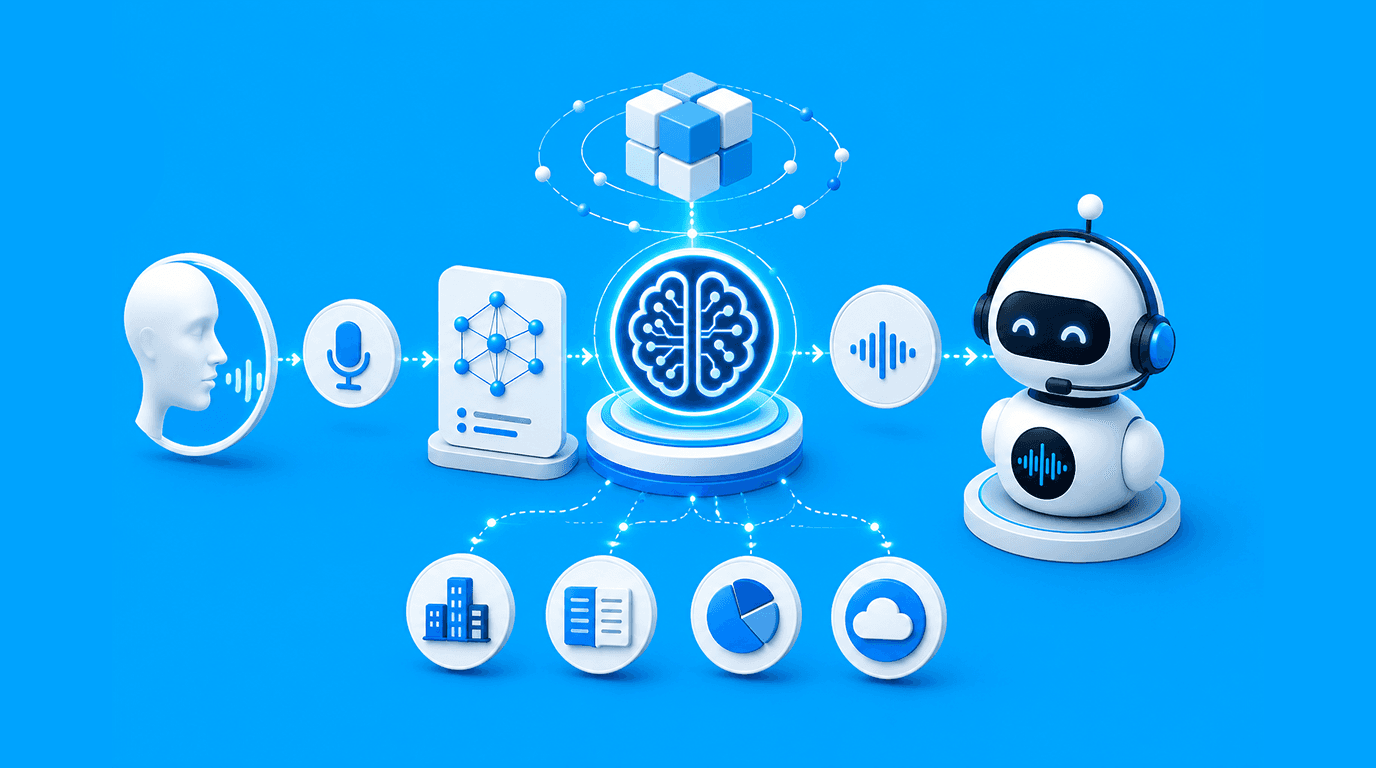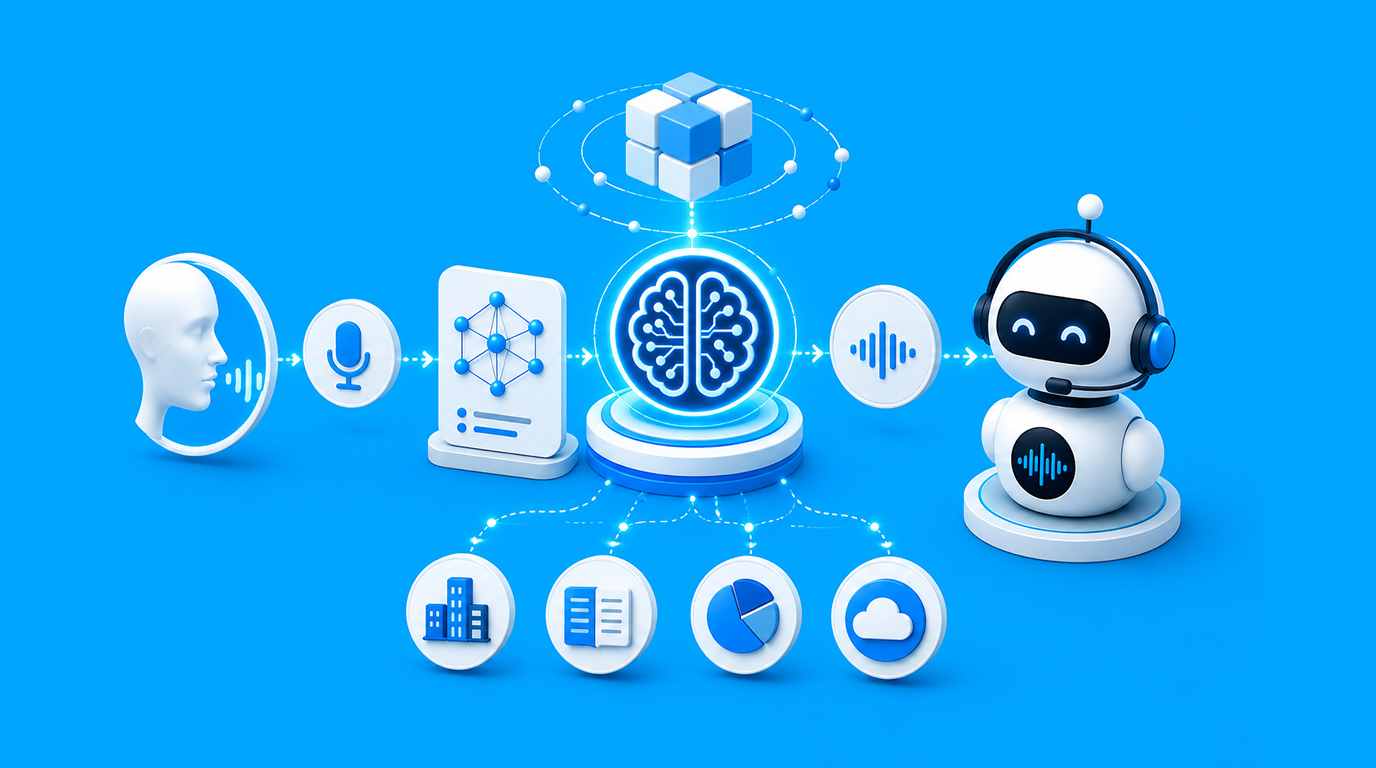
Call centre voice bots built on general-purpose foundation models misrecognise domain terms at rates that make them operationally unreliable. In BFSI deployments, a bot that mishears "EMI" as "army" or interprets "KYC pending" as an unresolved complaint does not just frustrate the customer, it creates a compliance exposure. The gap between what foundation models can do and what enterprise voice AI actually needs is not a prompt engineering problem. It is an architecture problem.
Domain-specific language models exist to close that gap. By the end of this post, you will understand exactly how domain language models change the performance profile of conversational AI voice bots , why that matters for regulated industries, and what the architecture looks like when it works.
What Generic Foundation Models Get Wrong in Conversational AI Voice Bots
Foundation models are trained on broad internet corpora. They are excellent at general language understanding but weak at domain disambiguation, especially in voice contexts where ASR (Automatic Speech Recognition) first converts speech to text before any language processing occurs.
Two failure points compound in voice AI:
The ASR layer may transcribe a domain term incorrectly due to acoustic similarity with common words.
The downstream language model may lack the schema to correct it from context, even when the error is recoverable.
In a banking IVR, "NACH mandate" and "NATCH mandate" sound identical to a generic ASR system. A domain language model trained on banking terminology resolves this from context. A generic one does not.
The result for call center voice bot deployments is high misrecognition rates, inflated agent escalation volumes, and customer abandonment at self-service touchpoints. Enterprises typically do not attribute this to model architecture, which means the root cause goes unaddressed while CX teams chase symptom-level fixes.
How Domain Language Models Are Built for Conversational AI
A domain language model is a smaller, fine-tuned model trained on curated data specific to an industry vertical. In BFSI, that means loan documentation, regulatory circulars, product disclosure statements, collections scripts, and grievance correspondence. The model learns the terminology, the syntax patterns, and crucially, the intent taxonomy that defines how customers actually express problems in that domain.
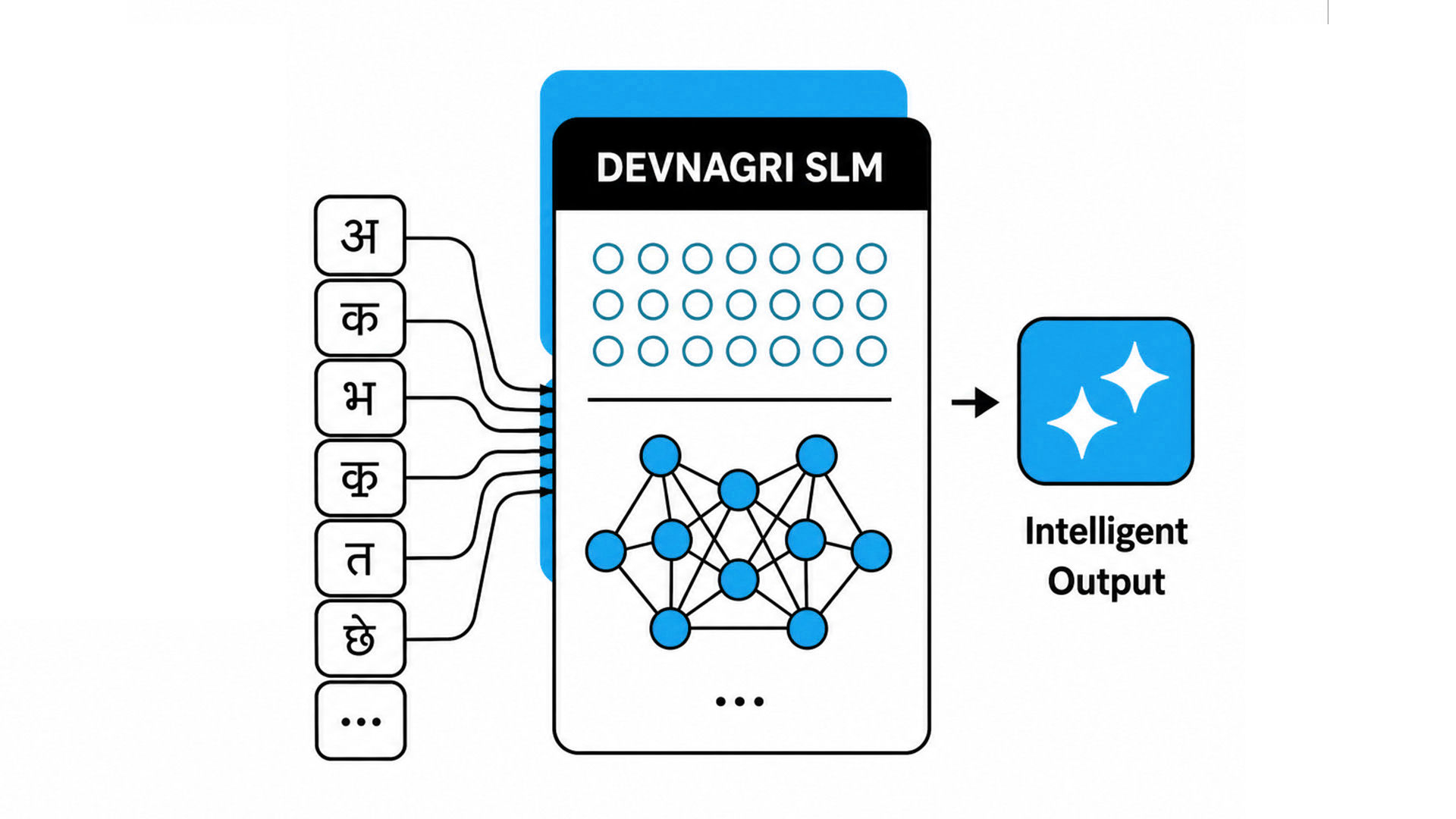
Devnagri's domain SLMs for BFSI are trained not just on English financial text but across 22 Indian languages, including regional dialects where financial terminology often code-switches between English and vernacular mid-sentence. A collection bot handling a customer in Rajasthan who speaks Mewari-inflected Hindi needs a language model that recognizes that code-switched intent, not a generic one that flags the utterance as ambiguous.
This specialization means smaller models outperform much larger general-purpose ones on domain-specific voice tasks, with lower latency and lower compute cost.
The Role of ASR Quality in Conversational AI Voice Accuracy
Before a domain language model can do its work, an ASR engine must produce an accurate transcript of what the caller said. Generic ASR systems trained primarily on English or standard Hindi perform poorly on regional Indian language inputs, particularly in telephony-grade audio with background noise, dialect variation, and mixed-script pronunciation.
Enterprise-grade conversational AI voice infrastructure must combine a domain-tuned ASR layer with the domain language model. One without the other creates a brittle system:
Accurate speech recognition feeding an underpowered language model gives you precise transcriptions the bot cannot interpret correctly.
A powerful language model downstream of weak ASR is receiving corrupted input from the start.
The MeitY DEITY report on AI-assisted public services flagged ASR accuracy in Indian languages as a primary deployment barrier, not model intelligence. Organizations evaluating call center voice bot solutions should treat ASR quality across target languages as a non-negotiable first criterion.
Why Conversational AI Bots Need a Cultural Intelligence Layer
Language comprehension alone does not produce appropriate voice AI behavior. A collections bot in Maharashtra and one in Tamil Nadu are not operating in the same cultural context, even if both conversations are about a missed EMI. Tone, formality register, acceptable assertiveness levels, and the right moment to escalate from self-service to human agent all vary by region.
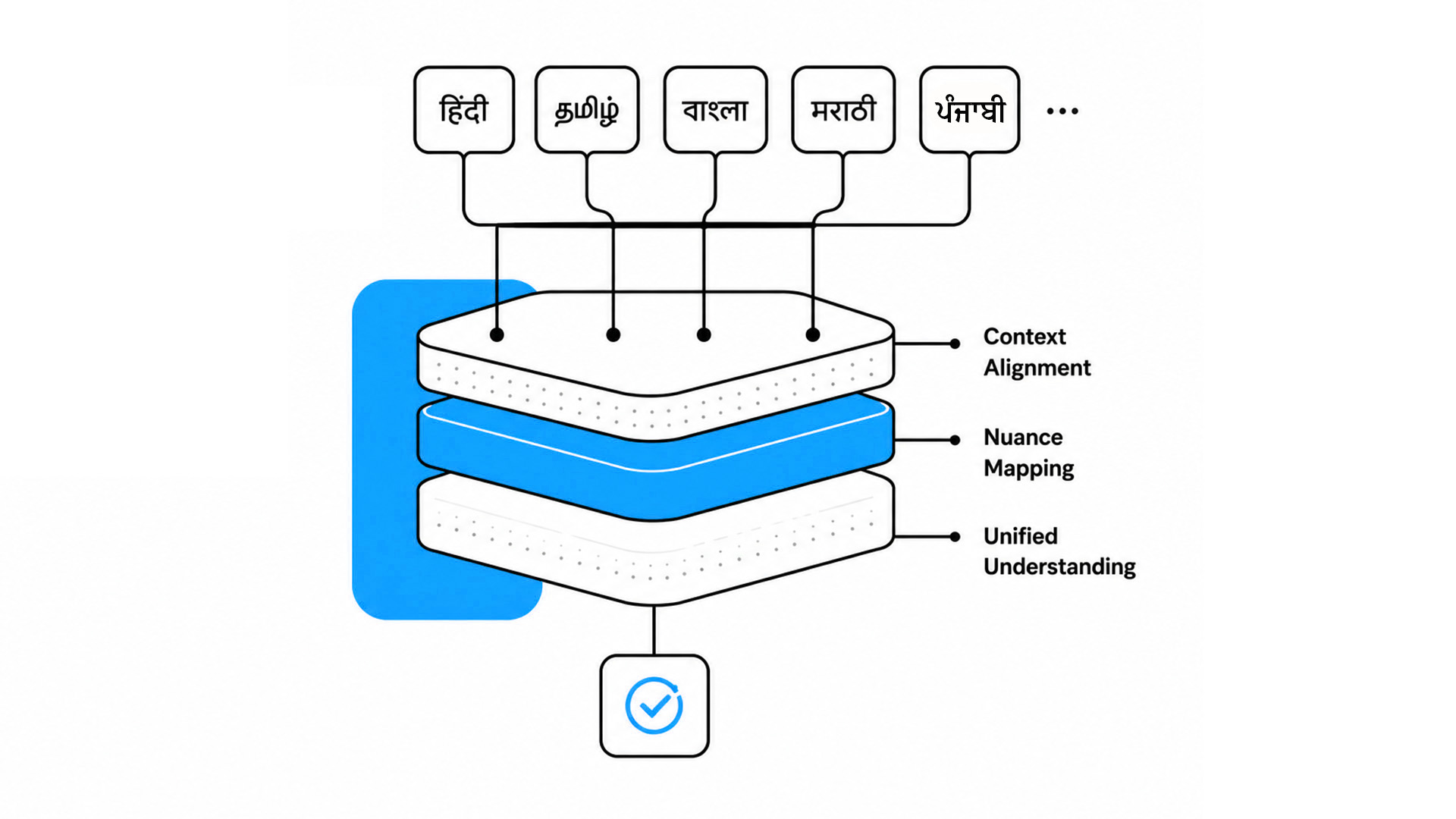
A cultural intelligence layer sits above the domain language model and governs how outputs are constructed. In Devnagri's architecture, this includes a tone engine that calibrates output between soft, firm, and reminder modes based on prior interaction history, account status, and regional norms. The आप versus तुम distinction in Hindi-language voice output is not a stylistic preference; in a collections context, it affects right-party contact rates and customer sentiment at a statistically meaningful level.
Organizations that treat this as a translation problem deploy bots that speak correct language but wrong context. The outcome is customer disengagement and escalation volumes that negate the cost case for voice AI entirely.
Call Center Voice Bot Architecture: What Enterprise Deployment Actually Requires
A production-grade call center voice bot is not a single model. It is an orchestrated stack, and each component must be governed with every handoff logged:
Telephony integration, inbound call routing and IVR trigger
ASR layer, domain-tuned, language-specific speech-to-text
Domain language model, intent classification and entity extraction
Intent router, self-service resolution or human escalation logic
TTS layer, natural, tone-controlled voice output in the caller's language
CRM / Core Banking integration, real-time account context pulled per interaction
Audit log, immutable record of transcript, model version, classification, and outcome
For regulated sectors, the audit layer is not optional. RBI's Digital Lending Guidelines require that AI-mediated customer interactions maintain full traceability. A voice bot that cannot produce an immutable transcript of every call is not compliant regardless of how well it handles calls.
Devnagri's conversational AI infrastructure includes zero-data-retention defaults with configurable audit log policies, VPC and on-premises deployment options for organizations with data residency requirements, and integration pathways into core banking and CRM systems.
Measuring What Conversational AI Voice Bots Actually Improve
Voice bots are frequently measured on the wrong metrics: containment rate and average handle time at the call center level. Those metrics tell you whether the bot handled the interaction, not whether it handled it well. A bot that resolves 80% of calls through misclassified outcomes inflates containment while degrading customer trust.
The right measurement frame for conversational AI voice bots in enterprise deployments covers:
First-contact resolution rate, by language segment, not aggregate
Post-call NPS, broken down by language and intent category
Escalation rate per intent, flags model failure points at the use-case level
Regulatory compliance incident rate, per thousand interactions, not per quarter
Organizations that track these metrics see domain language models outperform generic alternatives by margins that justify the infrastructure investment. Devnagri's collections voice bot deployments in BFSI have produced 20-30% improvement in collections response rates, driven primarily by language-appropriate engagement rather than scripting changes.
How Conversational AI Voice Infrastructure Scales Across Languages
India's linguistic diversity is not a UX consideration for enterprise voice AI; it is an infrastructure requirement. A bank with customers across 18 states is operating across a minimum of eight primary languages and dozens of regional dialects. A call center voice bot that handles Hindi and English but not Tamil, Telugu, Marathi, or Bengali is not a language AI deployment, it is a partial one.
Scaling conversational AI voice coverage requires domain language models trained per language, not a single model with language-switching logic patched on. Each language domain model must be calibrated for ASR accuracy in that language, intent taxonomy in that language, and Text to speech (TTS) voice quality in that language. Organizations that assess this architecture before procurement avoid the costly rebuild that follows a narrow-language deployment that fails to serve the actual customer base.
Conclusion
Domain language models are not an enhancement to conversational AI voice bots, they are the architecture decision that determines whether a voice bot deployment performs or fails in regulated enterprise environments. Generic foundation models cannot supply the domain context, regional language depth, or governance posture that BFSI and similarly regulated sectors require. The organizations building durable voice AI capabilities are treating this as an infrastructure decision, not a software selection.
If your organization is evaluating call center voice bot options for regional language deployments, book a platform walkthrough with Devnagri to review the domain SLM architecture and live deployment examples from BFSI.
A voice bot that cannot understand your customer is not an AI problem, it is a data and architecture problem that no amount of prompting will fix.