Voice bots are increasingly positioned as a cornerstone of modern customer experience strategies. Across industries, enterprises are deploying conversational AI systems to reduce service costs, improve responsiveness, and scale engagement. Yet despite growing investment, many voice bot initiatives underperform or stall after initial pilots. The prevailing explanation often points to immature AI models or user resistance. In practice, however, the more consistent and less acknowledged cause is the absence of a strong language infrastructure.
AI voice bots do not fail because artificial intelligence is incapable. They fail because human language, especially in spoken form, is far more variable, contextual, and culturally embedded than most enterprise systems are designed to handle. Voice bots struggle to build confidence, remain accurate, or scale successfully if language isn't treated as an operational layer that is managed, maintained, and evolved over time. This is especially clear in places where people speak more than one language, where conversations get much more complicated.
The Truth About Using AI voice bots
In recent years, conversational AI has shifted from being something people try out to something they expect. CXOs no longer argue over whether automation should be part of client engagement. People are now talking about where and how soon it can be put to use instead. Multilingual Voice Bots are appealing because they promise quick, easy access and human-like engagement at scale.
This change is very obvious in McKinsey's research. Its ongoing work on enterprise AI adoption shows that most organizations have used AI in at least one area, but few have been able to use these technologies across all their workflows or deliver long-term value. The problem isn't ambition or money; it's how hard it is to make AI work in real-world situations that involve people, procedures, and uncertainty.
Voice channels make these problems more obvious than text-based systems do. Voice interactions can't use visual signals, structured inputs, or the ability to reread something slowly, as chat interfaces can. Users speak naturally, interrupt themselves, change direction mid-sentence, and bring emotion into the exchange. When systems are not designed for this reality, failure becomes structural rather than situational. (source)
Why AI voice bots Reveal Language Weaknesses So Quickly?
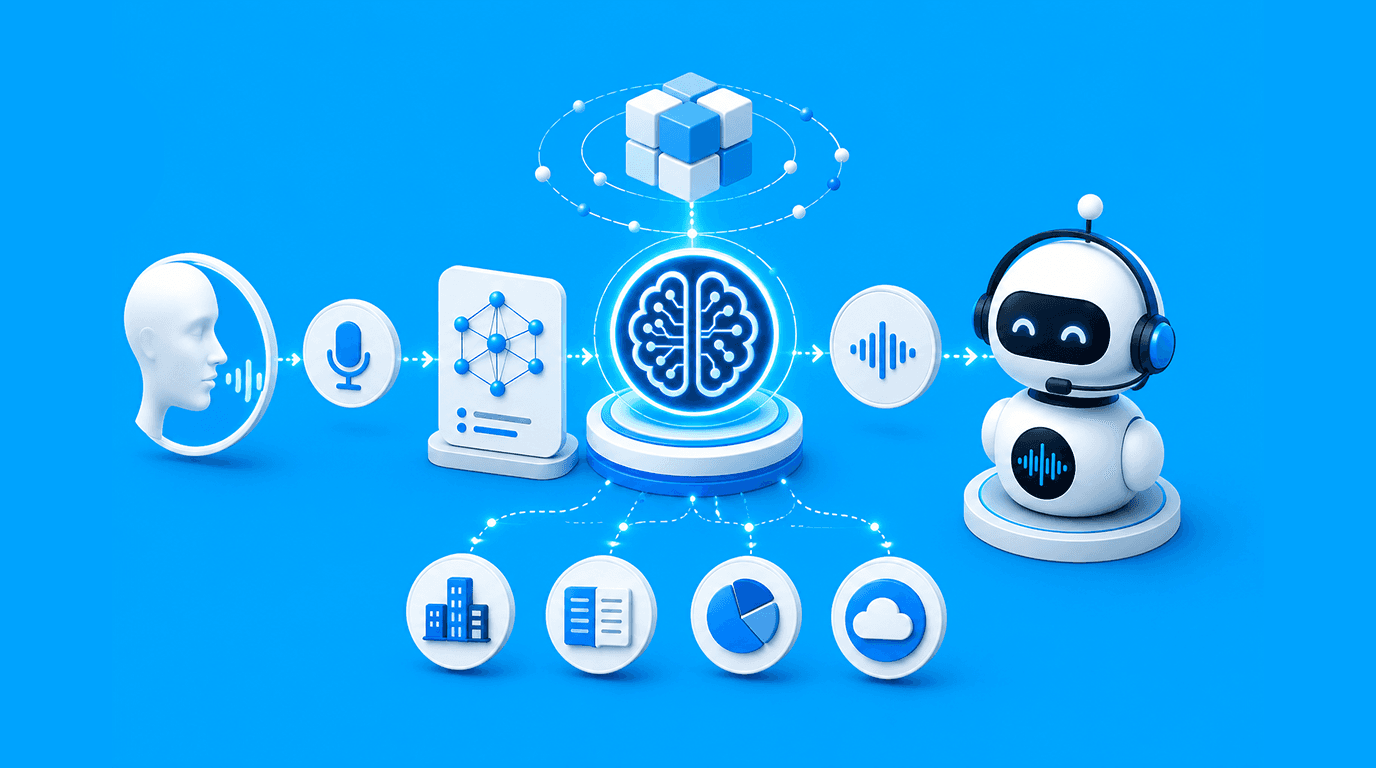
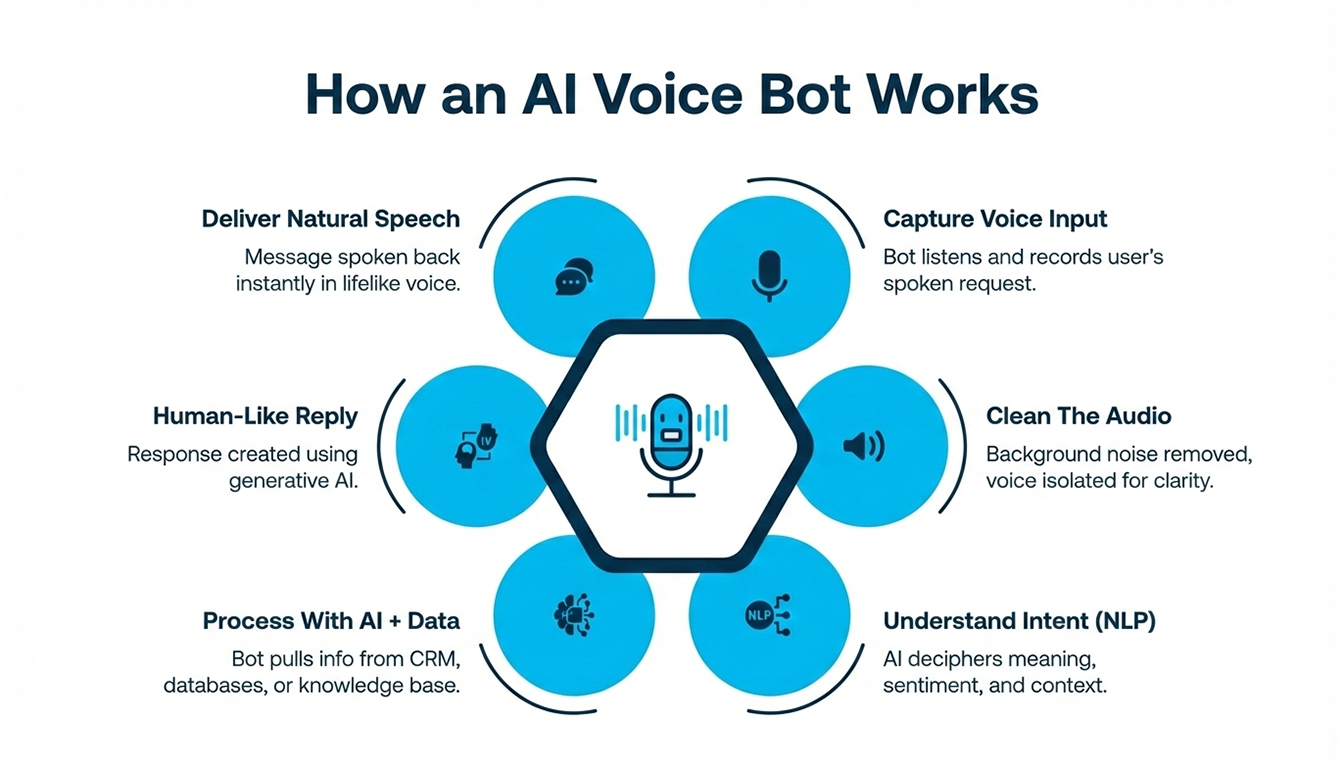
Multilingual Voice Bots' interaction appears simple from the outside. When a customer speaks, the system interprets the input and delivers a response. This interaction relies on multiple closely connected parts: speech recognition, language interpretation, context retention, answer creation, and fallback logic. Weakness in any one of these layers degrades the entire experience.
In practice, many organizations invest heavily in speech recognition accuracy while underestimating the importance of language interpretation and contextual continuity. Deloitte has observed that conversational AI programs frequently struggle during training and orchestration, not because of a lack of technology, but because language data and conversational design are treated as secondary concerns rather than core system elements (Source)
The result is a familiar pattern. The voice bot technically works, but customers do not feel understood. Responses are grammatically valid yet contextually incorrect. Escalations don't feel helpful; they feel sudden. Over time, trust erodes, and human agents compensate for automation rather than being complemented by it.
Language Is Not Content. It Is Infrastructure.
One of the most persistent misconceptions in enterprise AI programs is treating language as content. Language is often handled through scripts, static prompts, or outsourced translation tasks that sit outside core system governance. This method might work for a few examples, but it doesn't work when there are many.
In voice-based systems, language is more like infrastructure than content. It must be consistent, use version control, undergo quality testing, and be continually improved. Even powerful AI models don't work well without these rules. This difference is especially important in regulated companies or those with high trust, because misunderstandings can lead to legal, financial, or reputational problems.
Executives who have been in charge of failed voice projects generally report the same revelation. The system didn't fail in a loud or dramatic way. Instead, it provided incorrect answers in an unclear way. This is generally worse for the consumer experience than not saying anything.
The Multilingual Challenge in Conversational AI
The complexity of Multilingual Voice Bots increases significantly in multilingual environments. In many markets, users do not operate within clean linguistic boundaries. They switch languages, borrow words, and change the way they talk based on the situation. This is standard behavior, but most enterprise voice systems can't handle it.
Multilingual conversational AI bots are frequently trained on formal, standardized language datasets that do not reflect how people actually speak. Accents, regional differences, and code-mixed phrases can make communication unclear, and the limited language infrastructure can't always resolve these issues. Gartner has said that conversational AI bots will be more successful if the knowledge and language systems they use are ready than if the models are more advanced.
This means that multilingual bots often fail without anyone noticing. They don't fully understand what people want, which makes them angry without causing visible errors. Customers stop using the bot altogether, and the company loses faith in the channel over time.
Patterns Observed in Unsuccessful Deployments
Voice bot systems that don't work well tend to have similar problems across industries. Different teams or vendors handle different language tasks. People view translation as a one-time task rather than a continuous skill. Live interactions do not consistently contribute to the training data. Even in markets where English isn't the primary language, it's nevertheless used as the default base language.
AI systems perform well in controlled settings, but they struggle when applied to complex processes involving people. Voice bots are at the center of these problems, which makes it easy to see where language infrastructure is poor.
Weak language infrastructure poses strategic risks.
The cost of inadequate language infrastructure extends beyond poor customer experience. Misunderstanding can lead to compliance risks, service delays, and increased workload for employees in fields where accuracy and clarity are essential. Employees at companies spend more time fixing automated interactions, so automation doesn't help them work more efficiently as intended.
There is also a section that concerns reputation. Customers are quick to disengage from systems that do not respect how they speak or how they are understood. People lose interest more quickly when they talk to someone on the phone because it feels more intimate.
What does a strong language infrastructure look like?
Organizations that succeed with voice bots approach language as a living system. They bring in diverse, representative linguistic data, such as how people speak in different parts of the country and in real life. They set up ways to monitor quality over time. Instead of reporting failure, they make backup and escalation channels that protect the user's dignity.
Most importantly, they accept that language systems are never complete. They evolve continuously as user behavior changes. This mindset distinguishes scalable Conversational AI Bots from short-lived pilots.
In linguistically complex markets, some organizations are beginning to separate language intelligence from bot logic entirely. By treating language as an independent infrastructure layer, they enable multiple systems, including voice bots, to draw from a shared, continuously improving linguistic foundation. Platforms such as Devnagri operate in this space by focusing on language AI and localization automation at scale, particularly for Indian languages, where linguistic diversity is the norm rather than the exception.
Strategic aspects to think about
Before approving further investment in voice automation, executive leaders should ask several foundational questions. Where does the organization’s language data reside, and who is responsible for its quality over time? How does the system learn from misunderstood interactions? How are dialects, accents, and mixed-language usage handled? What governance exists to ensure consistency across channels?
These questions rarely appear in traditional technology evaluations, yet they determine whether voice bots deliver durable value or become another stalled initiative.
Conclusion
Voice bots do not fail because customers reject automation or because AI models lack capability. They fail because language is treated as an afterthought rather than as infrastructure. Until enterprises design, govern, and invest in language systems with the same rigour as data, security, and platforms, voice automation will continue to underperform in practice.
In Conversational AI bots, the technology captures users' attention, but language determines what happens next.
"In voice systems, intelligence gets interest, but language infrastructure pays the principal."