Most enterprises don't have a language problem. They have a governance problem that shows up as a language problem.
The AI models are there. The enterprise systems, core banking, CRM, and contact centre platforms have been in place for years. But somewhere between those two layers, something keeps breaking. Regional language interactions are overlooked. Regulatory communications get manually translated with no record of who approved what. Customers in Tier 2 and Tier 3 markets drop off during onboarding because the process wasn't built with them in mind. And when a compliance officer needs to demonstrate that multilingual customer communications met RBI, IRDAI, or SEBI requirements, there's nothing to show.
That's not a translation gap. It's an infrastructure gap. And it's the exact problem that a sovereign language AI infrastructure needs to close.
What is a sovereign language AI infrastructure layer?
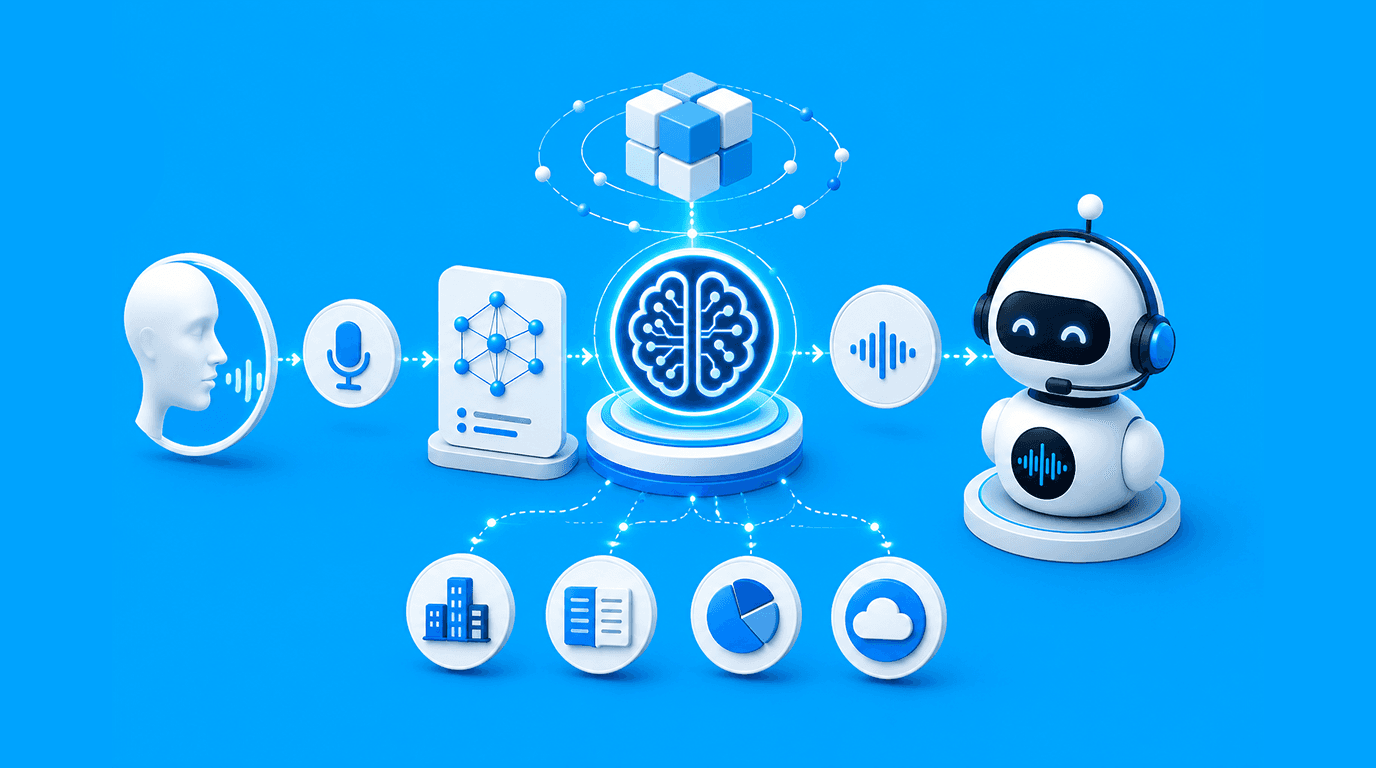
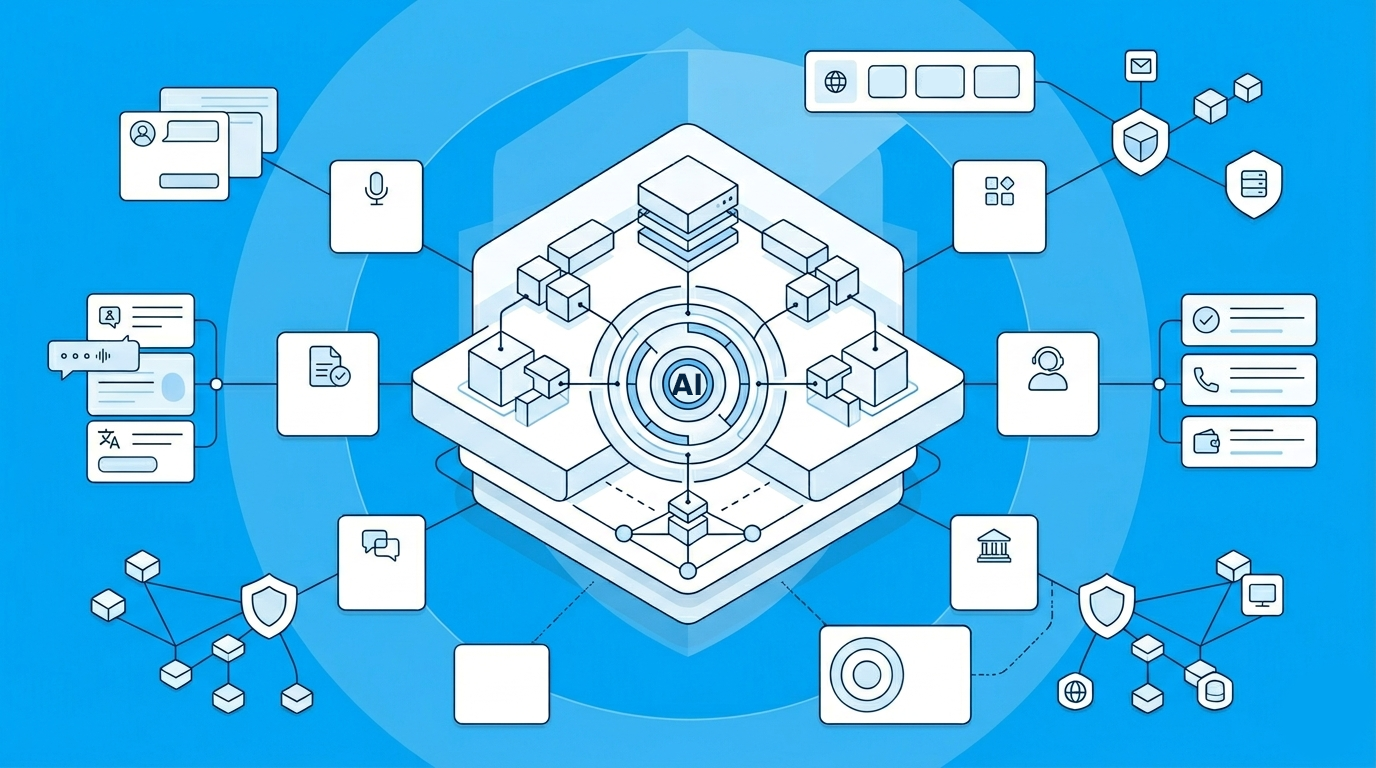
Think of it as the connective tissue between the AI models your enterprise uses and the operational systems your teams run every day. It governs how language is processed, where that data lives, how interactions are recorded, and whether any of it holds up under regulatory scrutiny.
In that phrase, the word "sovereign" carries significant meaning. It's not a marketing language. It means your organisation retains full control over the language data, over the processing logic, and over what gets retained and what doesn't, regardless of which foundation model is running underneath. No customer language data leaves your defined perimeter without explicit governance controls. Every multilingual interaction is traceable. Every policy is configurable.
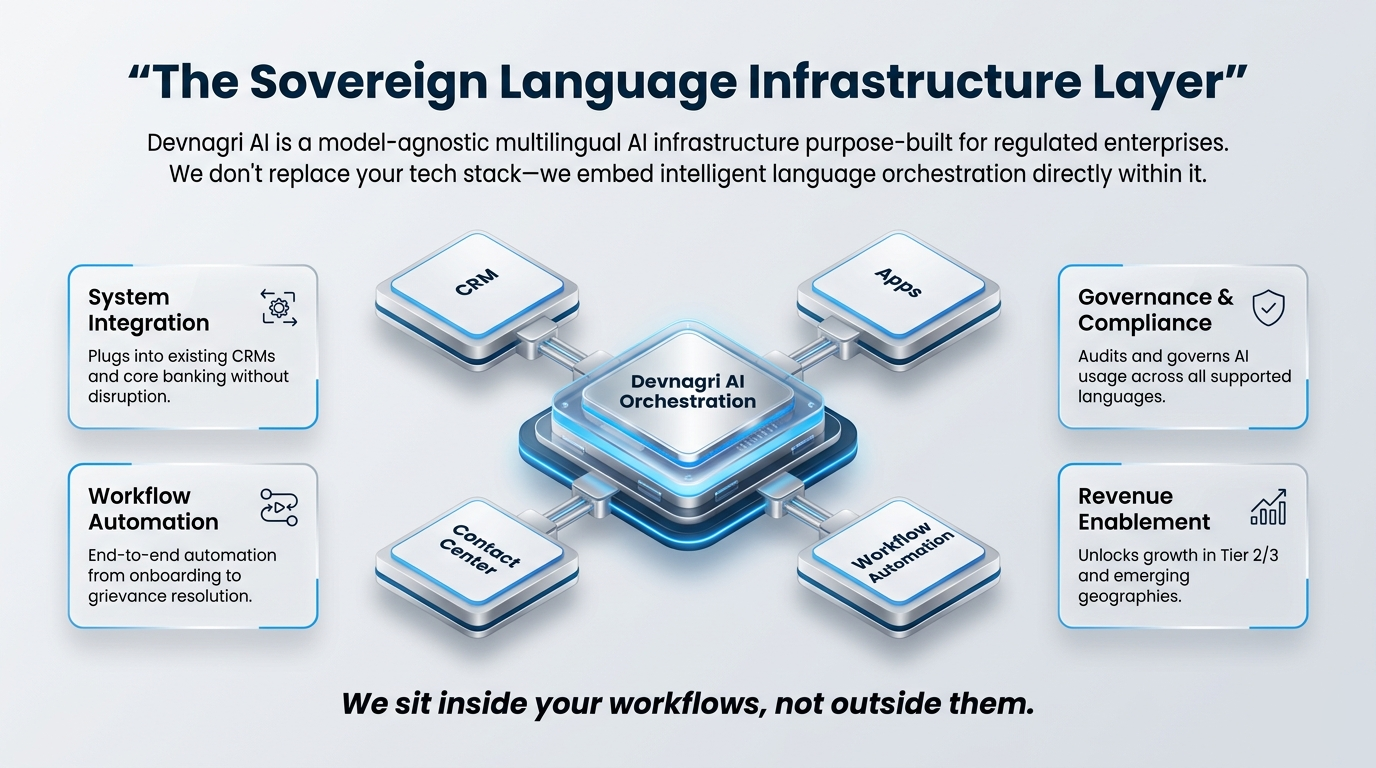
Devnagri AI is built as a layer. Not a translation API. This is not a chatbot that has been added to a CRM. It's the infrastructure through which regulated enterprises actually govern language at scale, connecting foundation models to operational systems, embedding domain-specific intelligence into live workflows, and keeping the compliance posture intact across every touchpoint.
There are four things this kind of infrastructure has to do, and doing any three of four isn't enough. It has to orchestrate language tasks across models, channels, and systems without creating a new engineering burden every time something changes. It has to enforce data residency, retention policies, and audit requirements at the language layer itself, not as an afterthought. It has to apply domain-specific understanding relevant to the sector it's operating in, not generic model output that doesn't know the difference between a KFS disclosure and a marketing email. And it has to deploy across SaaS, VPC, on-premise GPU, and hybrid environments without asking the compliance team to compromise.
How It Works, Three Layers, Each Doing Something Different?
1. The Foundation Model Interface
Devnagri doesn't bet on a single model. It connects to leading foundation AI models through standardised interfaces and selects the right one for each task based on the language involved, the domain, the accuracy requirement, and the latency tolerance. For enterprises, this matters for a reason that goes beyond technical flexibility: it means no single AI vendor can hold your language infrastructure hostage. As the foundation model landscape continues to shift, the infrastructure adapts with it.
2. Domain Intelligence, Where Generic Output Becomes Operationally Useful
This is the layer that most organisations underestimate when they start building language capabilities in-house.
Domain SLMs, small language models fine-tuned specifically for sectors like BFSI, insurance, and regulatory communication, sit between the enterprise system and the foundation model. These aren't general-purpose language models that happen to work in financial services. They're trained on sector-specific vocabulary, compliance language, and the kind of regional dialect variation that a general foundation model will consistently get wrong because it was never trained to get it right.
Alongside that sits a cultural intelligence layer, a tone engine with a very specific job. It manages the formality of language output. In Hindi, the difference between "आप" and "तुम" is not a stylistic preference; in a collections workflow or a grievance resolution context, it's a decision with real consequences. The tone engine makes that decision based on workflow context, regional dialect expectations, and sentiment signals, not on a default setting that treats every customer the same.
Then there's ASR and TTS—Automatic Speech Recognition and Text to Speech built for Indian languages and regional dialects, not adapted from models trained primarily on English. Transliteration handles script conversion without losing pronunciation or meaning, which matters in any context where two people are communicating across different scripts, and neither should have to lose something in translation.
And our Digital Language Deployment Infrastructure, is a real-time localisation system that publishes language updates across websites and applications without triggering a full development cycle. Enterprises go live with new language infrastructure in five days. Brand glossaries get established in 48 hours. Full version control is in place within a week.
3. Enterprise Integration and Governance
The final layer is where language outputs connect to the systems enterprises actually run and where every interaction gets recorded in a way that holds up under scrutiny.
Devnagri integrates directly with core banking platforms, CRM systems, and contact centre infrastructure. Not alongside them. Inside them. Linguistic intelligence becomes part of the operational workflow rather than a parallel process someone has to manage separately.
End-to-end journey management covers the full arc from onboarding through grievance resolution, with automated routing, escalation logic, and real-time status communication built in. Zero data retention is the default; no customer language data is held beyond the transaction, which is a hard requirement for DPDP compliance and most enterprise data governance standards worth taking seriously. Every multilingual touchpoint produces an immutable audit log. When a compliance team needs to demonstrate regulatory adherence under RBI, IRDAI, or SEBI frameworks, that record is already there.
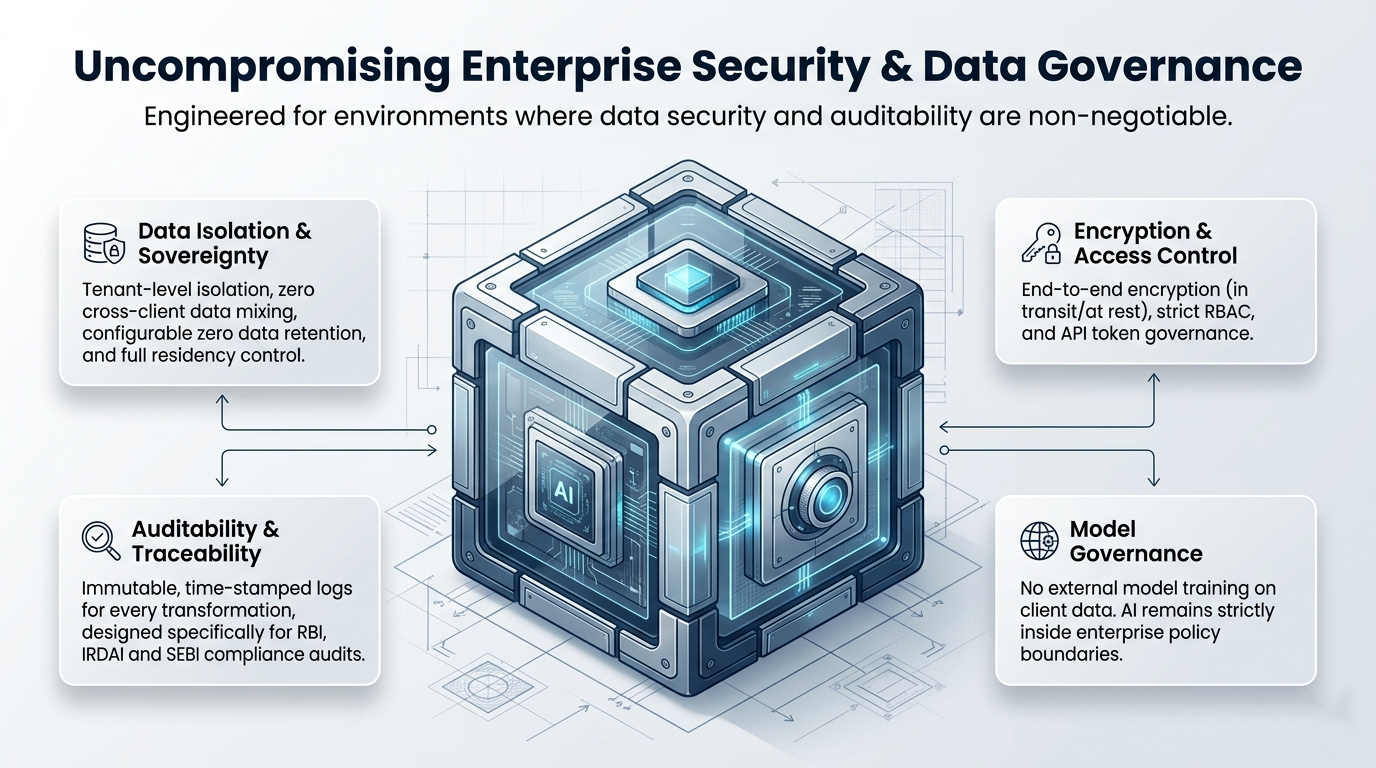
Deployment options span SaaS, private VPC, on-premise GPU, and hybrid configurations. The infrastructure accommodates the data residency requirements of regulated institutions; it doesn't ask those institutions to accommodate the infrastructure.
Research on enterprise AI adoption keeps arriving at the same finding: the biggest constraint on scaling AI in regulated industries isn't model capability. It's the absence of governance frameworks that tie AI outputs to operational and compliance infrastructure. That's the constraint Devnagri is built around.
What Organisations Actually Get From This?
The Efficiency Case
Enterprises deploying this infrastructure typically see around a 30% reduction in manual localisation effort and a 25% improvement in grievance resolution speed. Those numbers aren't the output of a single automation; they're what happens when language intelligence is embedded into the workflow rather than applied to it from the outside.
The Compliance Case
Sovereignty in language infrastructure means compliance teams stop retrofitting. The audit capability isn't something you add after a regulator asks for it, it's already there, built into every interaction by default. Immutable logs. Configurable retention policies. A complete record of every multilingual customer touchpoint that holds up under RBI, IRDAI, and SEBI scrutiny without requiring a separate review process to produce it.
There's a consistent pattern in how organisations approach AI governance. Those that embed compliance controls at the design stage consistently face lower remediation costs than those that treat governance as something to sort out after deployment. The infrastructure layer is where we make that decision, and it compounds. Get it right early and compliance becomes a background function. Get it wrong and it becomes a recurring cost centre.
The Market Reach Case
Scaling across India's 22 scheduled languages and hundreds of regional dialects has historically meant scaling the localisation team alongside it. Hire more translators, add more reviewers, and build more regional processes. That model works until it doesn't, and for most enterprises, it stops working somewhere around the point where regional market ambition starts outpacing the budget to staff it.
Sovereign language AI infrastructure breaks that dependency. Domain-aware language processing handles regional languages with the kind of consistency and cultural calibration that a growing manual team will always struggle to sustain. The reach scales. The headcount doesn't have to.
The Onboarding Case
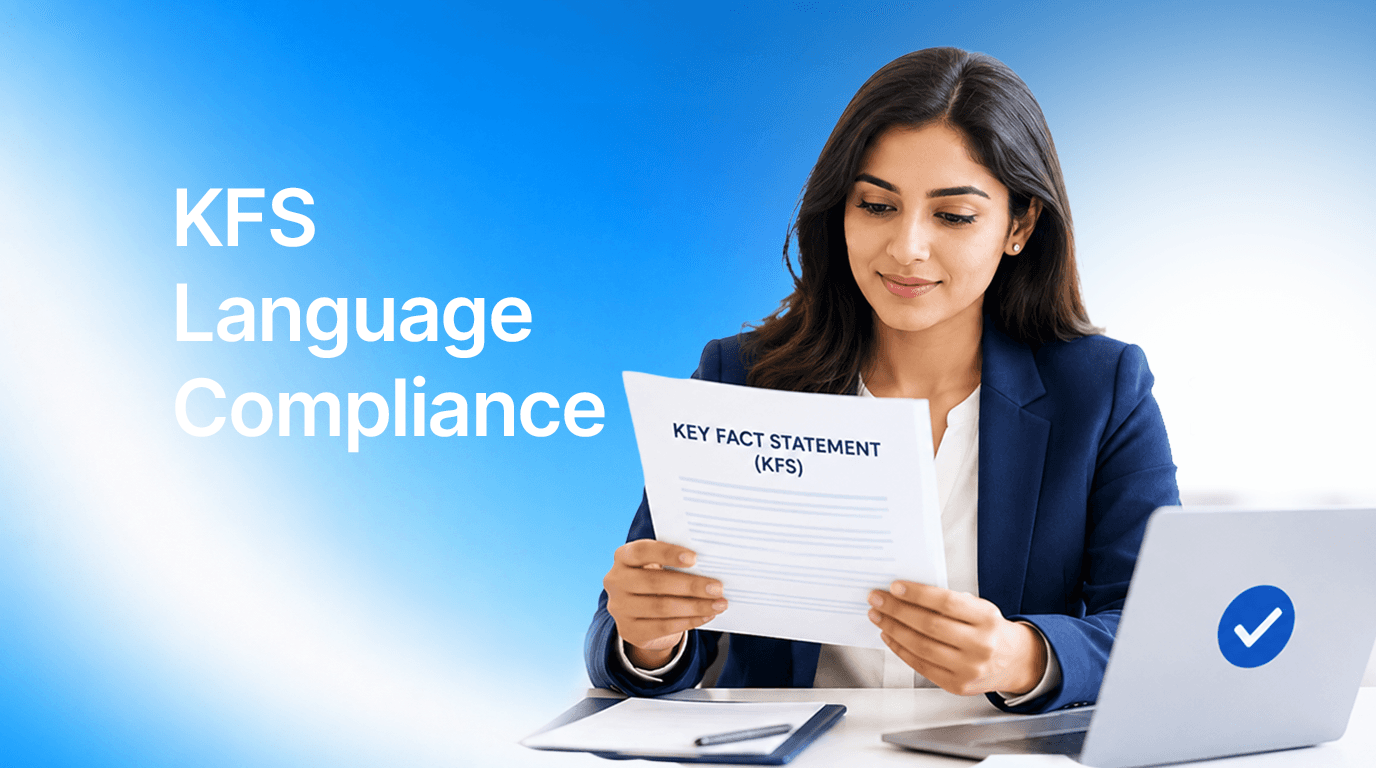
Enterprises deploying multilingual language infrastructure have reported a 25% uplift in onboarding completion rates. The logic is that customers who receive onboarding communications, disclosures, and guidance in their preferred language are more likely to complete the process. For BFSI institutions operating under KFS disclosure requirements, that outcome is simultaneously a customer experience improvement and a compliance win.
Where are enterprises already running this?
BFSI: Running Multilingual Operations Under Regulatory Scrutiny
In banking and financial services, the customer lifecycle creates language requirements at every stage: KYC onboarding, KFS disclosure delivery, collections communication, and grievance resolution. Domain SLMs calibrated for BFSI terminology ensure regulatory language is rendered accurately across regional languages, and immutable audit logs give compliance teams the traceability they need for RBI and SEBI. Leading private sector banks and small finance institutions have deployed this infrastructure in live operational environments and continue running it in production.
What this process looks like in practice:
Take a BFSI institution onboarding a customer in rural Maharashtra. Without governed language infrastructure, the onboarding flow defaults to Hindi or English, the KFS disclosure is a translated PDF nobody reviewed for accuracy, and if the customer drops off, there's no way to know whether language was the reason.
With Devnagri in the workflow, that same customer receives the full onboarding journey in Marathi, including the KFS disclosure, which is rendered by a domain-specific SLM that understands financial compliance language, not just general translation. If the customer calls in, the IVR responds in Marathi. If they raise a grievance, it's routed, logged, and resolved in the same language. Every step produces an audit record. And the compliance team doesn't have to do anything extra to generate it, it's already there.
That's the difference between language as a feature and language as infrastructure.
Government: Serving Citizens in the Languages They Actually Speak
Public sector institutions have the broadest linguistic obligation of any sector and the least room for inconsistency. A citizen filing a grievance in Bhojpuri or Marathi deserves the same quality of response as one writing in English. Right now, most government bodies can't guarantee that.
Devnagri enables government organisations to process citizen grievances, deliver regulatory communications, and manage public information workflows across regional languages, with governance controls built to meet national data policy requirements. That means every interaction is logged, every response is traceable, and no citizen communication falls into a manually managed gap. The platform's integration with India's national language mission isn't incidental, it reflects that this infrastructure is already operating at a national scale, not being piloted toward it.
Insurance: Getting Policy Language Right When It Matters Most
In insurance, miscommunication isn't a customer experience problem; it's a compliance liability. Policy terms, claims processing, renewal notices – all of these have regulatory weight. Domain SLMs fine-tuned for insurance guarantee the policy language is generated with sector-specific accuracy. Tone calibration handles the specific demands of the claims lifecycle, where the way something is said carries as much weight as what is being said.
E-Commerce and D2C: Reaching Regional Markets Without Rebuilding the Stack
Consumer-facing enterprises expanding into non-metro markets know that language is a conversion variable, not a cosmetic one. Devnagri enables real-time localisation of digital interfaces without requiring full development cycles. Conversational AI handles multilingual customer support and query resolution at scale. Large-format e-commerce platforms and direct-to-consumer businesses have deployed this infrastructure in production, with measurable impact on regional engagement.
Enterprises that have deployed this infrastructure in production report measurable improvements in regional conversion rates and customer query resolution times, outcomes that come from language being built into the experience, not added on top of it.
On Building This In-House
It comes up in almost every enterprise conversation: "Could we build this capability internally?"
The honest answer is that internal teams almost always underestimate what's actually involved.
Domain calibration, training models to understand sector-specific terminology, regulatory language, and regional dialect variation, is not a project that has a completion date. It requires ongoing investment and specialist knowledge that most engineering teams cannot sustain alongside everything else they are responsible for.
Infrastructure commitments continue, including governance design, zero data retention, immutable audit logging, and deployment flexibility across SaaS, VPC and on-premise applications. It must be maintained, updated when regulations change, and verified.
And multilingual accuracy across Indian languages, at the quality level that regulated communication actually requires, is not achievable through general-purpose APIs. It requires purpose-built models, cultural intelligence layers, and continuous domain refinement. Internal teams who start with a general API and plan to refine it over time consistently find that the refinement never catches up to the requirement.
Devnagri exists to solve these issues as infrastructure, not as a shortcut, and not as a point solution. The scope of what sovereign language AI infrastructure actually involves is, in practice, too significant and too specialised for most internal teams to own sustainably.
The Bottom Line
The need to communicate accurately, compliantly, and at scale across linguistic diversity isn't new. What's new is the availability of technology capable of meeting that need and a regulatory environment that makes addressing it an organisational obligation rather than a strategic nicety.
Devnagri's infrastructure layer gives regulated enterprises the governance, orchestration, domain intelligence, and deployment flexibility they need to operationalise multilingual AI without taking on the compliance, accuracy, or integration risks that come with general-purpose solutions.
The question isn't whether language AI infrastructure is relevant to your operations. It almost certainly is. The question is whether the infrastructure governing it is built for the environment you're actually operating in.