Automatic speech technologies have matured fast, but not evenly. The next wave of value will come not from accuracy benchmarks alone, but from fixing the structural, linguistic, and operational blind spots most enterprises still underestimate.
Automatic speech recognition (ASR) and Text to Speech systems in India are now trending inside call centers, mobile apps, virtual assistants, and analytics stacks. Many enterprises feel “good enough.” Accuracy scores look strong. Vendors promise scale. Pilots show early wins.
And yet, frustration persists.
Business leaders report missed intent, uneven customer experience across regions, compliance concerns, and limited insight extraction, especially in multilingual, high-noise, real-world settings. The gap is not a lack of AI sophistication. It is a mismatch between how speech systems are designed and how businesses actually operate.
What are the problems with text to speech AI?
This blog examines the core limitations of text to speech systems and Automatic Speech Recognition (ASR), why they persist despite technical progress, and how to evaluate speech AI systems?. The central argument is simple: speech is not just an audio problem; it is a language, context, and systems problem.
Context & Industry Landscape of Multilingual Speech AI in India
Speech AI has gone from being a test subject to being a part of the infrastructure in the last ten years. Companies increasingly use it for customer service, usability, analytics, and automation.
McKinsey & Company says that speech and conversational interfaces are among the fastest-growing applied AI technologies, especially in customer service and operational transformation.
However, adoption velocity has outpaced operational readiness. Many systems were taught in controlled settings with clear audio, standard accents, and limited vocabulary. But businesses use them in contact centers with high noise levels, in different parts of the world, and in emotionally charged conversations.
The end outcome is a slow loss of trust. When speech systems don't work, it's not obvious. For example, they could misclassify intent, flatten emotion, output robotic voices, or provide analytics that sound accurate but miss what was really important in the conversation.
Limitations of Automatic Speech Recognition (ASR) and Text to Speech Systems in India
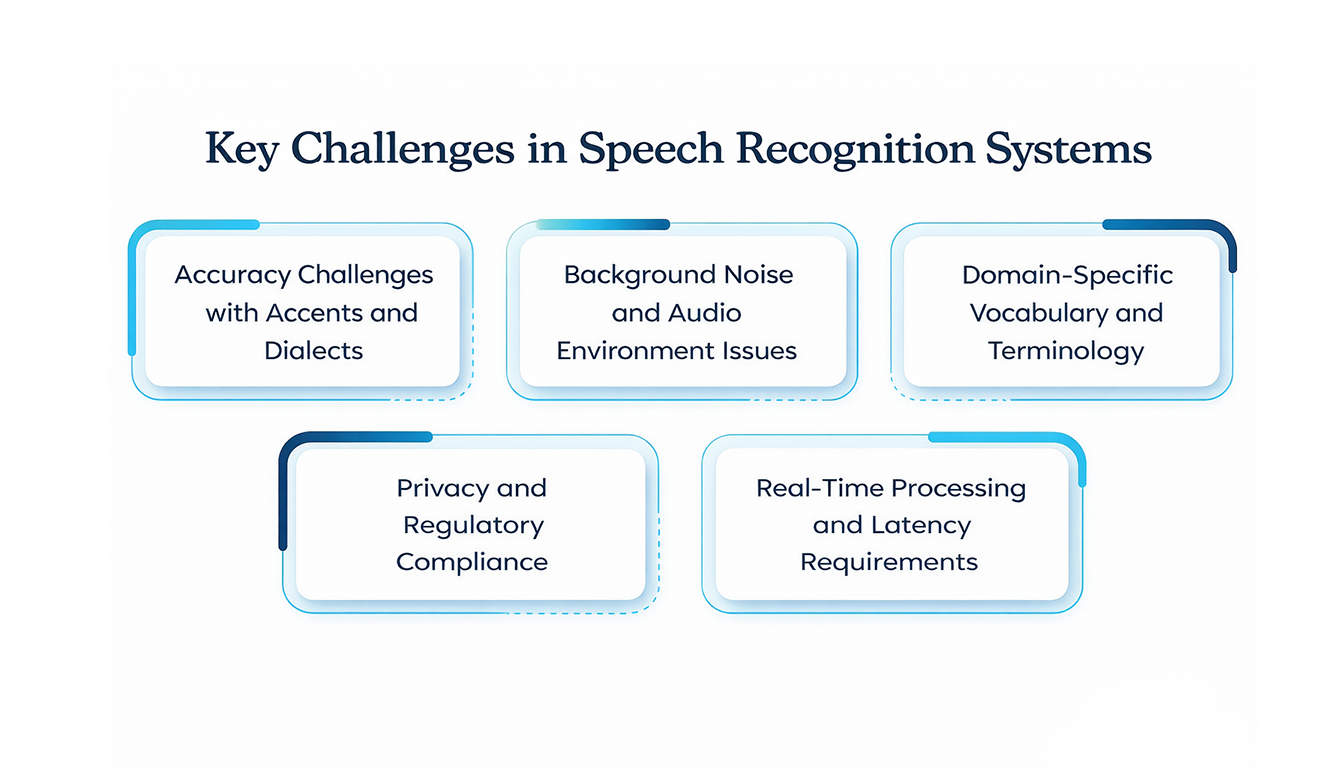
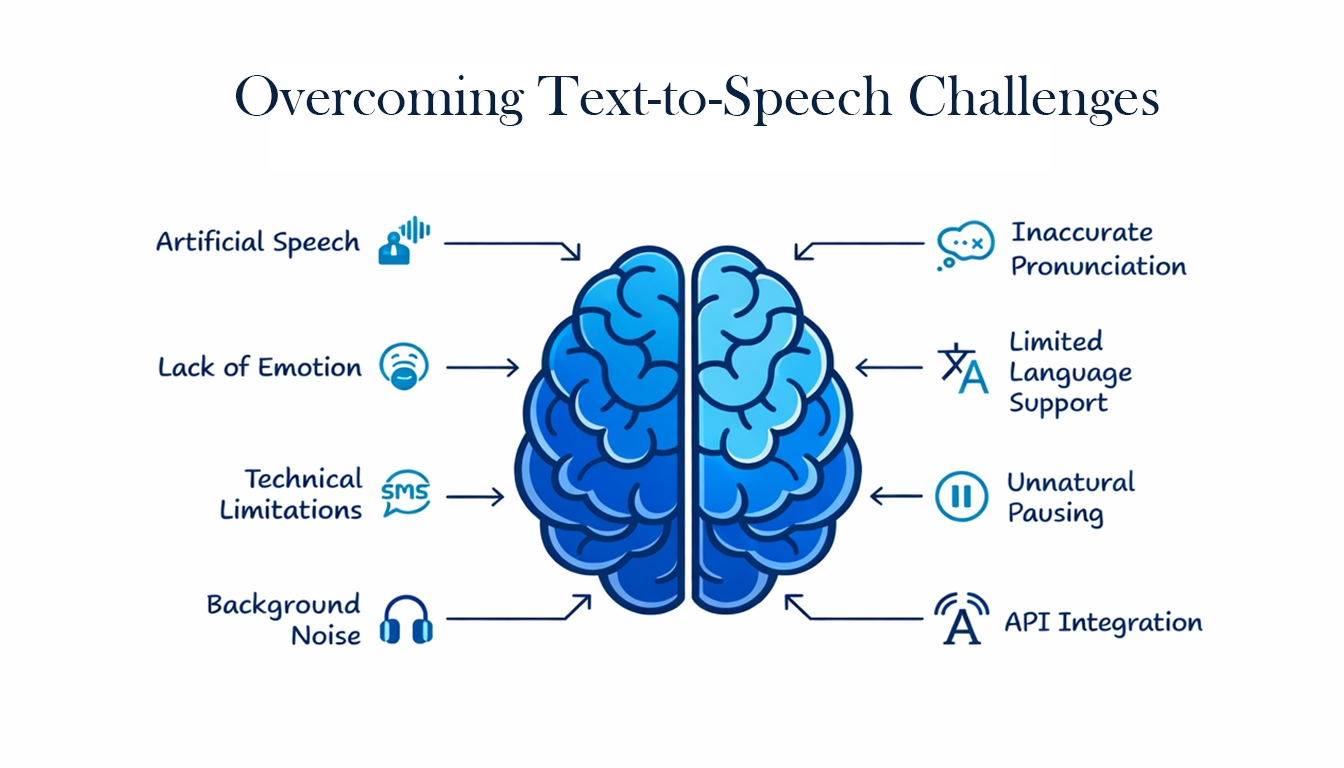
Current ASR and TTS systems often lose accuracy in noisy environments, with diverse accents, and in domain-specific or multilingual scenarios. Many TTS voices still lack natural emotion and context, while real-time performance and support for low-resource languages remain inconsistent. This creates a gap between demo-level results and real-world enterprise use.
Explore the speech AI limitations in detail, including how it is breaking down in India.
1. Accent, Dialect, and Code Switching Speech Recognition
Automatic Speech Recognition systems accurately capture words but often miss contextual meaning, emotion, and implied intent. Multilingual speech recognition India, or say Speech to text, accuracy is still inconsistent across accents and dialects. Global English benchmarks may look good, but when speakers mix languages, switch registers mid-sentence, or use phrases that are only used in certain areas, their performance declines quickly.
This is especially clear in multilingual markets, such as What are the limitations of ASR? where people naturally mix languages in a single sentence. Most Automatic Speech Recognition systems still treat this as an edge case rather than a design assumption.
According to a Deloitte Insights investigation, speech systems generally don't perform well in "non-standard linguistic contexts," which can lead to issues with analytics and automation later on. (Source)
2. Context Blindness Speech to Text
Automatic Speech Recognition systems are great at writing down words, but not their meanings. In business, the meaning of a phrase is often more important than the words themselves. When a customer says, "Fine, do whatever you want," it may mean they are giving up rather than agreeing. Automatic Speech Recognition picks up the words, but the system misses the signal.
3. Naturalness Without Intent Text to speech
Text to Speech quality has improved dramatically. Voices are smoother, pauses are more human, and prosody is more fluid. But many systems still lack alignment with intent.
They sound like people, but they don't think like people.
This happens when:
- Regulatory disclosures sound like they're talking to you, but they're not clear legally.
- Support answers seem to understand, but they don't seem urgent.
- Multilingual outputs keep the syntax but lose the cultural tone.
As the Harvard Business Review has pointed out, people trust AI interfaces less because they are realistic and more because they give the right answer in the right situation. (Source).
4. One Size Fits All Voice Design in Automatic Speech Recognition
Many businesses use the same Text to Speech voice for different areas, operations, and purposes. This makes things a little rough. A collection's reminder, an onboarding tour, and a healthcare advisory shouldn't all sound the same.
Most Text to Speech systems focus on making things sound nice in general, not on making them sound unusual.
Why is Multilingual Speech AI accuracy not enough?
Speech AI can extract words from audio and provide correct translations, but accuracy is not sufficient because Indian voices vary by factors such as intent and emotion. When it comes to a word in any language, it might have many meanings according to the situation in which it has been said.
Multilingual speech AI in India must perform across four simultaneous dimensions:
- Linguistic fidelity: Capturing what was said, including mixed languages and informal phrasing
- Contextual awareness: Understanding why it was said and what it implies
- Operational reliability: Behaving consistently across environments, accents, and noise conditions
- Business interpretability: Producing outputs that decision makers can actually trust
Most vendors optimize heavily for the first dimension and partially for the second. The third and fourth are often left to the enterprise to “manage downstream.”
That assumption no longer holds. Speech systems are no longer experimental tools; they are operational dependencies.
Why These Gaps Keep Showing Up Speech to Text and Text to Speech?
If you step back, the problem isn’t just technical. It’s organizational.
In many companies, Speech AI is still built and deployed as a feature, something to add on, rather than as a core capability that needs to work across messy, real-world conditions. Language experts and technical teams generally operate independently, which means important information is lost early on.
Most voice AI for Indian call centers are trained to perform well on tests, not to handle the unpredictability of real customer calls. People in charge tend to care more about machine learning skills than language skills, and they tend to care more about accuracy numbers than if the system really works for users.
Localization is typically delegated to external vendors rather than integrated into the product and decision-making processes. And at the heart of it all is an "English first" way of thinking that still affects how models are made and ranked.
Better models won't fix the problem unless these basic things change. The problems are systemic; thus, they require systemic fixes, not just technical updates.
Why does speech recognition fail in real conversations?
Speech recognition doesn't work in real conversations because people don't speak in clear, predictable sentences; they use accents, mix languages, and communicate in loud places.
The system has a harder time accurately capturing words when there is background noise, multiple speakers, and poor audio quality.
A Gartner study on the use of conversational AI found that more than half of businesses cited language and contextual accuracy as the main reasons pilots fail. (Source) . It’s usually trained on clear, studio-like data, but real life is fast, messy, and full of context shifts.
Opportunities for enterprise speech AI in India are missing
When done right, speech systems can:
- Surface unfiltered customer intent earlier
- Detect emotional risk signals in real time
- Enable inclusive access across languages
- Create a single truth layer across voice, text, and analytics
The opportunity is not for more speech data. There is better alignment between language, context, and business outcomes.
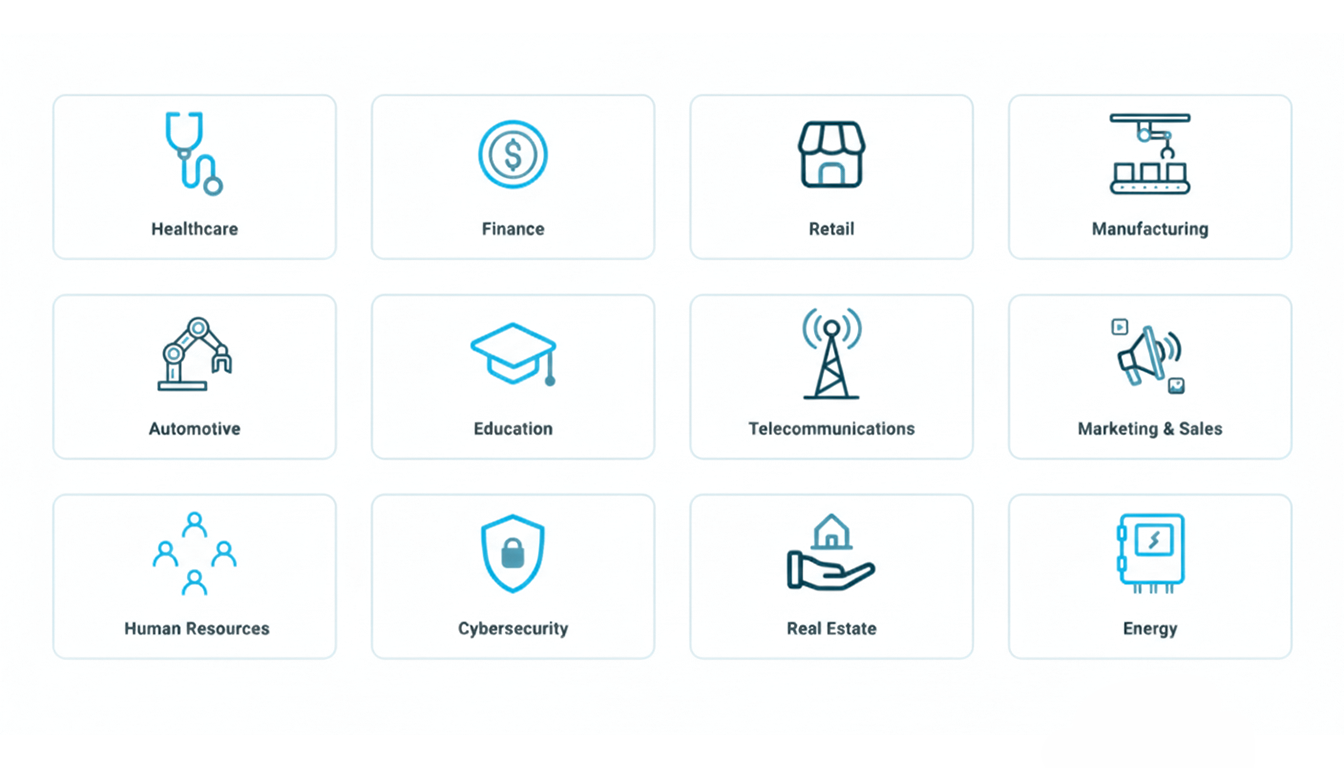
In multilingual markets like India, these ASR and TTS challenges are amplified by scale and diversity. Language AI platforms such as Devnagri have shown that integrating localization automation directly into speech and content workflows, rather than bolting it on later, can materially improve reliability across regions, accents, and use cases.
The insight here is not vendor-specific. It is architectural: language intelligence must sit at the same layer as speech intelligence.
The Hidden Cost of “Good Enough” Speech Systems
Most enterprises do not fail at speech AI because the technology is immature. They fail because the technology works just well enough to avoid scrutiny.
Automatic Speech Recognition transcriptions look clean in dashboards. Text to Speech voices sound natural in demos. Early pilots meet success criteria. And then, quietly, organizations stop asking harder questions.
What is rarely measured is the second-order impact of speech errors. Not the clear mis-transcription, but the cumulative impact of minor errors on a large scale. When intent is misunderstood even a little bit in thousands of exchanges, findings get skewed. When the tone is the same across millions of outgoing messages, trust declines. When the language patterns of one region are not well represented, fairness suffers.
This is where “good enough” becomes expensive.
In customer operations, for example, even a 3–5% misclassification rate in intent can distort root cause analysis. Leaders believe they are addressing the top drivers of dissatisfaction, while customers continue to complain about issues that never appear in reports. The organization becomes data-rich and insight-poor.
Multilingual Speech AI in India Is Not a Channel, It Is a Behavior
One of the most common design mistakes is treating speech as just another input or output channel, equivalent to chat or email.
Speech conveys hesitation, emotion, power dynamics, urgency, and cultural signals that text simply cannot. Customers raise their voice when they feel unheard. They slow down when confused. They switch languages to seek clarity or comfort.
When Automatic Speech Recognition systems normalize or flatten these behaviors, organizations lose the very signals that make speech valuable in the first place.
Customers may notice right away that something is wrong when Text to Speech systems deliver voices that are flawlessly modulated but don't match their emotions. The voice sounds like a person, but the conversation doesn't feel like it's coming from a person.
The outcome is a small trust gap that is hard to assess but impossible to ignore over time.
The Governance Gap in Text to Speech AI and Speech to Text AI
Governance is another limitation that doesn't get enough attention.
Speech systems often handle customer data, compliance requirements, and AI decision-making simultaneously. But governance approaches are far slower than deployment speed.
Some common gaps are:
- Reviewing multilingual results in an inconsistent way
- Speech-to-insight pipelines are hard to audit.
- Too much trust in vendor promises to fix prejudice
- Not knowing who owns what when speech outputs affect decisions
These gaps become more than just technical speech AI challenges in India when voice AI in Indian Enterprises starts to affect credit decisions, insurance evaluations, healthcare assistance, and public services. They become dangers for the organization.
Enterprises that fail to govern speech systems with the same rigour as financial or identity systems will eventually face regulatory, reputational, or ethical fallout.
Human-Centric Speech AI for Real Users, Real Context, and Real-Time Workflows
The real world is noisy. People interrupt each other. They change their mind mid-sentence. They use slang, sarcasm, and silence.
Speech systems that perform well in controlled environments often degrade precisely when businesses need them most: during conflict, stress, or urgency.
When you design for real-life use cases, you mean:
- Training with bad audio
- Validating across a range of social and linguistic backgrounds
- Stress testing models in edge circumstances instead of disregarding them
- Accepting that language changes over time
You need to change the way you think. From making things better to making them stronger. From the average to the unusual. From standards to real-life use.
The Strategic Inflection Point in Speech AI Adoption for Global Businesses
Speech AI is at a key turning point, just like early analytics platforms were ten years ago. The question is no longer whether to embrace, but how deeply to integrate and how responsibly to scale.
Organizations that continue treating Speech to Text and Text to Speech as plug-and-play utilities will extract incremental value. Those who treat speech as a core layer of intelligence, grounded in language, culture, and context, will unlock a disproportionate advantage.
The technology is ready. The models are capable.
What remains uncertain is whether enterprises are willing to design and govern speech systems that reflect how humans actually speak, rather than how machines would prefer them to.
And that difference will define the next phase of competitive differentiation.
Conclusion
Speech AI has crossed the novelty threshold. What comes next is accountability.
The enterprises that win will be those that stop asking, “How accurate is the model?” and start asking, “How faithfully does Indian language speech AI represent human intent, across languages, contexts, and moments that matter?”
Because in business, what is misunderstood is often more dangerous than what is unheard.