A few years ago, most banks treated customer support as a back-office function. Necessary, yes. Strategic, not really. That has changed.
Today, customer conversations sit at the center of banking experience, retention, and even revenue growth. But supporting those conversations at scale has become incredibly expensive.
Not because customer service is failing. In fact, customer expectations are rising faster than most support teams can scale.
Customers now expect instant support across voice calls, WhatsApp, mobile apps, websites, and email. They expect the bank to remember previous conversations. And increasingly, they expect support in their preferred language.
That combination is expensive.
A large retail bank may handle millions of customer interactions every month. Balance enquiries, card blocking requests, EMI reminders, fraud alerts, loan status checks, and KYC updates – most of these are repetitive, high-volume interactions that still depend heavily on human agents.
Most banking leaders already recognize the pattern. The symptoms appear differently across institutions, but the pressure points are remarkably similar. Hiring and training costs continue climbing, customer wait times remain unpredictable during peak hours, support-team attrition creates operational instability, and multilingual servicing adds another layer of complexity. At the same time, customers still expect round-the-clock assistance with consistent service quality regardless of channel.
This is where omnichannel conversational AI is starting to reshape the economics of banking support operations in a very practical way.
Banks are no longer deploying conversational AI merely as a chatbot experiment. They are using AI-powered customer engagement systems to automate repetitive support workflows, reduce inbound call pressure and improve customer experience across every communication channel.
And importantly, the shift is becoming measurable.
There is also a broader shift happening inside banking.
For years, digital transformation in BFSI focused heavily on apps, dashboards, and transaction infrastructure. Customer support evolved more slowly. Many institutions kept layering new systems on top of their old support processes.
Now the gap is becoming visible.
Customers can transfer money instantly, open accounts digitally, and apply for loans online, yet a simple support query may still involve waiting on hold, navigating IVR trees, or repeating information across channels.
That disconnect is pushing banks toward conversational infrastructure rather than isolated support tools.
What Is Omnichannel Conversational AI in BFSI?
Omnichannel conversational AI refers to a single AI system that manages consumer interactions uniformly across several communication channels.
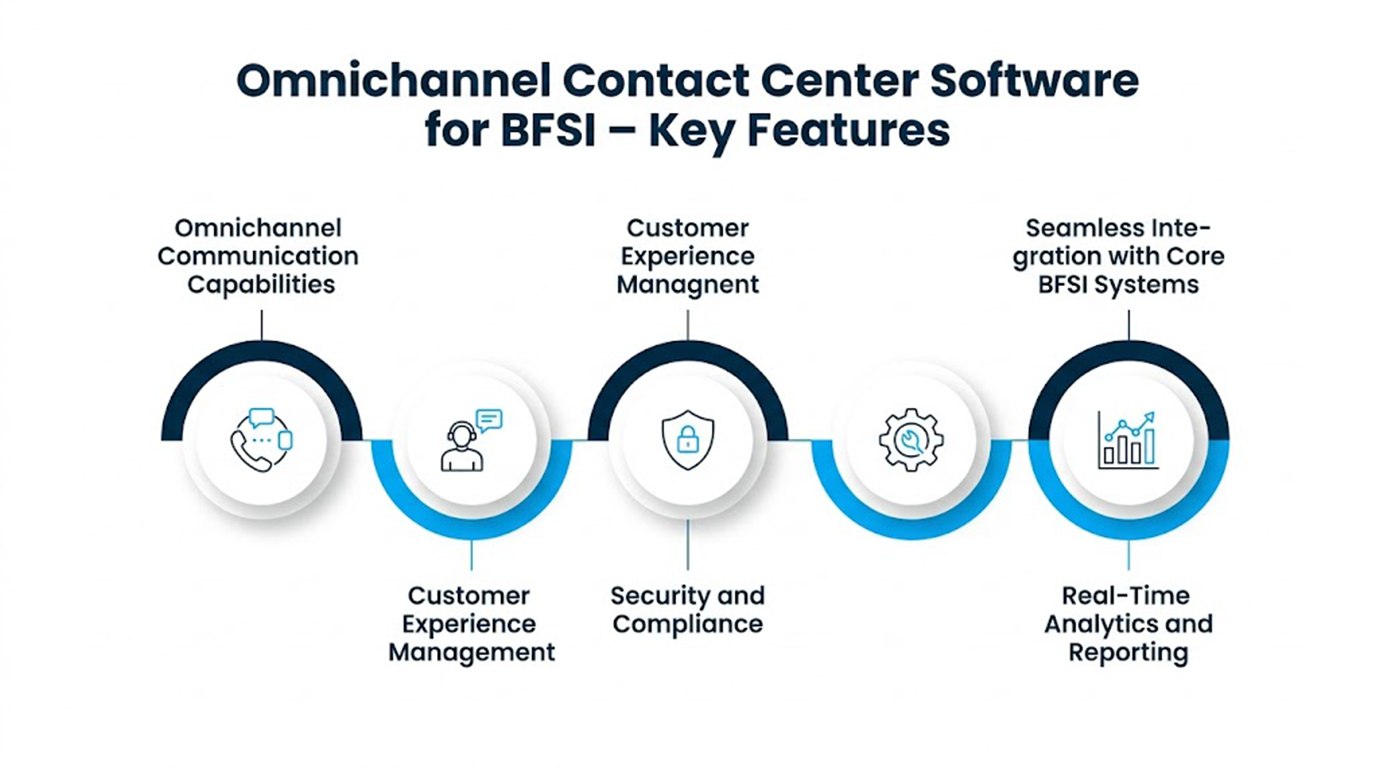
In the BFSI world, this would normally be voice calls, WhatsApp banking, mobile apps, chat on websites, SMS, email support and IVR, all connected through a common conversational layer, rather than operating in silos.
Instead of viewing each channel as a silo, the AI layer ties talks together.
It's as if a consumer opened a question on a banking app and then called the bank. The context is carried over. The customer doesn't need to repeat the account details or explain the problem again.
That continuity matters more than many organizations initially realize.
Traditional support systems often create fragmented customer journeys. One department handles phone calls.
Omnichannel conversational AI changes this architecture by centralizing customer interaction intelligence.
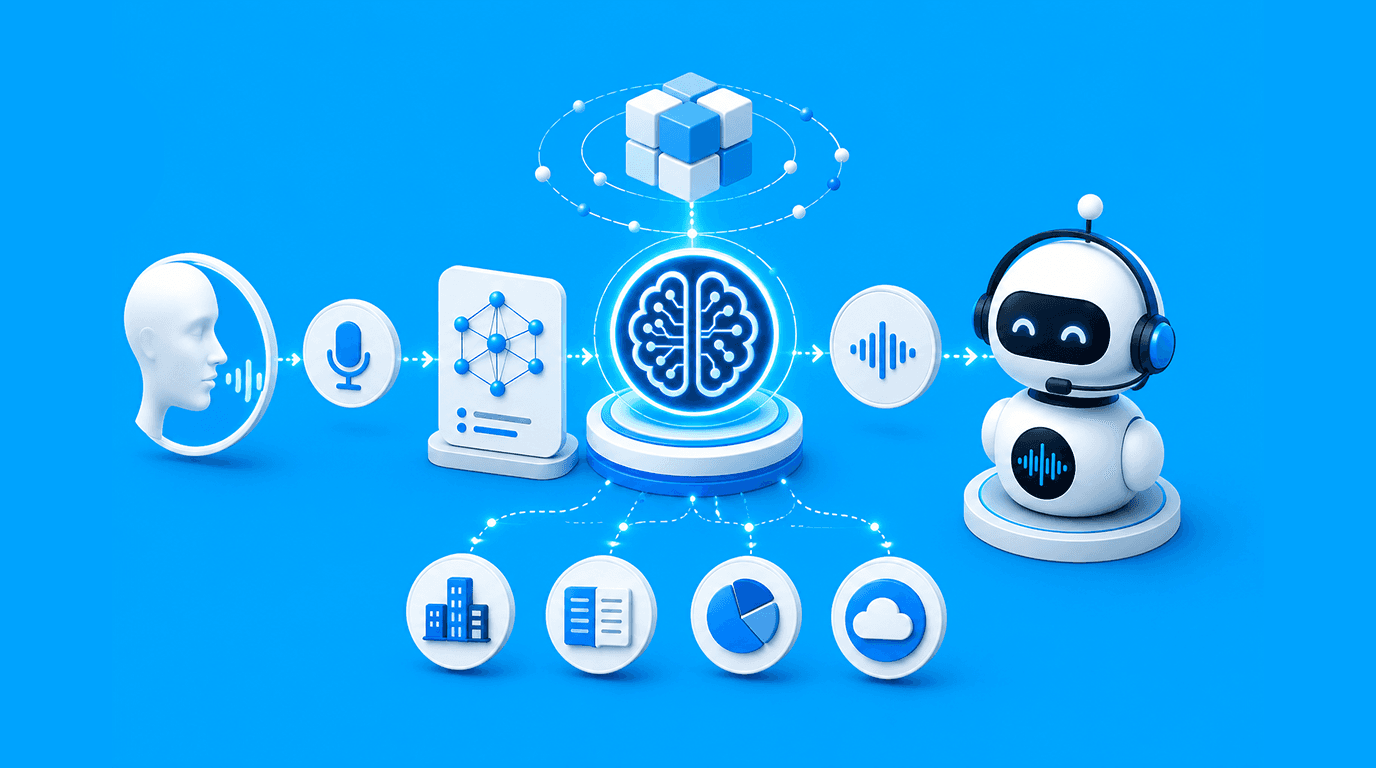
Behind the scenes, several technologies work together quietly, speech to text systems, multilingual speech AI models, natural language processing engines, and text to speech frameworks.
Customers usually never notice these layers individually.
What they notice is whether the interaction feels fast, accurate, and natural.
No repeating account details three times. No restarting conversations from scratch because the interaction moved from chat to voice.
For banks, the operational impact can be substantial.
Why Banking Call Centers Are Becoming Expensive
Most support teams did not suddenly become inefficient overnight.
The operating model simply stopped matching customer behavior.
Customers now move across channels constantly. They start on mobile apps, switch to WhatsApp, escalate over voice calls, then expect the bank to remember everything contextually.
Traditional support systems were never designed for that kind of continuity.
Part of the issue is simply scale.
Banking interactions have exploded over the last decade, especially after mobile banking adoption accelerated.
Ironically, better digital banking has increased support complexity.
A customer may use mobile banking for transactions but still prefer voice support for disputes, fraud alerts, loan concerns, or onboarding clarification.
Then there is the multilingual challenge.
India alone has millions of banking users who are more comfortable communicating in Hindi, Tamil, Bengali, Marathi, Punjabi, Gujarati, or Telugu rather than English.
Scaling high-quality multilingual support through human-only operations becomes difficult very quickly.
Banks also face another operational issue that rarely gets discussed openly: support attrition.
Call center environments often experience high employee turnover because repetitive query handling creates burnout. Salaries are not the only cost. Hiring and retraining cycles have hidden operational costs.
Meanwhile, customers want the following:
- Quick response times
- Around the clock support
- Customised Communication
- Secure interactions
- Cross-channel continuity
The old support model just can't keep up economically.
How Conversational AI Reduces Call Center Costs
The real advantage of conversational AI in BFSI is not just automation.
It is operational efficiency at scale.
Automates Repetitive Banking Queries
A large percentage of banking queries are predictable.
An AI chatbot for financial services or an AI voice bot for BFSI can automate these workflows instantly.
That alone reduces inbound call pressure substantially.
In several BFSI deployments globally, organizations have reported that conversational AI systems can autonomously resolve a large percentage of routine customer interactions before they ever reach a human agent.
Handles High Call Volumes Without Expanding Teams
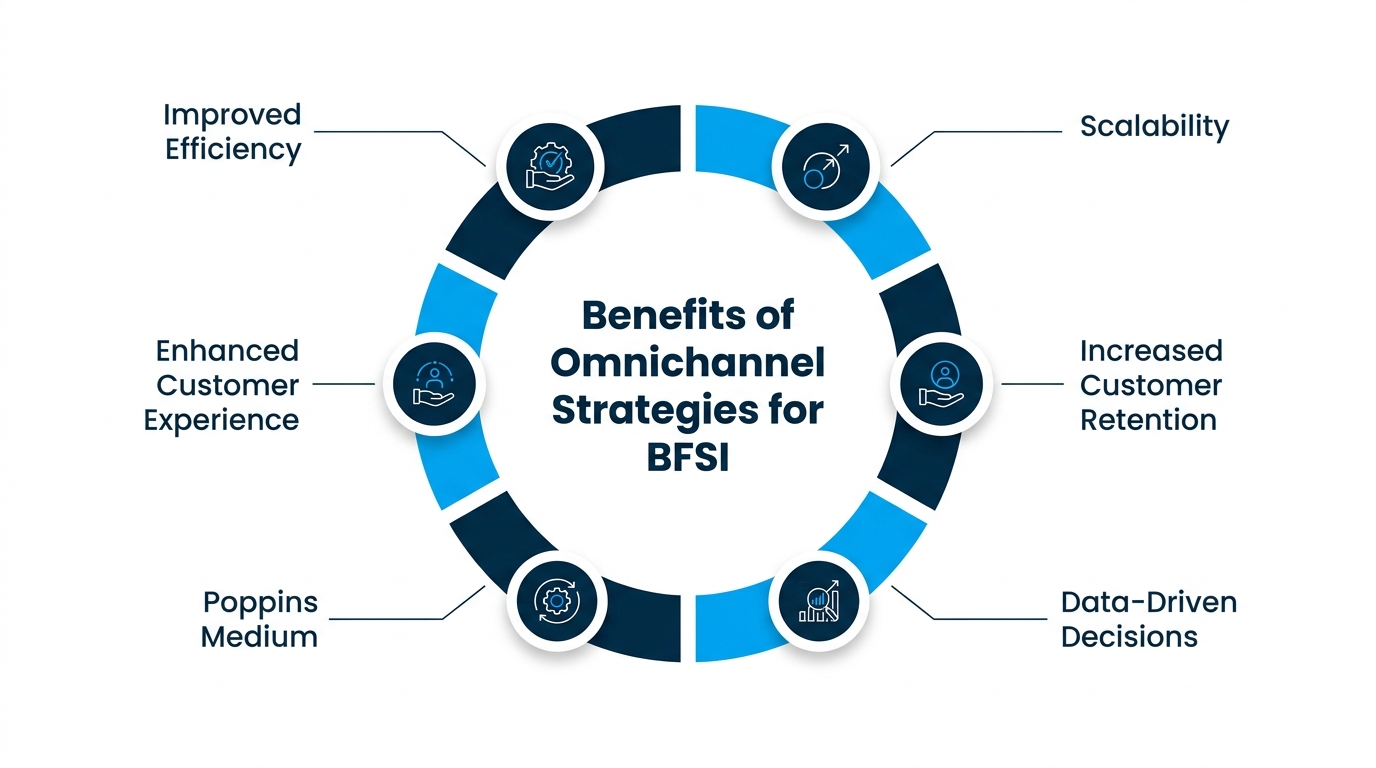
One of the biggest operational advantages of AI customer support for banks is scalability.
Traditional call centers scale in the most expensive way possible.
More interactions usually mean more hiring, more training, more infrastructure, and eventually more operational complexity.
More customers usually mean more hiring.
Conversational AI scales differently.
Whether the bank receives 5,000 calls or 50,000 calls during a campaign, the AI infrastructure can manage high concurrency without proportionally increasing staffing costs.
The scalability becomes particularly valuable during festive banking seasons, tax filing periods, loan campaigns, fraud-related incidents, or even aggressive credit-card marketing pushes when customer interaction volumes rise suddenly.
One operations executive at a private-sector bank described the problem in a surprisingly blunt way during a discussion on support automation.
"We realized entire teams were spending most of the day answering the same predictable questions."
That observation stuck because it captured the inefficiency perfectly.
That realization is driving automation investment across BFSI.
Supports Customers in Multiple Indian Languages
This shift becomes even more important in the Indian banking landscape.
Multilingual conversational AI for banking enables banks to connect with customers in their local language without scaling support teams across languages.
Modern multilingual speech AI systems are increasingly capable of handling conversations across Hindi, Tamil, Bengali, Marathi, Punjabi, Kannada, Gujarati, Telugu, Malayalam, and several other Indian languages.
For many institutions, this technology changes the accessibility equation entirely.
In practice, customers from Tier 2 and Tier 3 markets often engage more comfortably when communication happens in their preferred language.
Even simple changes, repayment reminders in Hindi instead of English, or onboarding guidance in Marathi, can improve response quality noticeably.
It increases trust.
It improves comprehension.
And interestingly, it often improves repayment engagement rates for reminders and collections communication.
This is one area where Indian language AI platforms are increasingly relevant because the challenge is not only translation, it is contextual language understanding across diverse dialects and banking scenarios.
Provides 24/7 Customer Support
Most large banks still rely heavily on shift-based support structures.
That model works, but it is resource-intensive and difficult to optimize continuously.
Conversational AI removes that limitation.
For customers, this approach creates convenience.
For banks, it reduces dependency on large overnight support teams.
Over time, that operational flexibility matters more than many organizations initially expect.
Especially for institutions trying to optimize support costs without compromising service availability.
Reduces Average Handling Time (AHT)
Average handling time remains one of the most closely monitored metrics in banking support operations.
Even when conversations escalate to human agents, AI systems can pre-collect context and summarise the issue before transfer.
That reduces interaction friction significantly.
Read in Detail: How Conversational AI Reduces Customer Complaint Resolution Time
Improves First Call Resolution
Few banking experiences frustrate customers more than repeated transfers between departments.
It creates the impression that the institution itself lacks coordination.
Conversational AI systems can classify intent more accurately and route customers directly to the appropriate resolution path.
Some interactions are resolved instantly.
Others are escalated intelligently.
Either way, resolution efficiency improves.
And in automated customer service for banking, faster resolution directly impacts both operational cost and customer satisfaction.
Best Use Cases of Omnichannel AI in Banking
What makes conversational AI adoption particularly compelling in BFSI is that the use cases are not theoretical anymore.
Most deployments tie directly to operational metrics that banks already track closely: response time, call volume, resolution efficiency, servicing cost, and customer satisfaction.
Customer Support Automation
Banks are increasingly automating first-level support interactions using conversational AI platforms designed for banks.
Routine customer support no longer requires manual intervention for every interaction.
Loan and EMI Reminder Calls
Loan servicing teams often spend enormous resources on outbound reminder communication.
AI voice systems can automate EMI reminders, payment confirmations, due-date alerts, soft collections communication, and even loan eligibility outreach campaigns without requiring large outbound calling teams.
The real advantage here is consistency.
Messages go out on time, communication remains standardized, and outreach scales without dramatically increasing operational overhead.
Credit Card Support
Credit card queries are one of the biggest volume support categories in BFSI.
Banks have many queries from customers about card activation, transaction disputes, reward points, card blocking and credit-limit related issues, all of which are high-frequency activities that conversational AI can handle well.
Conversational AI easily manages these procedures on chat and voice channels.
Insurance Claims Help
Insurance processes are difficult to follow when you're worried.
Conversational AI can assist policyholders in a much more structured manner with claims monitoring, submission of papers, understanding policy terms, renewal reminders and queries about eligibility.
Faster service, less operational dependencies.
Customer On-Boarding & KYC Assistance
The KYC process is often accompanied by a high number of support tickets as consumers want help uploading documents, checking information or understanding the compliance requirements.
AI-powered onboarding processes reduce friction and increase completion rates during onboarding.
Conversational interfaces allow customers to check questionable activities immediately.
So this cuts down on response delays during high risk circumstances.
Why Multilingual AI Matters in Indian Banking
One reality that often gets underestimated in banking transformation discussions is that India is not a single-language digital market.
A customer in Jaipur, Coimbatore, Ludhiana, or Guwahati may interact with digital banking very differently, especially during support conversations.
The next major wave of banking users includes more than just English-speaking urban consumers. It improves communication effectiveness. And it opens access to underserved markets.
According to research published by McKinsey , organizations that personalize customer engagement effectively can improve customer satisfaction and business performance significantly.
Conclusion
Banks and financial institutions are no longer using conversational AI only for automation.
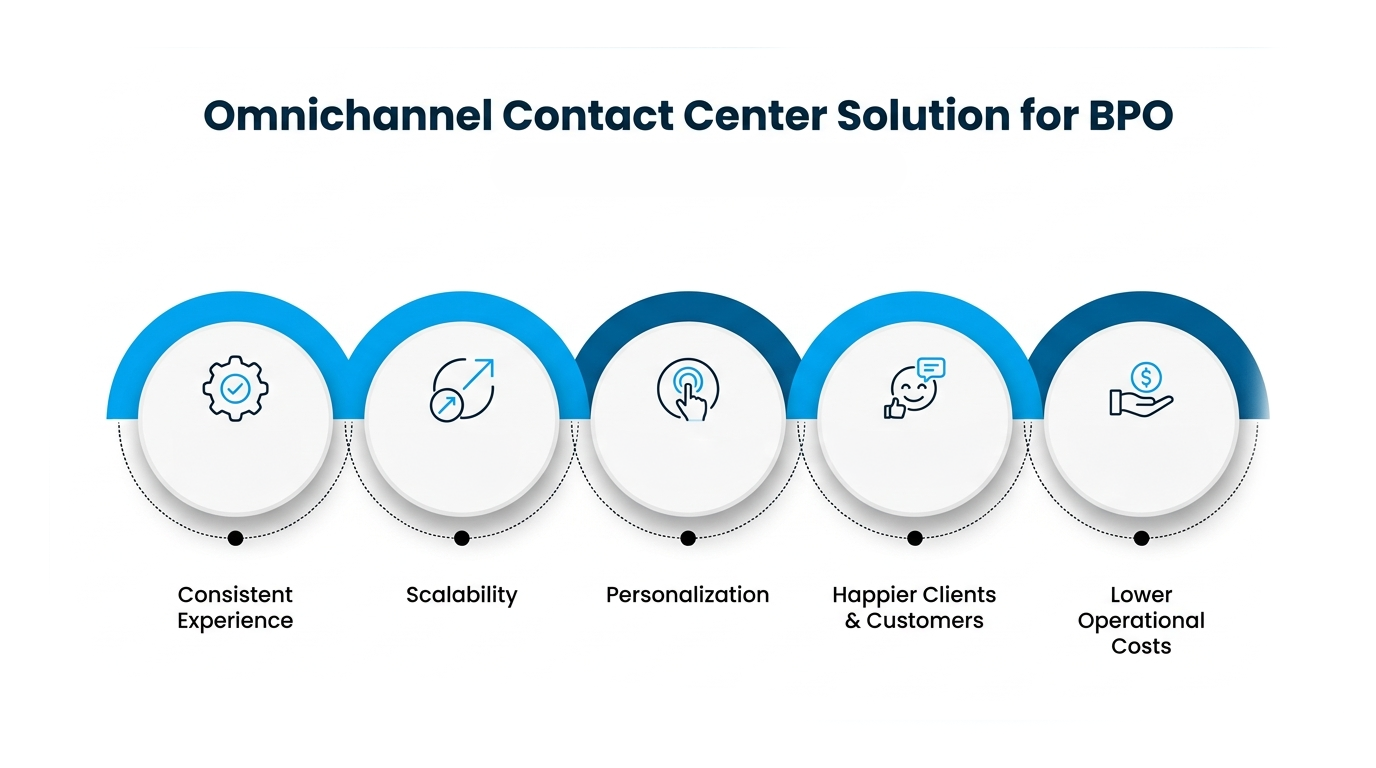
They are using it to scale customer engagement efficiently across channels, languages, and customer touchpoints while controlling operational costs.
At this point, the operational economics are becoming difficult for BFSI leaders to ignore.
Support costs continue rising. Customer expectations continue accelerating. And multilingual engagement requirements are expanding simultaneously.
As customer expectations continue to rise, traditional call-centre-heavy support models will struggle to scale sustainably.
Omnichannel conversational AI offers a more efficient operating model, one that combines automation, multilingual accessibility, and continuous customer engagement.
Companies who are investing in multilingual omnichannel AI today will likely be in a better position to service the next generation of digital banking clients.
Especially in markets like India where the multiplicity of languages and use of digital technologies are going hand in hand.