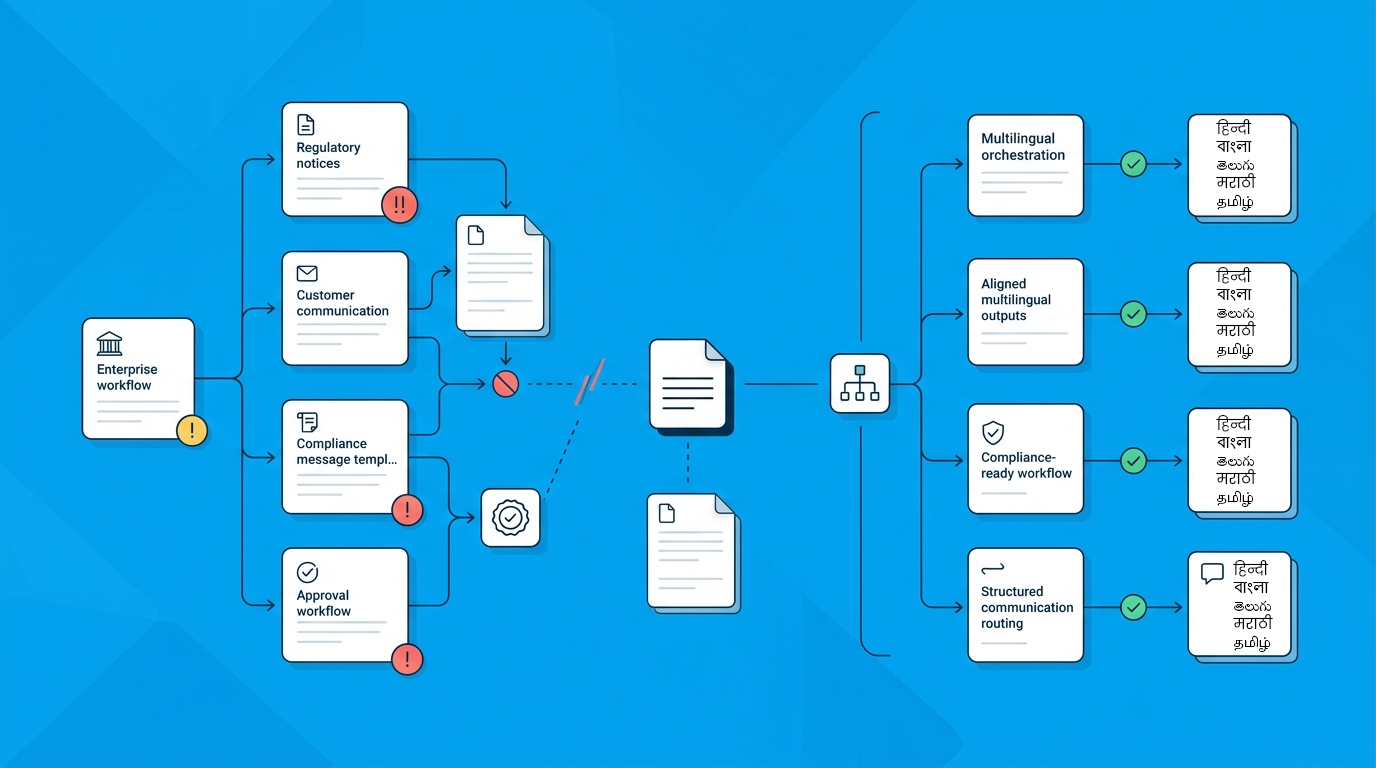
Most BFSI institutions operating in India today already have a multilingual communication process of some kind. There is a localization vendor, an internal review cycle, and a distribution channel. Boxes get ticked. Documents go out in regional languages. And on the surface, it looks like the job is done.
But here is the thing: the job is not translation. It never really was.
The actual job, the one that is starting to draw regulatory attention, is governance. Specifically, whether institutions can demonstrate, with verifiable records, that every multilingual regulatory communication was approved correctly, deployed consistently, distributed in the right language to the right borrower or investor, and auditable at every step.
Most current workflows cannot do that. And regulators are starting to notice.
Why This Has Moved From a Communication Problem to a Compliance Problem
For a long time, multilingual communication in BFSI sat somewhere between customer service and marketing operations. It was a good-to-have. A sign of regional sensitivity. Something you did to make customers feel more comfortable.
That framing has shifted, not dramatically or all at once, but steadily, driven by two things happening simultaneously.
First, financial participation from tier-2 and tier-3 India has grown significantly. Retail investors, first-time borrowers, and MSME loan applicants increasingly come from markets where Hindi and English are not primary languages. The RBI's Financial Inclusion reports have consistently identified regional outreach and customer transparency as central to expanding formal financial participation, and as more customers enter from non-English-first backgrounds, the demand for multilingual communication has gone from optional to operational.
Second, and more importantly for this conversation, regulators have begun attaching governance expectations to multilingual communication specifically.
The Structural Problem With Manual Multilingual Workflows
To understand where the risk actually sits, it helps to map what a typical multilingual regulatory communication workflow truly looks like inside a mid-to-large BFSI institution.
A policy or compliance team drafts the master document in English. It goes to a localization vendor, sometimes one, sometimes multiple, depending on language coverage. Translated files come back. A compliance reviewer checks them, often comparing against the English master manually. Legal may review separately. Approved files are then handed off to communications or technology teams who upload or distribute them across customer-facing systems: apps, portals, SMS, email, WhatsApp, and branch communication packs.
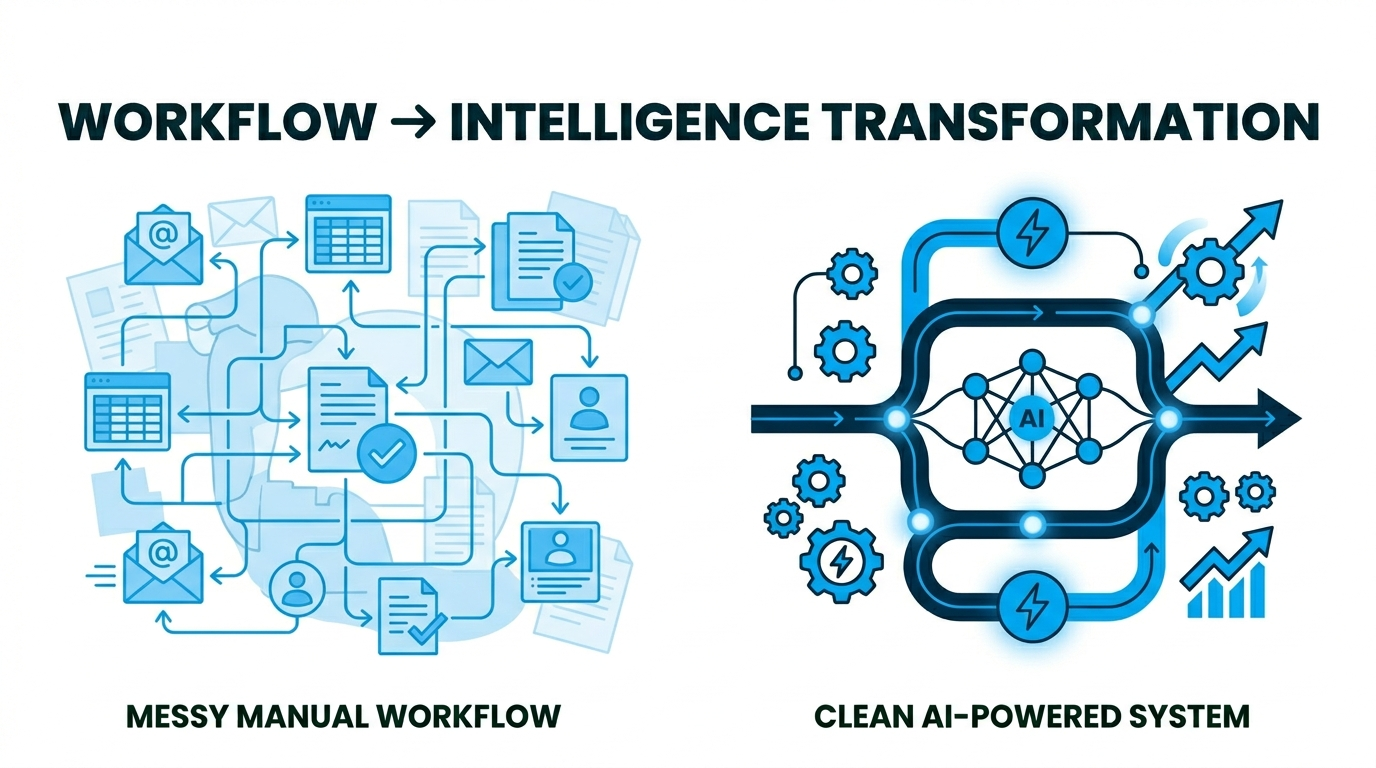
At each handoff, something gets lost. Not always the content, but the record.
Who specifically approved the Tamil version of the Q2 disclosure update? Was the Odia version deployed before or after the Odisha branch communication went out? Did the last regulatory update to the insurance product disclosure reach all three distribution channels in every language before the deadline?
These questions, which sound like edge cases, become very real during an audit or during litigation where a borrower or investor disputes whether they received information in a language they understood.
In conversations with compliance operations teams across the BFSI sector, a pattern comes up repeatedly: the hardest part of an audit is not proving what the final communication said. It is reconstructing the workflow trail: who approved what, when, and in which form. When that workflow lives across emails, shared drives, WhatsApp threads, and external vendor portals, reconstruction becomes extremely difficult.
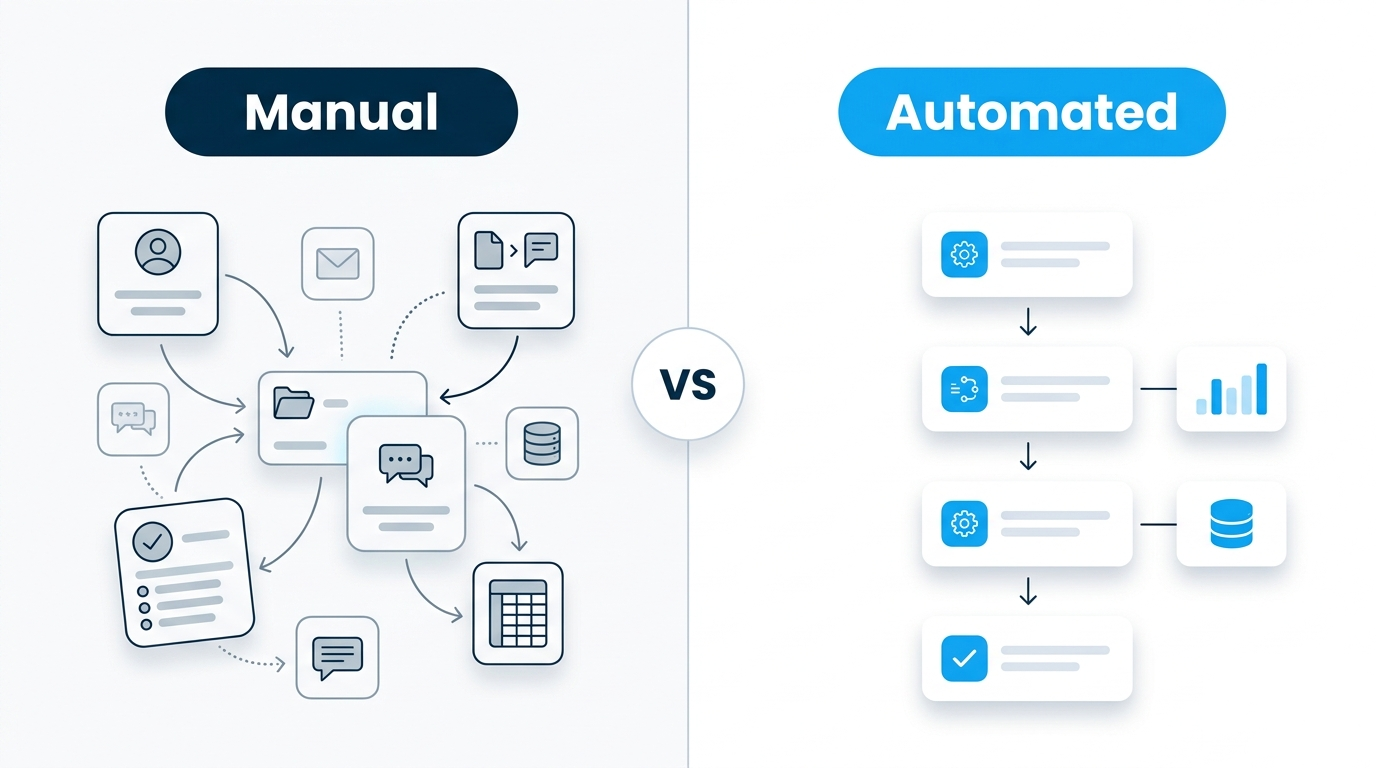
Operational ambiguity of that kind does not require anyone to have made a mistake. The system was just not built to be auditable. And in a regulatory environment that is increasingly expecting evidence-based governance, that is the problem.
What RBI's Enforcement Data Actually Tells You
It is worth spending a moment on the enforcement picture, because it tends to make the risk more concrete than an abstract discussion of "audit exposure".
RBI publishes penalty notices publicly. A penalty notice is not just a fine; it is a named disclosure that appears in financial media, gets filed in regulatory databases, and surfaces in investor and counterparty due diligence. The reputational cost frequently exceeds the monetary one.
SEBI's Regional Language Disclosure Requirements: The Same Pattern, Different Sector
The governance problem extends beyond banking. In capital markets, the same structural issue appears in how investment disclosures, fund updates, and investor alerts are handled across languages.
India's retail investor base has expanded rapidly into smaller cities and towns over the last several years, and a meaningful portion of those investors are engaging with financial products through vernacular interfaces, regional language apps, local intermediaries, and non-English communication. SEBI's regulatory direction has increasingly emphasised transparency and consistency in disclosure are essential as first-time investors from non-metro markets enter.
The challenge for financial institutions is that disclosure workflows were not designed for that level of linguistic variation at speed. Most teams still treat regional language disclosure as a parallel publication exercise, you publish the English version, then you produce translations and upload them separately.
But parallel publication creates temporal gaps, which means investors in different regions may have access to materially different versions of the same disclosure at the same moment. In fast-moving market situations, fund updates, product reclassifications, risk notifications, and KYC revisions, that kind of gap can become a compliance issue quickly.
And regulators tend to notice inconsistency in disclosures long before customers do.
The IRDAI Dimension: Where Multilingual Governance Meets Claims and Consent
Insurance organizations often think about multilingual communication first in terms of customer service. Helping policyholders understand their cover. We are making the process less intimidating for first-time buyers in smaller markets.
That is a reasonable starting point, but IRDAI's multilingual communication requirements now extend well beyond customer service into areas that carry real legal exposure: policy disclosures, claims communication, grievance handling, and consent frameworks.
Insurance is a documentation-heavy business. A policy document is a legally binding contract, and how that contract is communicated in different languages matters, not just for customer experience but for enforceability and disputes. If a policyholder receives conflicting information across languages or channels, the perception of ambiguity can be as damaging as actual non-compliance, particularly in claims disputes where the interpretation of a policy term becomes central.
Several insurers have recognized this and begun rethinking their multilingual communication architecture entirely, moving away from fragmented localization pipelines toward systems that are integrated directly into compliance and grievance operations. The shift is subtle but strategically important. Document translation under language technology platforms is not peripheral. They are operational infrastructure.
Why Is Translation Quality Not the Issue, And What Actually Is?
Most BFSI compliance and technology leaders who have thought seriously about this problem already know that translation quality is not where the gap is. Many institutions work with highly capable language vendors. The output is generally accurate.
The gap lies in workflow, which consists of five layers of infrastructure that must work together for multilingual communication to be genuinely compliant and possible with multilingual AI for BFSI:
1. Standardised regulatory terminology
Financial and regulatory terminology cannot vary from vendor to vendor or region to region. Institutions need a centralised, governed terminology layer that is directly linked to regulatory standards so that the same concept is expressed the same way in every language, every time.
2. Version synchronisation
Every language version needs to stay in sync with the approved master document in real time. In manual workflows, version drift is almost inevitable, a circular update gets processed in Hindi on day one, and the Marathi version follows three days later. That lag creates exposure.
3. Approval governance
Compliance, legal, risk, and regional stakeholders all need visibility into the same review workflow. When approvals happen across disconnected email threads and shared drives, the audit trail fragments.
4. Distribution traceability
Institutions need to record, at a granular level, when each multilingual communication was distributed, through which channel, and to which customer segment. Without this, the KFS acknowledgement requirement, and equivalent mandates in other regulatory frameworks, cannot be demonstrated.
5. Audit-ready immutability
In the event of a regulatory review, every action taken in the multilingual communication workflow should be reconstructable from a single, immutable record. Not pieced together from emails. Not approximated from vendor logs. Reconstructible.
Most existing workflows address two or three of these five layers adequately. Very few address all five at once. That is where the compliance gap actually lives.
Why Governed Language Infrastructure Is Becoming a Priority Investment
There is understandable caution in BFSI environments around introducing new technology into regulated communication workflows. That caution is entirely appropriate. Compliance leaders are right to be sceptical of automation that touches regulated content without clear governance controls.
But the conversation has evolved.
Forward-looking institutions are not looking at language AI as a replacement for governance. They are looking at it as a way to make governance more consistent, more auditable, and more scalable, particularly as the volume and velocity of multilingual regulatory communication increases.
The capabilities that matter in this context are not translation speed. They are operational controls:
- Maintaining approved regulatory terminology libraries that remain consistent across all language outputs
- Detecting inconsistency across language versions before distribution
- Automating version synchronisation across systems as master documents are updated through document translation .
- Creating searchable, immutable multilingual audit histories
- Integrating directly with core banking and CRM systems to remove manual handoffs
- Generating compliant multilingual responses to grievances with full traceability
Governance scalability, rather than faster translation, is the core value proposition in India's operating environment, where a single institution may need to manage regulatory communication across fifteen or more languages simultaneously.
At Devnagri, this challenge is the problem we have built our multilingual AI for BFSI around: not replacing the compliance team's judgement, but giving that judgement the infrastructure to operate consistently across languages and channels at scale.
Why Is Multilingual Compliance Becoming a Strategic Risk in BFSI?
Most BFSI organisations invest heavily in cybersecurity, fraud prevention, risk analytics, and regulatory monitoring. These are well-resourced, senior-led functions.
Multilingual compliance operations often sit several levels below that. They are managed operationally rather than strategically, and they tend to attract attention only when something goes wrong, a disclosure inconsistency surfaces in an audit, a grievance escalates because a customer in a regional market did not receive information in a form they could understand, or a regulator specifically queries the vernacular communication trail.
That reactive posture is becoming harder to maintain.
Under normal operational conditions, a fragmented multilingual workflow tends to function adequately. The problems are invisible until scale breaks the system, a simultaneous multi-language circular update, a regulatory deadline with a tight turnaround, or an audit that requires reconstruction of the entire distribution trail.
The question for BFSI leadership is no longer simply, 'Do we support regional languages?'
The question is, can we govern multilingual communication with the same rigour, the same auditability, and the same infrastructure investment as financial compliance itself?
Institutions that get ahead of this challenge will not just reduce regulatory risk. They will build stronger operational trust, a cleaner audit posture, faster execution across regional markets, and a compliance infrastructure that can scale as India's financial sector continues its expansion into non-English-first markets.
That combination of reduced risk, operational resilience, and regional reach is increasingly a competitive advantage, not just compliance hygiene.