For most enterprises, language still sits in the “content” bucket—something to be translated at the last mile. That mental model is breaking down. In multilingual markets, language now behaves less like an output and more like a system dependency. It shapes customer access, compliance traceability, employee productivity, and data quality.
This shift is especially visible in regions where linguistic diversity is structural rather than cosmetic. When a service workflow moves from English to Assamese, Tamil, or Marathi, it is not just a translation; it is a change in how intent is captured, how decisions are made, and how records are maintained.
Organizations that treat language as infrastructure move faster, scale more predictably, and build deeper trust. Those that don’t end up retrofitting localization into processes that were never designed for it.
The difference can be seen in factors such as cost curves, time-to-market, and the client's experience.
How does language as infrastructure act as a core enterprise layer?
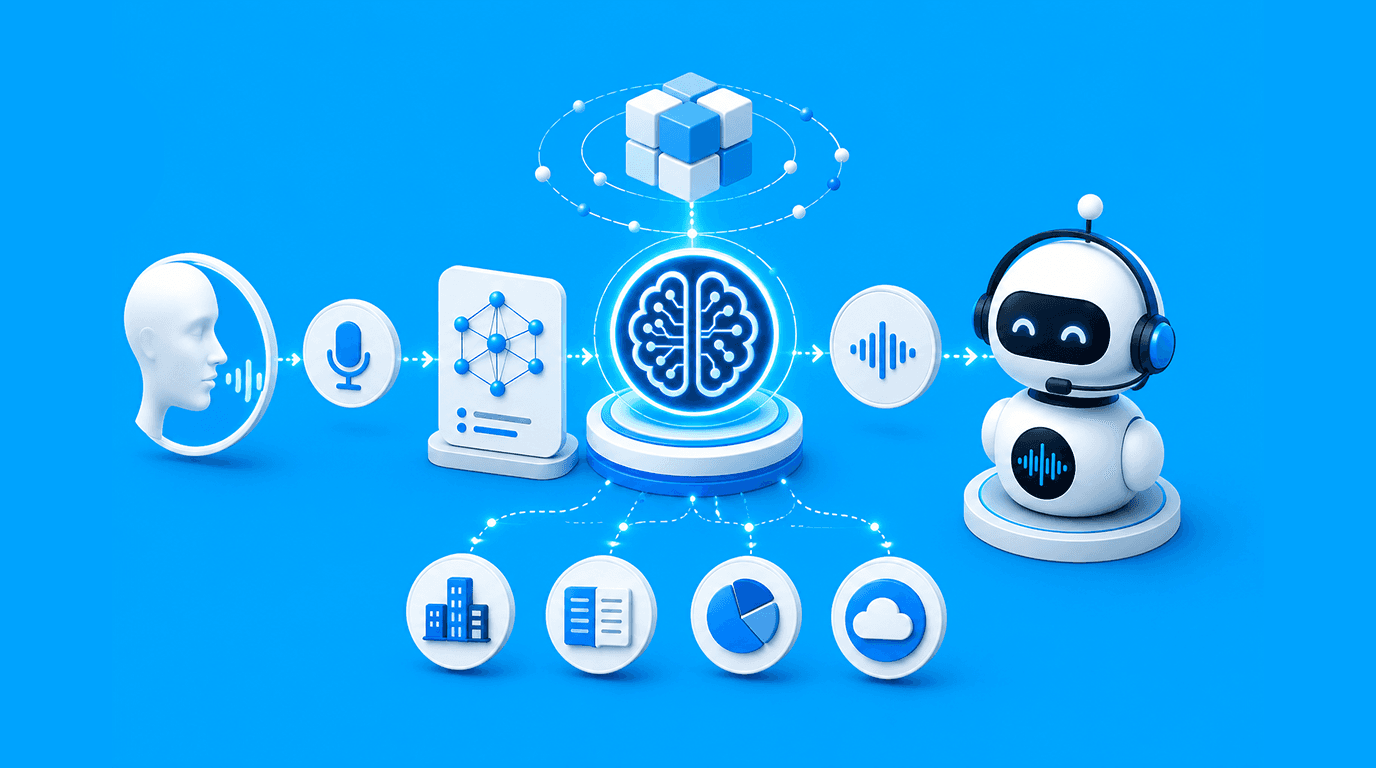
Language AI slides into the core enterprise workflows and seamlessly keeps localizing every output wherever required.
A few years ago, a large public digital platform in India noticed something odd. Their traffic numbers looked healthy, but completion rates outside English-first regions were consistently lower. The product worked. The UI was clean. The pricing was right. But the journey stalled mid-flow.
The issue was not usability. It was language continuity.
Users entered in their preferred language, but key workflow steps—consent capture, document upload instructions, support escalation—quietly switched back to English. Trust dropped. Abandonment followed.
This is not an isolated pattern. It shows how things really are. The World Economic Forum says that digital platforms that do a good job of localizing can reach hundreds of millions more users in emerging nations, where language is still a major barrier to participation (Source).
In that sense, multilingual capability is not a growth feature. It is a precondition for inclusion.
Why “English-First Workflows” fail?
Enterprises often assume a linear model:
Build → Translate → Launch in new regions.
That model worked when localization meant marketing copy. It fails when language touches:
- Onboarding journeys
- Customer support conversations
- Compliance disclosures
- Training systems
- Internal operations
McKinsey’s research on global operating models notes that companies that embed digital capabilities into core processes—not as overlays—achieve significantly higher productivity and faster scaling. Language follows the same rule.
If it enters only at the interface layer, it creates friction downstream:
- Mismatched data fields
- Inconsistent customer records
- Audit gaps
- Fragmented analytics
In contrast, when language is embedded at the workflow level, it becomes a multiplier.
The Infrastructure Lens: A Practical Framework
Using a simplified 7S-style lens, language infrastructure touches:
- Strategy – Regional expansion without proportional cost growth
- Structure – Shared services for multilingual operations
- Systems – Translation, speech, and content flows integrated into core platforms
- Skills – Language intelligence in product, CX, compliance
- Staff – Reduced dependence on manual intermediaries
- Style – Native-language trust as a brand behavior
- Shared Values – Inclusion as an operating principle, not a campaign
Most organizations today are strong in one or two of these. Very few are aligned across all.
The Data Layer: Where Language Quietly Rewrites Economics
Language infrastructure is not only about experience. It is about data.
When customer interactions happen in multiple languages but are stored in a single normalized structure, enterprises gain:
- Comparable analytics across regions
- Faster model training for AI systems
- Consistent compliance records
Gartner has repeatedly highlighted that poor data quality costs organizations an average of $12.9 million per year (Source). In multilingual environments, a significant share of that loss comes from unstructured, untranslated, or inconsistently captured language data.
Speech to text in regional languages. English to Assamese translation in transactional systems. Multilingual search within internal knowledge bases. These are not CX enhancements. They are data architecture decisions.
The Workforce Multiplier Effect
There is a quieter benefit that rarely makes it into boardroom decks: employee efficiency.
In multilingual enterprises, a significant portion of time is spent translating—informally.
- A manager re-explains a policy in another language
- A support agent interprets a customer request for a backend team
- A trainer switches between languages in live sessions
Harvard Business Review has documented how reducing friction in knowledge flows directly improves organizational productivity and decision speed (Source).
Language infrastructure formalizes these invisible translation loops. The result is not only speed. It is cognitive load reduction.
People spend more time solving problems and less time converting meaning.
Where Indian Language Translation Becomes Strategic?
Translation in India’s Most spoken languages, like English to Assamese translation, might sound tactical. In reality, it signals a deeper strategic capability: the ability to move full workflows into linguistically diverse regions without redesigning the operating model.
This matters for:
- Government platforms
- BFSI onboarding
- Healthcare access systems
- Skilling and education ecosystems
When transactional language shifts, adoption follows.
And once adoption follows, data density improves. That feeds back into AI systems, making them more accurate for those very regions.
A compounding loop begins.
The Technology Stack: From Tools to Layered Architecture
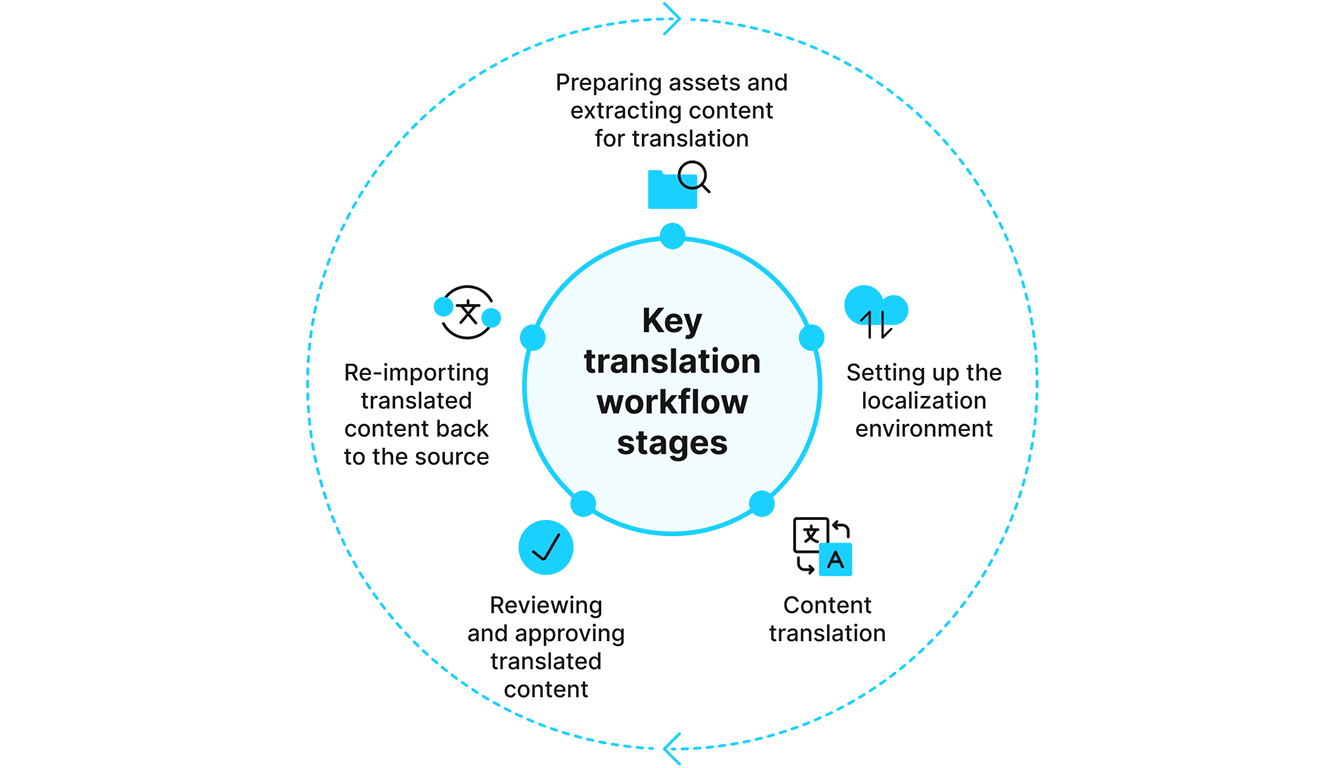
Language infrastructure typically evolves through three stages:
Stage 1 – Tool-based
Manual translation + fragmented vendors
Stage 2 – Platform-based
Centralized localization management
Stage 3 – Infrastructure-based
Language intelligence embedded into APIs, workflows, analytics, and AI models
This is where providers such as Devnagri enter the conversation—not as translation vendors, but as language AI layers that plug into enterprise systems and automate multilingual operations at scale across Indian languages.
The shift is subtle but profound. The enterprise stops “handling language” and starts “running on language.”
Opportunities Leaders Often Underestimate
- Faster regional rollout without proportional hiring
- Higher trust in regulated interactions
- Better AI performance because training data reflects real linguistic diversity
- Unified analytics across markets
These are not soft benefits. They directly affect cost, risk, and growth velocity.
The Operating Model Shift: From Translation Requests to Language Flows
One of the clearest signals that an enterprise has crossed the maturity curve is the disappearance of the phrase “send this for translation.”
In infrastructure-led environments, language is no longer a ticket in a queue. It becomes a continuous flow.
Product updates are released simultaneously across languages because content components are already mapped.
Customer conversations are analyzed in near real time regardless of the language spoken. Compliance logs are searchable without manual intervention.
This changes release velocity.
In traditional models, multilingual expansion adds a time penalty to every launch. In an infrastructure model, the marginal time cost of adding a new language—whether it is English to Assamese translation or Hindi to Tamil speech workflows—drops dramatically. The enterprise begins to scale horizontally without slowing down.
That is an operating model advantage, not a localization benefit.
Decision Intelligence Improves When Language Friction Drops
A second-order effect shows up in leadership meetings.
When regional performance data is delayed because it must be manually translated, interpreted, and normalized, strategy discussions lean toward English-dominant markets. Not by intent—by visibility.
Once multilingual data flows into the same dashboards in comparable formats, a different pattern emerges.
Tier 2 and Tier 3 regions stop being anecdotal. They become measurable.
Leaders start asking sharper questions:
- Why is onboarding faster in one language cluster than another?
- Why do complaint categories differ by region?
- Which product features are being used differently across linguistic segments?
Better questions lead to better capital allocation.
Language, in this sense, becomes a decision-support layer.
The Impact Of Multilingual Customer Support On CSAT
In multilingual markets, trust is built less through brand campaigns and more through operational clarity.
A consumer who hears a loan disclosure in their own language and gets the same terms in writing—correctly translated, easy to find, and consistent across all channels—feels like they can trust the company.
A patient who can describe symptoms in a familiar language and see them accurately reflected in medical records feels safe.
These are small moments. But at scale, they compound into measurable retention.
Companies often spend a lot of money on acquisitions but don't pay much attention to this operational trust layer. Language infrastructure helps both without making a fuss.
A Practical Starting Point: The 3-Workflow Rule
For organizations wondering where to begin, a useful heuristic is the 3-workflow rule:
Identify three high-volume, high-risk, or high-growth workflows and make them fully multilingual end-to-end.
Typically, these are:
- Customer onboarding
- Customer support
- Compliance or documentation flows
When these three are infrastructure-enabled, internal resistance to further scaling drops. Teams experience the effects in their day-to-day work: fewer escalations, clearer data, and faster turnaround times. Momentum builds on its own.
The Long-Term View
Five years from now, multilingual capability will not be a differentiator in markets like India. It will be assumed—much like mobile-first design is today.
The real differentiator will be how deeply language is embedded into enterprise architecture.
Some organizations will still be translating interfaces.
Others will be running multilingual businesses by default.
That gap will define who scales efficiently and who keeps rebuilding the same workflows for every new region.
And, as with every infrastructure shift, it will feel obvious in hindsight.
The Risks That Sit Beneath the Surface
- Treating language as a UI problem rather than a workflow dependency
- Scaling multilingual channels without governance
- Ignoring bias across dialects and accents in speech systems
- Locking language data into vendor silos
These risks do not appear in the pilot phase. They appear at scale.
Strategic Moves for Businesses
1. Reclassify language as core infrastructure in digital transformation roadmaps
2. Map language touchpoints across workflows, not just customer interfaces
3. Unify multilingual data into a single analytics layer
4. Adopt API-first language architecture for scalability
5. Build governance early, especially for regulated sectors
The organizations that move first here will not just localize faster. They will operate differently.
The Inclusion Dividend
There is also a macroeconomic dimension.
OECD research shows that reducing barriers to access—linguistic, financial, or digital—directly improves participation in formal economic systems. (Source)
Language infrastructure does exactly that. It converts passive populations into active users.
For enterprises, that is not CSR. That is market creation.
Conclusion
Enterprises once built infrastructure for compute, then for cloud, then for data.
Language is next.
Not because it is fashionable, but because in multilingual economies it determines who gets access, who completes a journey, and whose data enters the system in usable form.
The organisations that recognise this early will not talk about localization as a cost centre. They will measure it as a growth engine.
Language is no longer what sits at the top of the workflow. It is what allows the workflow to exist.