
According to the proverb, “Content is King,” which would remain true as long as it is high-quality and comprehensible. Thus, content localization becomes significantly important for any business trying to establish itself in the international market. The English to Malayalam Translation may function in one market or the other, but many local consumers prefer to receive their content in their native tongue, particularly long-form content.
Long-form content requires every sentence to be contextually relevant and flow naturally amidst the surrounding copy, unlike the isolated words and phrases that litter a digital storefront or landing page. Culturally relevant language increases credibility and makes the message feel natural and relatable to the intended audience.
Long-form content localization seems like a big task; however, never fear; you are not all obliged to do the work alone. This guide will define content localization, discuss the various types of long-form content localization, and execute success in strategy creation for localizing your content.
What Is Long-Form Content Localization?
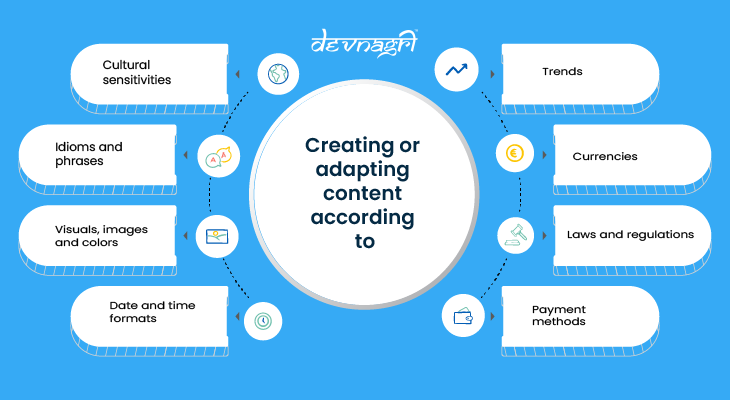
Long-form content localization is the adaptation of longer pieces of written content such as articles or guides for a specified region through English to Kannada Translation or other. The adaptation process goes beyond mere translation from one language into another. Localization involves translations with accuracy, but it also has to do with making the translated content sound natural and pertinent. While localizing their long-form content, the businesses should be cognizant of cultural norms and practices. For instance, visual images and designs in your marketing contents may even be adapted to fit cultural standards.
After the localization process begins, a company will have done market research to narrow down the potential target markets and set a translation process. Once the leaders have picked their target market, they can start factoring in which translation tools and methods best fit the companies’ need while translating long-form content. The correct method depends on the company’s quality, turnaround time, and cost goals for each project. Translating long-form content usually tends to be time- and cost-heavy, so careful planning is warranted.
Unless licensing is applied, the process of localization can become tricky when managing multilingual projects, and there is no centralized system in place. Therefore, localization project managers could face a demanding workload performing manual tasks such as copying and pasting strings for translation across spreadsheets. Hence, to handle the multilingual production of content, global companies rely on translation APIs such as Devnagri AI.
Devnagri AI is the complete localization solution to plan and execute everything under a single roof on its cloud platform enabled by AI. It lets you automate those tiring manual tasks and set up custom translation workflows according to your project’s specified goals. These workflows can route your long-form content through AI Translation from Devnagri AI, giving you quick and cost-effective localized content in minutes instead of days or weeks required in traditional translation methods. Any TMS like Devnagri AI can help you give a boost to your localization process for shipping multilingual long-form content like a breeze.
5 Advantages of Localized Content
Localizing content offers an opportunity for businesses on numerous fronts. According to a survey of 29 countries, 76% of online shoppers will more likely purchase products where information is available in their native language. Moreover, 40% will not purchase anything from websites that do not speak their language, creating the relevance of localizing content when diversifying into a new target market.
More benefits of localized content include the following:
- Attract New Audiences
Domestic markets can be saturated, especially if you have maximized your reach. Entering different target markets will allow your business to reach a new audience and boost overall sales.
- Have a Competitive Edge
Localized content performs better with international audiences in helping consumers understand your offer. This makes way for building local trust and recognition as you build out your area. Hence, it is the local population that takes time to digest the process of conversion, and such localized content will put you ahead of the pack in international markets with truly global positioning.
- Cost-Effectiveness
Localizing content cuts customer support costs and helps avoid serious blunders that arise from misunderstandings. Thus, it pays dividends in years to come. The audience will be confident in getting the correct information in their first language, making them a lot more likely to buy your service or product.
- Better SEO Reach
Your target audience searches the web in their vernacular. Therefore your translation process should include localizing the meta tags, title tags, and URL structure to optimize discoverability. Thus, localized content will direct organic traffic to your web page. Moreover, an additional English to Malayalam Translation and English to Kannada Translation can increase visibility in regional markets.
- Forced Expansion
After successful forays into one target market, businesses can speed up entry into subsequent international markets. You can implement your pre-established system in adding translations or expanding to new languages. Even though each audience will demand its own strategy, generally speaking, the steps taken on that strategy will be similar.
Exploring Different Types of Long-Form Content
Upon deciding to enter a new market, what must be weighed in is the value of content that has to be localized. The answers to this tie in with what your business offers and the kind of content that is valued by your target audience.
Tech companies should place priority on localization of product guides and user manuals, whereas service-based businesses may relay their information using blogs or case studies. Engagement and results are driven by market research.
A few common types of long-form contents that may benefit localization include:-
- Business Reports
- White Papers
- Blog Posts
- EBooks
- Videos and Podcasts
Long-form Content Localization Best Practices: How to Build a Successful Strategy
A complete global localization strategy is an upfront investment. It saves money in the long run. However, without a plan, the businesses waste resources on poorly translated content, miss opportunities to connect to its target market, and leave impact in international markets.
Here are four best practices regarding content localization to follow when creating your localization strategy:
-Research Your Target Market- Know cultural preferences and modes of communication.
– Decide What Content to Localize- High Impact- Create a priority on what to localize.
– Choose the Right Translation Solution- AI Empowered & People Translation.
– Bring SEO into Your Translation Process- This helps in optimizing the regional search terms for example English to Malayalam Translation and English to Kannada Translation.
Leverage Your Content Localization Strategy with Devnagri AI
Content localization is the bridge to international success. With local alignment in terms of language and culture, customer engagement will grow, trust placed in the business will increase, and new markets will open. English to Malayalam Translation and English to Kannada Translation create ways for businesses to reach their local audiences during communications with many has-a effects.