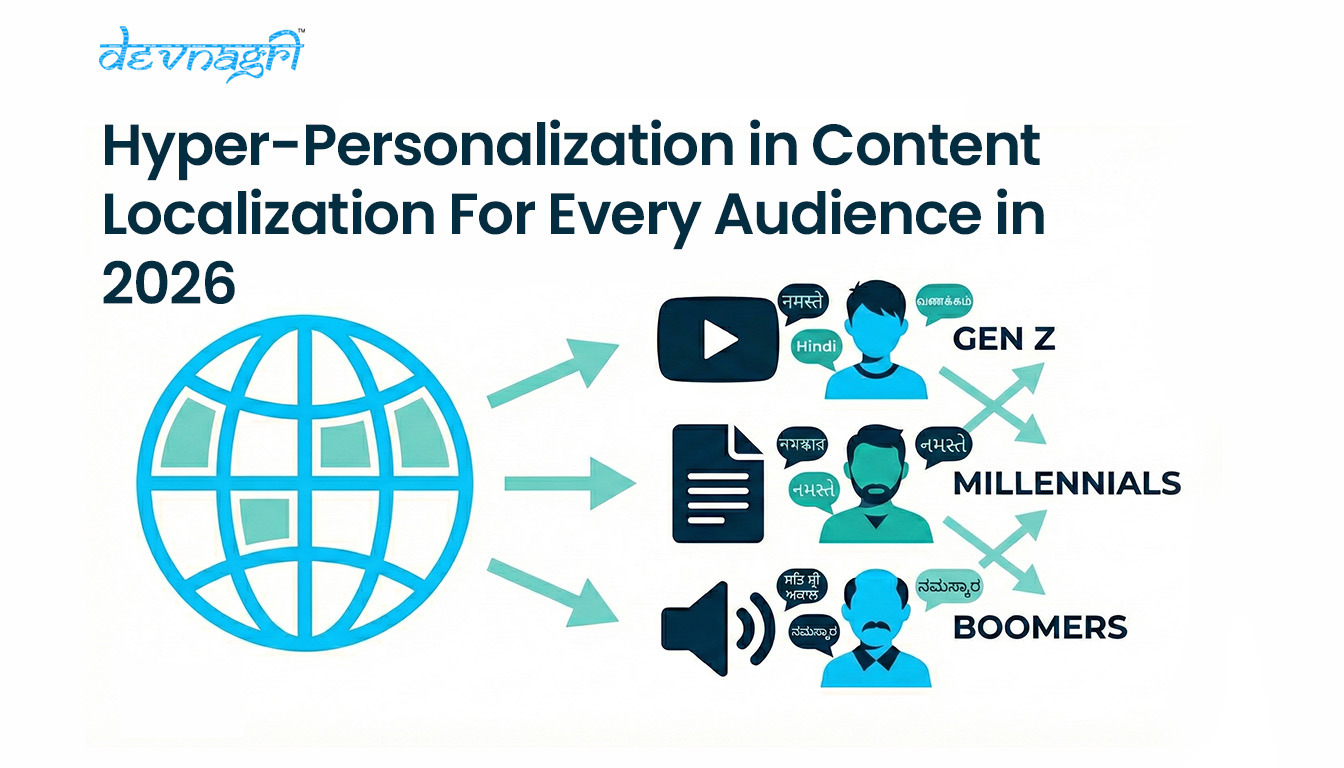
In 2026, content teams will be graded not only on how well they translate English into Hindi or other regional languages. The next big thing is hyper-personalized localization, which means customizing material not only by language but also by dialect, cultural context, personal preference, and when it is used. Brands that get this change right can increase engagement by 30% and purchase intent by 20–35% compared with generic methods.
The hard part is putting together the data, AI, workflow, and governance architecture so they work across all Indian languages. This means that C-suite executives should not see English to Hindi translation and Indian language translation as costs, but as ways to expand, stand out, and build trust. The rest of this blog covers the landscape, analytical frameworks, realistic case studies, quantification, risks and opportunities, and strategic advice.
Multilingual Market Landscape in 2026
Localization has long meant: translate from English to a target local language, adapt a few visuals, maybe adjust currency or date formats. But the environment has changed. According to McKinsey & Company, 71 % of consumers now expect personalized interactions, and 76 % become frustrated when brands fail to deliver. (source) Meanwhile, Deloitte research shows that brands embedding personalization into core experience strategy have increased by 50 % since 2022. (source)
In India and other multilingual markets, the translation dimension remains foundational: English to Hindi translation, and broader Indian language translation (such as Bengali, Tamil, Marathi, Telugu) are essential. But the real opportunity lies beyond, to hyper-personalization and hyper localization.
Reasons to Hyperpersonalize Content in 2026
Based on study inputs, three interrelated dynamics emerge.
1. Engagement & Conversion Uplift
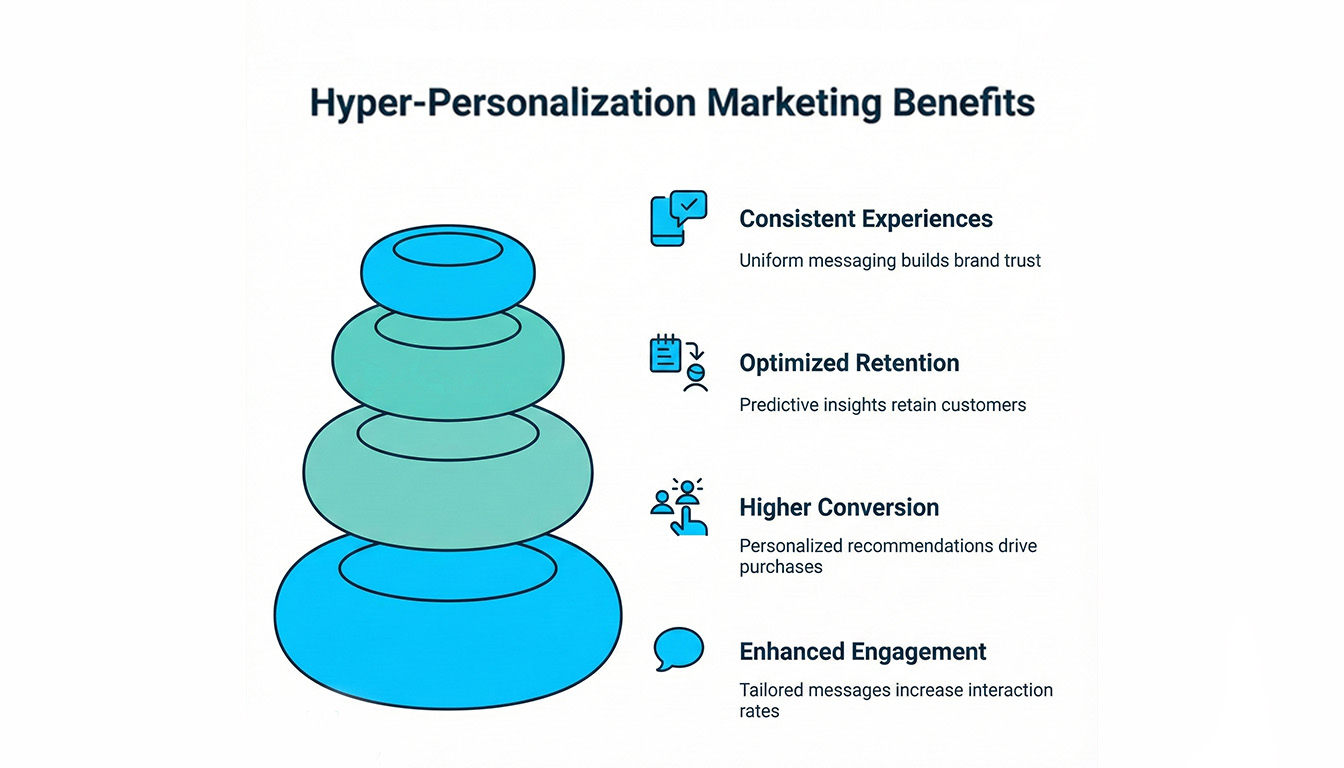
Hyper-personalization can increase engagement by up to 30% in target markets. Also, compared to generic content, predictive analytics and adaptive messaging can boost conversions by 20% to 35%. So, localization is no longer only a matter of hygiene; it has a direct impact on business ROI.
2. Multimedia & Micro-audiences
The research emphasises micro-audiences and multimedia: visual cues, idioms, layout, tone, device context, even AR/VR or voice-over in a regional dialect. That means strong translation (English to Hindi, Indian languages) alone is insufficient. For example, Hindi content for a Delhi urban commuter will differ meaningfully from Hindi content for a Lucknow tier-2 user. Both language and cultural framing matter.
3. Scale, Automation & Ethics
Generative AI + machine learning now enables real-time content adjustments and adaptive messaging for each individual. Brands that use AI-powered localization on a large scale say that their customers are much happier. 95% of companies report increased satisfaction. At the same time, ethics are vital, like respecting people's privacy, being honest about personalization, and knowing about other cultures. This becomes a liability rather than an asset without governance.
Case Insights (Hypothetical but Realistic)
Imagine a global consumer brand expanding into India. They have English content and one standard Hindi translation. In 2026 they transform into hyper-personalised localization:
- They break down Hindi speakers into micro-segments: "Urban Delhi Hindi commuter","Tier-2 Lucknow Hindi regional user", "Rural Hindi-speaking user with feature phone."
- For each segment, they create localized content: visuals of metro rush for urban; visuals of local market for tier-2; simple layout for feature phone scenario. Tone shifts: from "we help you conquer your day" (urban) to "आपका भरोसा, हमारी समझ" (regional).
- Using a generative AI engine, variants for video, audio, and static content are created; analytics identify which variant performs best (predictive modelling).
- Results: engagement in the regional micro-segment jumps by ~28 %, conversions increase by ~22 % over baseline generic Hindi translation.
While synthetic, this mirrors empirical research showing conversion uplift of 20-35 % with advanced personalization.
Opportunities
You need to be able to translate between Hindi and English and between Hindi and other Indian languages if you wish to do business in India. But hyper-localization can help you get more people to buy from you.
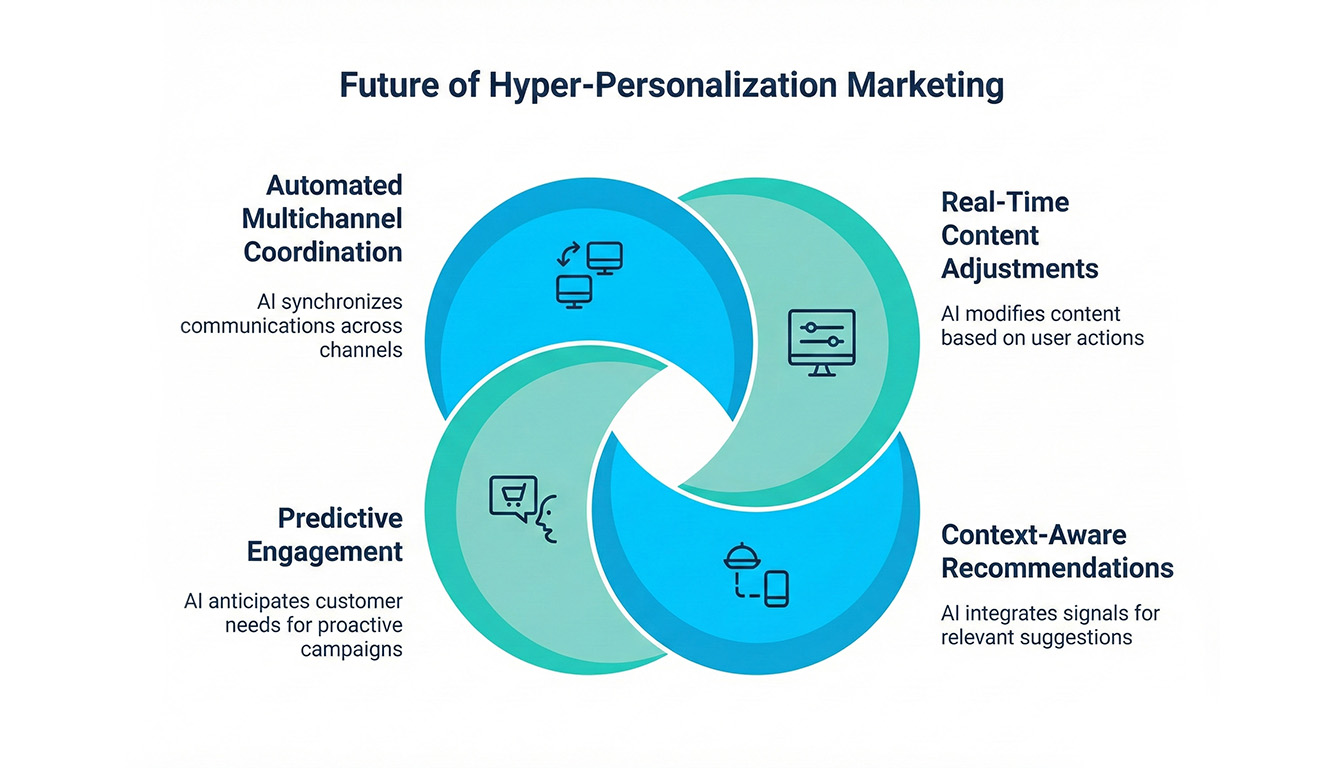
Real-time adaptive content helps you get into the market faster, makes your content more useful, and saves you money.
Building a translation engine that can grow with your business is a good idea since it brings your product to market faster, costs less each time you update it, and keeps your brand message the same in all areas.
Strategic Recommendations
1. Define clear KPIs for your localization and personalization efforts: e.g., variant-specific engagement lift (target: +20-30 %), conversion uplift (target: +20-35 %), cost per localized variant reduction.2. Invest in your localisation engine: Tools to automate translation (English to Hindi and other Indian languages), variant generation (dialect, visuals, layout), and analytics feedback loops.
3. Segment audiences deeply: Don't just treat Hindi speakers as one block, map dialects, region, device type, and user context (mobile vs desktop vs feature phone).
4. Apply the five promises of personalization (adapted from BCG's framework and popular in personalization strategy):
- Empower me: Give users a choice of language/dialect and control how content is delivered.
- Know me: Use data to anticipate needs, e.g., a Hindi user in Lucknow expects a particular idiom, device context.
- Reach me: Use the right channel at the right moment (app push, SMS, feature-phone IVR) and in the proper format.
- Show me: Visuals, layout, tone tailored to region and culture.
- Delight me: Continually optimise through testing and build loyalty via locally relevant content.
6. Pilot, measure, scale: Choose one primary language (like Hindi to English), one place (like Delhi NCR and the Hindi belt around it), and one type of content (like video and social). Check the results, make improvements, and then add other Indian languages and dialects, such as Tamil, Bengali, and Marathi.
7. Build talent and partnerships: Hire language specialists, cultural localizers, data scientists, and AI prompt engineers. Partner with platforms like Devnagri which specialise in Indian-language translation and AI workflows, but integrate them into your broader localization engine, not treat them as a isolated provider.
Conclusion
"Localization today is not just about speaking their language, it's about inviting them to recognise themselves in your message."
In 2026, hyper-personalization in content localization must be anchored in analytics, AI-enabled workflows and cultural intelligence. For companies executing English to Hindi translation and Indian language translation, the leap from basic localization to hyper-personalized experiences will mark the difference between follower and leader. If your current question is still: "Which languages shall we translate into?" then you're already behind. The real question now is: "How uniquely should each micro-audience feel the message was crafted just for them?"
Make the engine. Set the KPIs. Build the talent. Govern the data. Then lead the localization frontier into hyper-personalization.
FAQs
Q:1 What is hyper-personalization of content?
A:1 Hyper-personalization means tailoring content for each individual (or tightly defined micro-audience) by using real-time data, AI and analytics.
Q:2 What is hyper-localisation?
A:2 Hyper-localisation goes beyond translation into regional language, it localises dialect, idioms, visuals, layout, cultural references, even device context and usage patterns. It treats each micro-audience as its own, not just one version for each language.
Q:3 What are the five promises of personalization?
A:3 Using the best strategy frameworks, the five promises are:
1. Allow users pick how material is delivered
2. Understanding the wants and situation of the user
3. Getting to me at the right time and through the correct channel
4. Customizing visuals, tone, and layout
5. Surprising or going above and beyond
Q:4 What is the difference between personalization and hyper-personalization?
A:4 When you personalize something, you normally divide your audience into groups and make material that is right for each group. Hyper-personalization is treating each micro-audience or even person as if they were one of a kind by using real-time data, AI, and micro-segmentation.