Businesses are doing a wonderful job providing excellent products and services, along with effective marketing, but client retention remains the biggest challenge in this competitive market. Higher competition sets higher expectations, and traditional processes are not at all cost-effective or practical in such situations. Consistent, high-quality support is much required as well as challenging.
This challenge increases once the business scales vertically in terms of customer base or cross-selling and majorly when the growth is horizontal, spanning across the markets, especially tiers 2 and 3. The biggest problem in such a market is communication, where language is a problem. However, language is a major bridge connecting people, working as a base layer of infrastructure to help businesses expand in the markets.
Diversity in the Indian markets extends beyond cultures to encompass languages. Customer support is under constant pressure because more people are contacting them, customers have higher expectations, and they need to respond quickly. It's no longer cost-effective or practicable to use traditional support models that depend on humans. As companies grow and service more clients, it gets much tougher to give them constant, high-quality support.
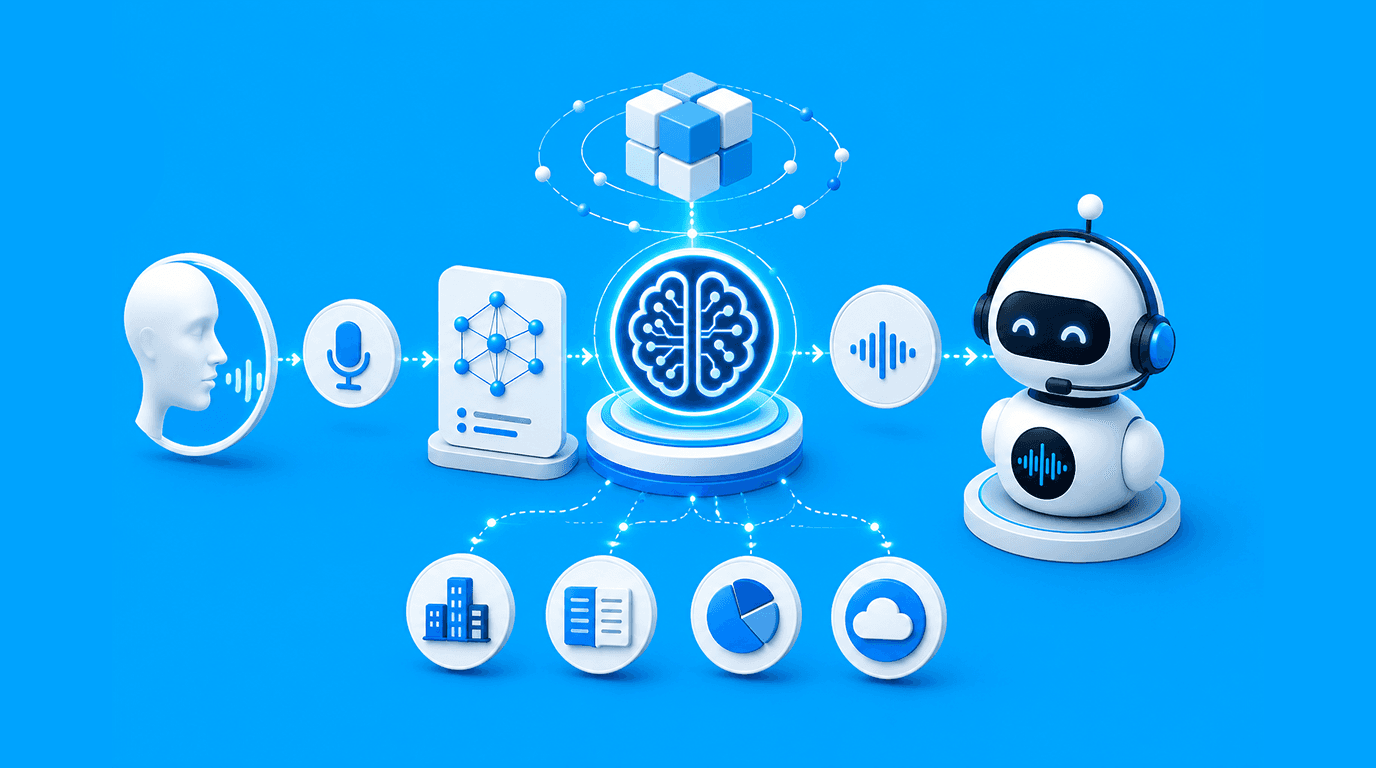
AI chatbots for customer care are no longer just an option; they are already a normal part of the business. Businesses can automate a lot of customer care operations while still being quick and dependable by using natural language processing (NLP), machine learning, and workflow automation. This transformation represents a significant shift in the planning and execution of support activities.
The Structural Challenges in Customer Support
Customer support teams today face three interconnected challenges: volume, latency, and cost.
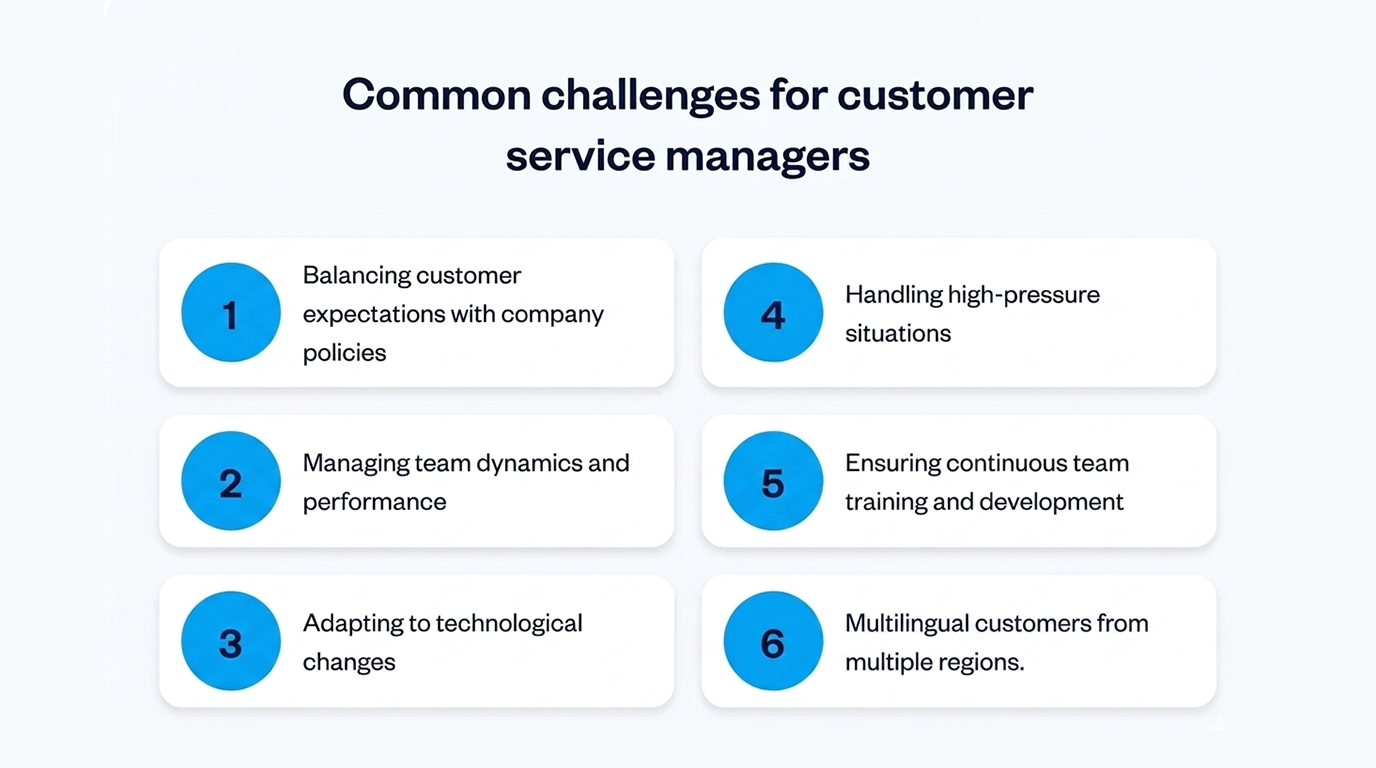
- More inquiries: Digital channels have brought in more questions, and they typically ask them in the same way over and over again.
- Response time: People want responses straight away, especially on websites and messaging apps.
- Cost inefficiency: If you hire more people to work directly with customers as demand rises, costs will go up unevenly.
These problems get worse in markets with more than one language because dealing with different languages costs more. The main problems don't get better when you add more support teams in the usual way.
Understanding AI Chatbots for Customer Support
AI chatbots are computer programs that can have conversations that sound like people and answer questions on their own. There are two main types of them:
- Rule-based chatbots use scripted answers and decision trees that have already been set up. Works well for structured, predictable queries, but not very flexible.
- Language AI chatbots use natural language processing (NLP) and machine learning to figure out what people mean, what they are talking about, and how language changes. Over time, these systems improve and can also manage unstructured conversations in various languages.
The AI customer support chatbot addresses customer grievances and is also effective for customer retention. They are able to pick up on intent, retain some level of context across interactions, and even read basic sentiment signals, which helps in shaping responses that feel more relevant and appropriate to the situation.
Core Use Cases of Chatbot Automation
AI chatbots usually show the most value in interactions that repeat. Not all support queries fall into that category, but a significant portion does, and that is typically where automation starts getting used.
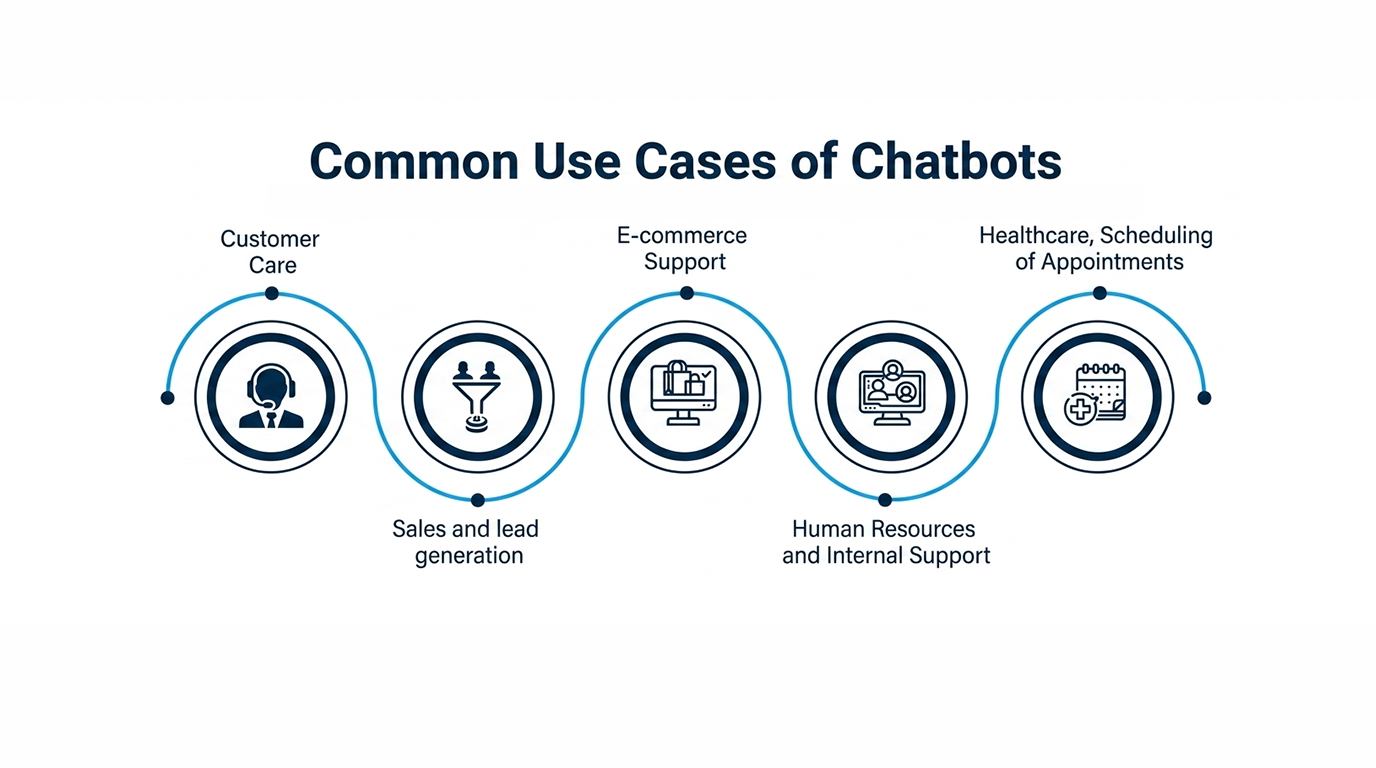
- FAQ Resolution: A large number of incoming queries are fairly standard. These can be answered without involving an agent each time, which reduces workload and keeps responses more aligned, although slight variations still happen in practice.
- Ticket Resolution:Routine issues can be picked up, sorted, and sometimes resolved at the first level itself. When things are less straightforward, they move to human agents. The handoff isn't always perfect, but it usually goes faster than doing everything by hand.
- Getting Customers Started:Early-stage interactions, like onboarding or basic setup, often need simple guidance. Chatbots can assist here by walking users through steps. It does not cover every scenario, but it removes a fair amount of initial confusion.
- Order Tracking and Status Updates: Many users just want to know what is happening with their request or order. These are frequent, low-complexity queries. Chatbots can send updates almost right away if they have access to the system, instead of adding to support queues.
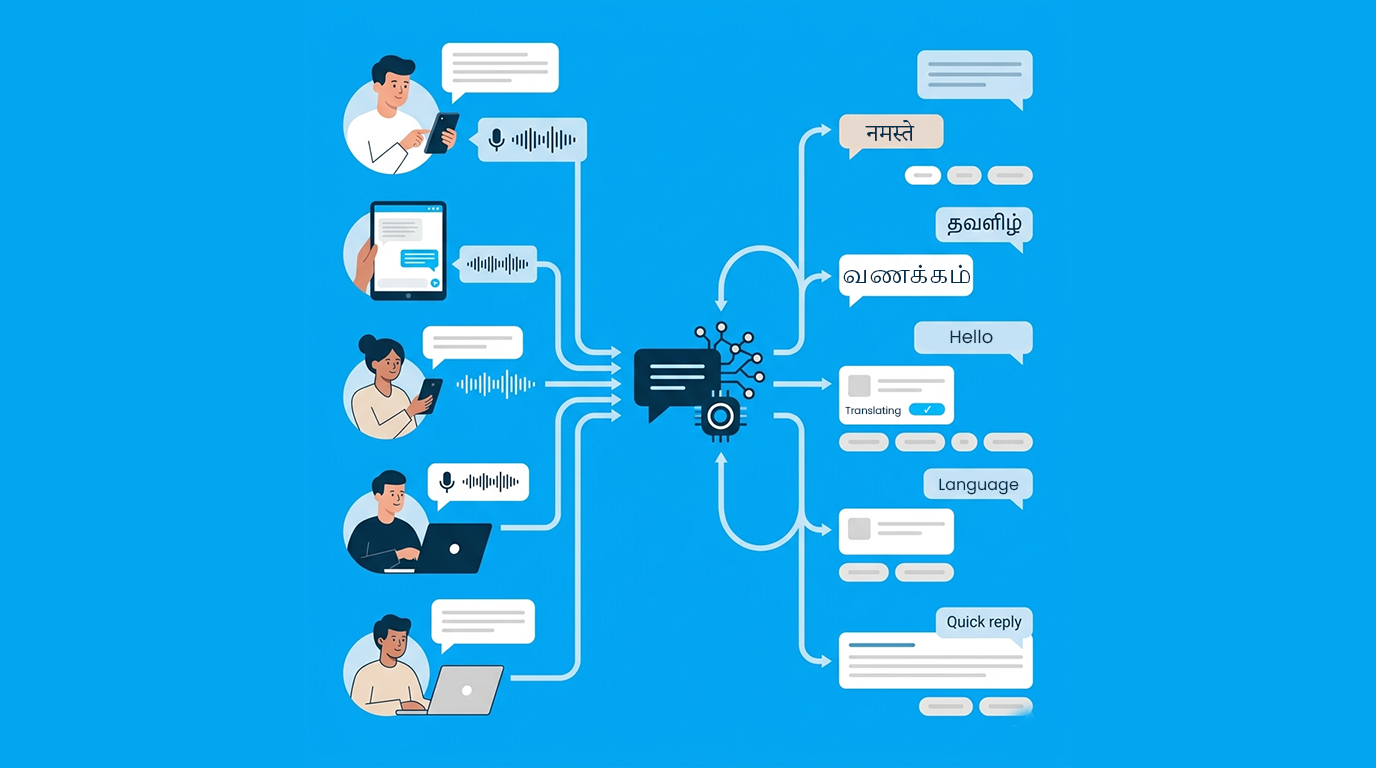
- Manage Multiple Languages: Help for more than one language Managing more than one language usually makes things harder to run. Language AI lets you handle responses in different languages within the same system. It makes things easier to some extent, but it doesn't get rid of all the edge cases or subtleties.
Research insights show that by 2027, chatbots will become the primary customer service channel for a majority of organizations.
Where to Integrate Chatbot in an Existing Customer Support System?
For chatbot automation to deliver measurable value, it must integrate with existing systems. If that integration is partial or loosely implemented, the chatbot may still respond, but it often falls short of actually resolving things end to end:
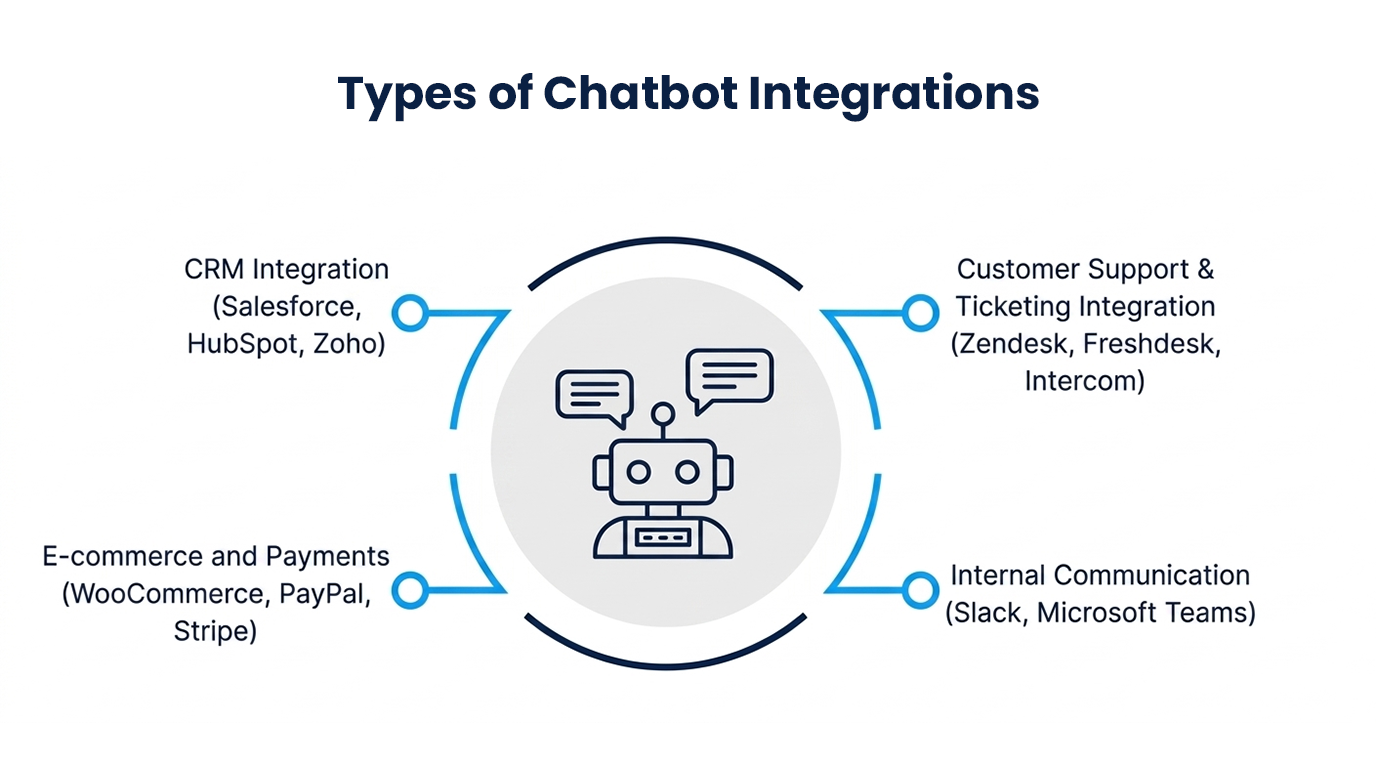
- CRM platforms keep track of customer history and allow for personalization so that interactions don't seem disconnected or repetitive.
- Helpdesk tools make it easier to create tickets and report problems, especially when you can't get a solution right away.
- IVR systems for voice-based interactions that employ the same logic for channels that are usually kept apart
- A lot of client interactions start and continue on messaging apps like WhatsApp and web chat
- Knowledge bases that can still offer you correct and fairly consistent responses even after you ask more questions of different types.
Effects on Business and Benefits
AI chatbots don't always help with customer service in the same manner. Some benefits are clear right away, while others show up as the system learns to deal with real-life situations.
- Faster response times: Many questions receive immediate answers. Not every interaction gets faster, but the time you have to wait for support to respond is getting shorter.
- Cost efficiency: Teams do not need to expand at the same pace as incoming demand. The cost curve flattens a bit, though it rarely drops outright
- Scalability: During high-traffic periods, the system continues to respond without the same visible pressure. It does not remove strain entirely, but it absorbs more of it
- Consistency:Answers begin to look more aligned across channels. There are still edge cases, but the variation seen in manual responses becomes less frequent
- 24/7 availability: Support does not really “close” anymore. Queries can be raised and addressed at any time, even if the depth of resolution varies outside typical working hours
Deloitte notes that organizations implementing AI-driven customer service solutions report significant improvements in efficiency and customer experience metrics.
Implementation Framework for Chatbot Automation
A structured approach does matter here, although in practice it is rarely as linear as it sounds. Most implementations move back and forth between steps before things begin to settle.
- Identify High-Impact Use Cases: It usually makes sense to start where the volume is high and patterns are relatively clear. Not everything needs to be automated at once, and trying to do that early often creates more friction than value.
- Make Training Data: Past customer interactions become the starting point for training intent recognition. The data is not always perfect, so it usually needs some cleaning and testing before it works reliably.
- Combine Systems: There needs to be some level of connection between the CRM, helpdesk, and backend systems so information can move without friction. If that layer is not strong enough, the chatbot may still respond, but the replies can feel disconnected, since the context it relies on is incomplete.
- Pilot Deployment: The initial rollout tends to happen in a limited scope. Even after integration, things are not fully “ready” in the strict sense; early usage usually reveals gaps that were not obvious during setup.
- Ongoing Improvement: This part goes on forever. People watch interactions, modify models, and get better at things over time. There is no set end point; instead, things get better slowly over time as people use them.
Devnagri’s Chatbot Role in Multilingual Customer Support Automation
Devnagri AI adds a multilingual layer to customer service systems. The idea is fairly simple: companies don’t need to build separate setups for every language anymore, but in practice, that’s where a lot of complexity usually sits.
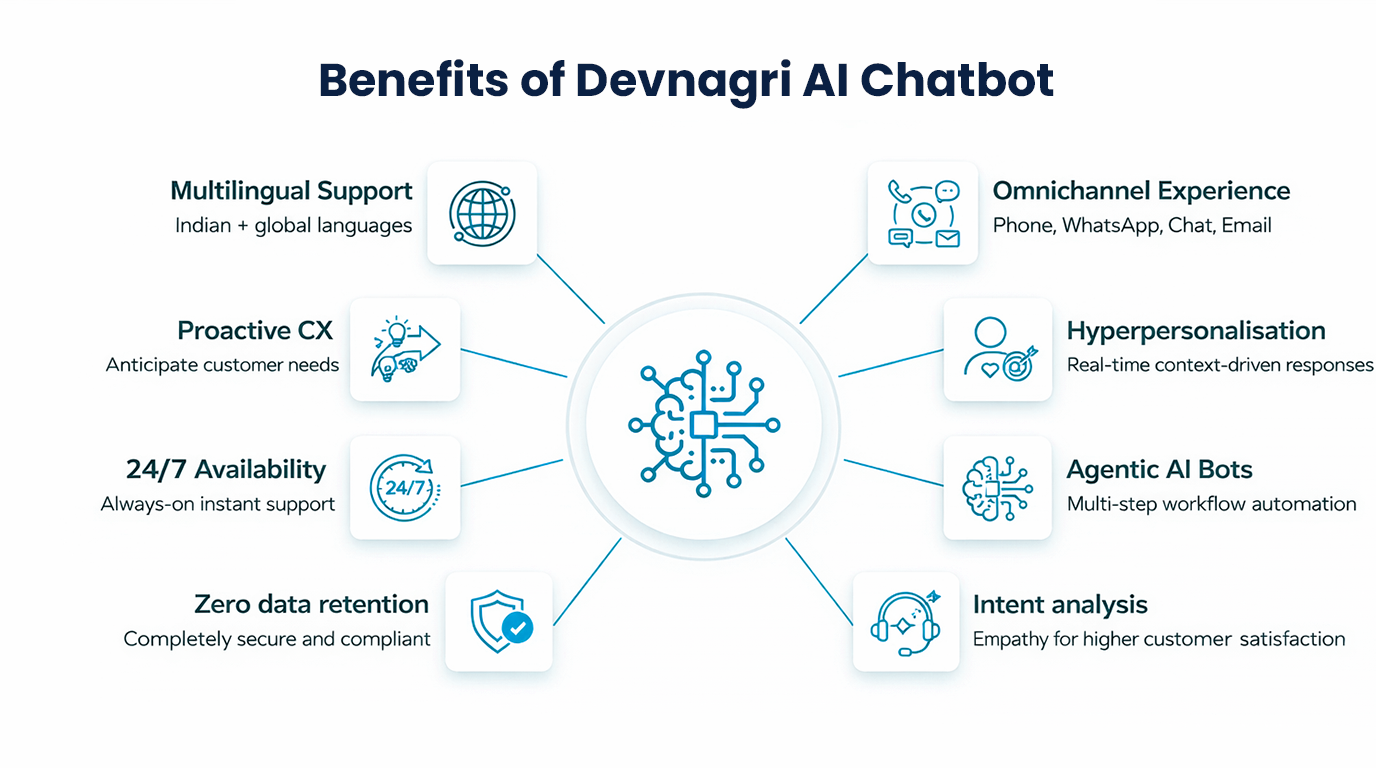
- Automated Grievance Management: When tickets or complaints come in regional languages, the system takes over a larger part of the flow. Translation and routing are not handled manually each time, which removes some delays. Not all of them, but enough to make the process feel less fragmented.
- Auto-Translation and Analysis: Incoming queries are translated and grouped as they arrive using a domain-specific Small Language Model (SLM). The output is not identical every time; phrasing differences still affect it, but the lag that usually builds up in multilingual setups reduces quite a bit.
- Sentiment Scoring and Routing:The system reads tone, or at least tries to approximate it, to decide what needs attention first. Based on language, intent, and severity, cases are routed to relevant teams. However, it doesn't always succeed on the first try, although the frequency of back-and-forth communication tends to decrease.
- Multilingual Response Generation: Responses are generated in the user’s primary language and stay tied to the context of the query. Some interactions go through end-to-end without intervention; others don’t. .
- Seamless System Integration: Devnagri integrates with current CRM, contact center, and ticketing systems. It doesn't stay outside as a separate layer that teams have to switch to. Usually, workflows stay the same, but now they can work in more than one language.
- Improved Operations and Compliance: With less manual translation involved, operations begin to stabilize. Resolution times improve, though not uniformly across all cases. Costs become easier to manage. Over time, customer satisfaction tends to go up. Keeping an audit trail helps with compliance at the same time, and it doesn't add any extra work to your daily tasks.
Conclusion
AI chatbots are changing customer service from just fixing problems to being more proactive and able to grow. Companies that make chatbot automation a key part of their infrastructure instead of just a side tool, will see long-term improvements in productivity, responsiveness, and customer satisfaction.
On the other hand, the long-term consequence is clear: customer service evolves from being a cost center to a strategic tool that helps the firm grow and gain consumers' trust.