Every business that grows beyond one region hits the same roadblock. Communication does not travel as smoothly as the product. Marketing material needs to change. Support documents pile up. Teams waste time fixing errors. Some markets get delayed because translation takes longer than expected.
That is the reality for global expansion. Growth looks exciting, but the practical side is complex. Companies that want to move fast must deal with many languages spoken in India. India alone shows the challenge. There are more than 22 official Indian languages including Bengali, Marathi or Assamese and more that are Most Spoken Languages in India. Businesses focusing on growth need English to Assamese translation and many Indic rare languages, so it’s not easy to talk to everyone. The scale gets bigger as you add global marketplaces.
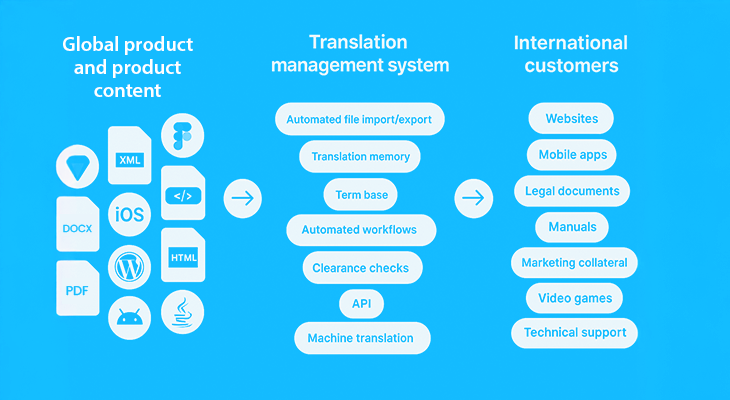
Translation management systems, often called TMS, have become the fix for this. They centralize the work. They keep translation linked to business goals rather than scattered across teams. They also make it easier to balance machine translation, human checks, and automation in a way that saves both money and time.
The value is not just operational. It affects how quickly a product launches. It changes how customers view a brand. It can influence compliance, especially in sectors like finance or healthcare. When the process runs well, businesses can expand faster with fewer risks. That is the return executives are looking for.
Understanding Translation Management Systems
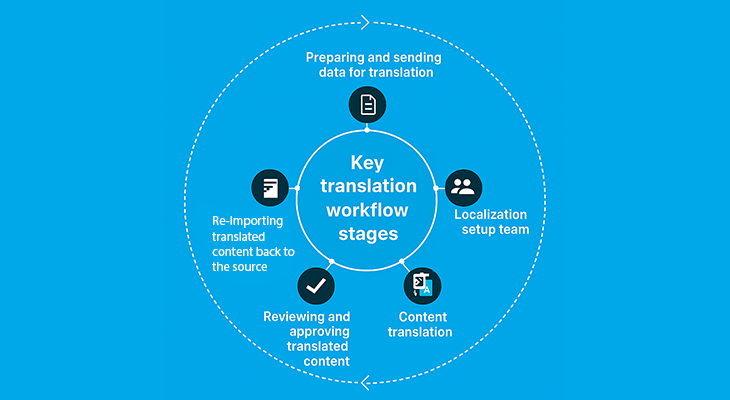
A TMS is more than a tool that stores words. It is a platform that controls translation as part of the business process. In the past, organizations used emails, spreadsheets, and outside vendors to conduct translation. This caused delays, mistakes, and having to do the same thing again and over.
Systems today look different. They incorporate translation memory, machine translation APIs, workflow automation, and review processes. Instead of sending files back and forth, content flows inside one system. Each update is tracked. Each version is stored. Quality checks are built into the workflow.
The difference is scale. With older methods, one product manual in ten languages was already heavy work. With modern systems, the same process can handle hundreds of documents in dozens of languages. That is how global companies keep pace.
The business case is also strong. According to CSA Research, the language services and technology market is worth more than 60 billion USD in 2022 and continues to expand. A large part of this growth is powered by technology-led translation management.
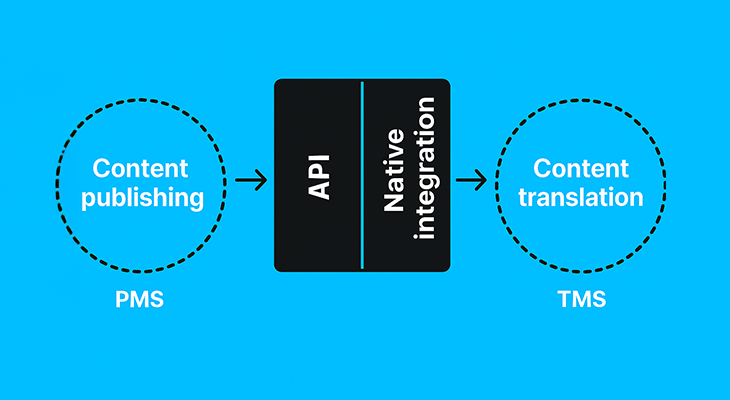
Machine translation APIs are central here. They let companies link systems directly to each other. An e-commerce platform can send product information to the TMS, get translations right away, and publish right away. Most of the text is automated, however human reviewers make changes to important parts. The end outcome is a speedier time to market.
Business Impact and ROI
The question that leaders ask is always the same: what is the return?
Industry data points to clear numbers. Forrester found that companies using AI-driven workflows managed to cut translation loads by nearly half. Handling time dropped by close to 90 percent in some cases. Another study noted that when machine translation was backed by human review, costs per word fell as much as 90 percent. Even lighter automation showed savings between 30 and 50 percent.
Research by Dimension Market Research shows that translation memory and automation tools can improve productivity by 10 to 60 percent. Cost cuts in some organizations have been reported at around 50 percent Dimension Market Research.
The numbers show one side. Practical cases show another.
One consumer goods company had trouble with packaging updates. Every small regulatory change forced a new set of translations. Before TMS, this meant weeks of delay. With a system in place, updates moved in days. Another case involved a financial service provider. Their challenge was compliance. Every translated report needed an audit trail. With TMS, reviews were logged, stored, and searchable.
The benefits go beyond cost. Time matters. Market access matters. In fast-moving sectors, reaching the audience first can decide whether a product succeeds or lags. Translation management is not just an internal efficiency play. It becomes a growth lever.
Key Features That Drive Business Value
Not all features matter equally. Some deliver real business value.
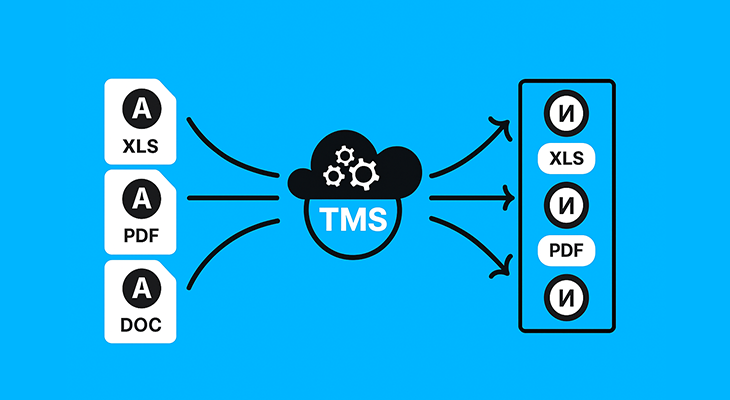
The first thing is to automate. A lot of the routine work is taken care of automatically, things like sending reminders, converting files into the right format, or assigning tasks to the right people. The next important step is making sure everything meets the right quality standards. That’s where built-in review checks and terminology tests come in, so nothing slips through the cracks. find problems before they are sold.
Another is integration. A TMS connects with content management systems, marketing automation platforms, and support tools. This means translation becomes part of the workflow rather than a separate task. Updates flow in real time. Campaigns stay consistent.
Scalability matters too. Businesses rarely stay in one language pair. They start with English to Hindi, then move into other combinations. As businesses move into the North East, there is a growing need for English to Assamese translation. A modern system can manage these changes without needing to be set up again. The same workflows can be used in new markets.
These features make the difference between translation as a slow support activity and translation as a core driver of business expansion.
Implementation Strategy for Business Leaders
Deciding to invest in a TMS is one step. Rolling it out is another. The process works best with a clear plan.
First comes evaluation. Leaders should list existing systems and content types. Marketing, product, support, legal – all have different needs. The TMS must support them together.
Second is vendor comparison. Security, compliance, and integration options should be at the top of the checklist. Executives often worry about data security. Modern platforms address this with encryption, access control, and audit logs.
Third is deployment. Most systems can be implemented in a matter of weeks, not years. Research from Nimdzi shows that structured rollouts often succeed within three months for medium to large organizations Nimdzi. That means benefits arrive quickly once the system is chosen.
Finally comes adoption. Teams need training. Processes need adjustment. Without this step, technology sits unused. With it, the return becomes visible.
Conclusion
Translation is not only about words. It’s about how fast your business can move, how much customers trust you, and how well you follow the rules. Modern translation management systems bring all of this into one place. They reduce cost, shorten timelines, and prepare companies for scale.
For decision makers, the question is not whether translation is needed. That is a given in global markets. The question is how to manage it in a way that supports growth. A modern TMS is one of the few tools that directly links language work to measurable business outcomes.
That is why leaders looking at expansion see it not as a cost but as an investment.