Generative AI has quietly become the default starting point for content creation. Teams use it to draft blogs, write product copy, localize landing pages, and spin up campaigns at speeds that were unthinkable even two years ago. But as more businesses rely on it, a practical reality is setting in, as fluency alone is not enough.
This gap is evident in multilingual use cases, especially in languages such as Odia. English to Odia translation is not just about accuracy. It is about tone, trust, and local familiarity. Generic large language models often miss this. They produce text that is technically correct, yet emotionally distant.
This year, the shift is clear. The organizations seeing real returns are not using generative AI in isolation. They are combining it with contextual machine translation and enterprise-grade language infrastructure, systems that remember terminology, respect industry rules, and adapt language to how people actually speak and read.
The Moment We’re In
A few years ago, multilingual content was a bottleneck. Every new language meant new vendors, longer timelines, and uneven quality. Most teams accepted this as the cost of scale.
But speed created a new problem. When everything is fast, mistakes travel faster too. Many teams discovered that their multilingual content looked fine on the surface but failed in practice. Engagement dipped. Support queries rose. In regulated industries, compliance teams grew uneasy. The issue was not AI itself. It was context loss.
Why Generic LLMs Struggle With Language at the Edges?
Large language models are trained to be broadly applicable. They learn patterns from massive, mixed datasets. That makes them excellent at producing readable text, and unreliable at respecting nuance.
In multilingual scenarios, this shows up in familiar ways:
- Industry terms get softened or generalized
- Local phrasing sounds translated, not native
- The same concept appears differently across assets
In English to Odia translation, this is especially visible. Odia readers are sensitive to tone. A sentence that feels slightly “off” can break credibility, even if the grammar is perfect.
Gartner has repeatedly cautioned that enterprises deploying generative AI without strong governance expose themselves to brand and compliance risk, particularly in customer-facing content (Source)
The model does not know your organization’s history. It does not remember last quarter’s approved terminology. It does not understand which phrases regulators scrutinize.
That knowledge must reside elsewhere.
Contextual Machine Translation: The Missing Layer
This is where contextual machine translation changes the conversation.
Unlike generic generation, contextual systems are trained and constrained by:
- Approved glossaries
- Industry-specific language rules
- Regional usage patterns
- Feedback from real users
Think of it less as “smarter translation” and more as institutional memory for language.
A Deloitte analysis on AI adoption highlights that value emerges not from raw model capability, but from how well AI systems are embedded into operational workflows with precise controls.
This allows generative AI to focus on speed, diversity, and originality while another layer maintains consistency, accuracy, and trust.
Example from the Ground
Consider a digital services business entering Odisha. Their webpage is translated using a popular LLM. The output is quick and straightforward. Within weeks, client feedback shows a pattern. Language feels “formal in the wrong places” and “strange in simple explanations.”
Nothing is technically wrong. Yet something is missing.
When the team revisits the setup, they realize there is no shared glossary. No reference for how financial terms should sound in Odia. No mechanism to learn from past corrections.
Once a contextual layer is added, approved terminology, review loops, and the reuse of validated phrases stabilize the language. Engagement improves, not because the AI got smarter, but because the system did.
Why Enterprises Are Building Language Infrastructure?
This year, forward-looking organizations have stopped treating translation as a one-off task. They are treating it as infrastructure.
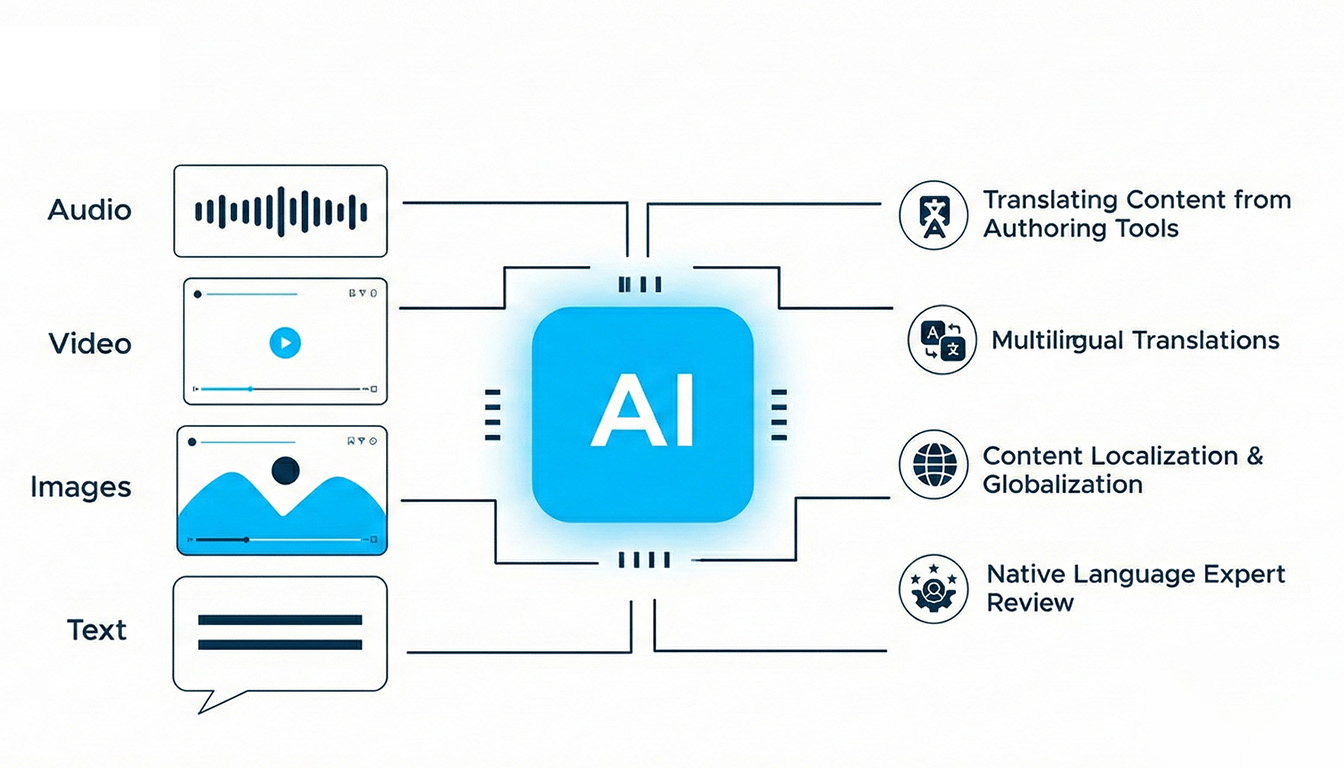
An enterprise-grade multilingual layer does three things well:
1. It governs how language is used
2. It remembers what has already been approved
3. It scales consistency across teams and tools
This is where platforms focused on language AI, such as Devnagri in the Indian market, fit naturally. Not as a replacement for generative models, but as an intelligent layer that aligns AI output with regional languages, enterprise needs, and local trust.
The goal is not perfect language. It is a reliable language.
Why Language Consistency Breaks Before Technology?
Poor technology rarely affects the quality of language in multilingual content programs. It fails because scale breaks consistency.
Initially, teams pay heed. Some pages are thoroughly translated. We discuss key terms. Tone is manually checked. This discipline erodes when content volume grows, new campaigns, product updates, support articles. Teams employ different tools. Old translations are reused without context. Minor deviations accumulate.
Customers notice over time. At first, unconsciously. A sentence sounds strange. A phrase sounds copied. Key terms appear three times on the same voyage. Quietly, trust declines.
This is prevalent in English-Odia translation. Rich, expressive, geographically sensitive Odia. Readers notice even minor language changes. Though readable, the content no longer feels relevant.
Enterprises commonly misdiagnose this. They want a better model or prompt. They need language continuity, a mechanism to ensure yesterday's proper translation informs today's fresh material.
Instead of writing more, contextual AI systems recall earlier decisions. They value authorized language over output. They prevent growth from diluting meaning.
Language behaves like design systems or APIs in mature companies. Reusable. Governed. Predictable. That foundation makes generative AI more potent because it no longer has to guess. This year's modest shift in multilingual content demonstrates that infrastructure, not novelty, is what differentiates.
Opportunities, and the Real Risks
What’s opening up
- Faster market entry without quality trade-offs
- Higher trust in non-English customer journeys
- Lower operational drag from managing multiple vendors
What can go wrong
- Over-automation without review
- Inconsistent voice across touchpoints
- Treating multilingual content as marketing, not risk
As HBR has noted, the competitive advantage of AI depends less on adoption speed and more on how responsibly it is integrated into everyday work.
What CXOs Should Do Now?
1. Audit multilingual content quality, not just output volume
2.Invest early in shared glossaries and context rules
3. Separate creative generation from regulated communication
4. Measure trust signals, time on page, comprehension, support load
5. Assign ownership for language, not just content
These steps are unglamorous. They are also decisive.
Closing Thought
Generative AI has made language faster. Context makes it meaningful. The organizations that win this year will understand the difference and build for it. “In multilingual markets, language is not a feature. It is the system customers use to decide whether to trust you.”
FAQs
Q: How does generative AI help in content creation?
A: It dramatically reduces the time needed to draft, adapt, and localize content. Its real value is realized when paired with systems that govern terminology, tone, and accuracy.
Q: How does generative AI typically create new content?
A: By predicting language based on patterns in its training data. This enables speed but also requires context controls to remain consistent and trustworthy in enterprise use.
Q: How is AI transforming content across languages?
A: AI enables multilingual creation at scale. Transformation occurs when organizations combine AI fluency with contextual machine translation and human oversight, especially for regional languages such as Odia.