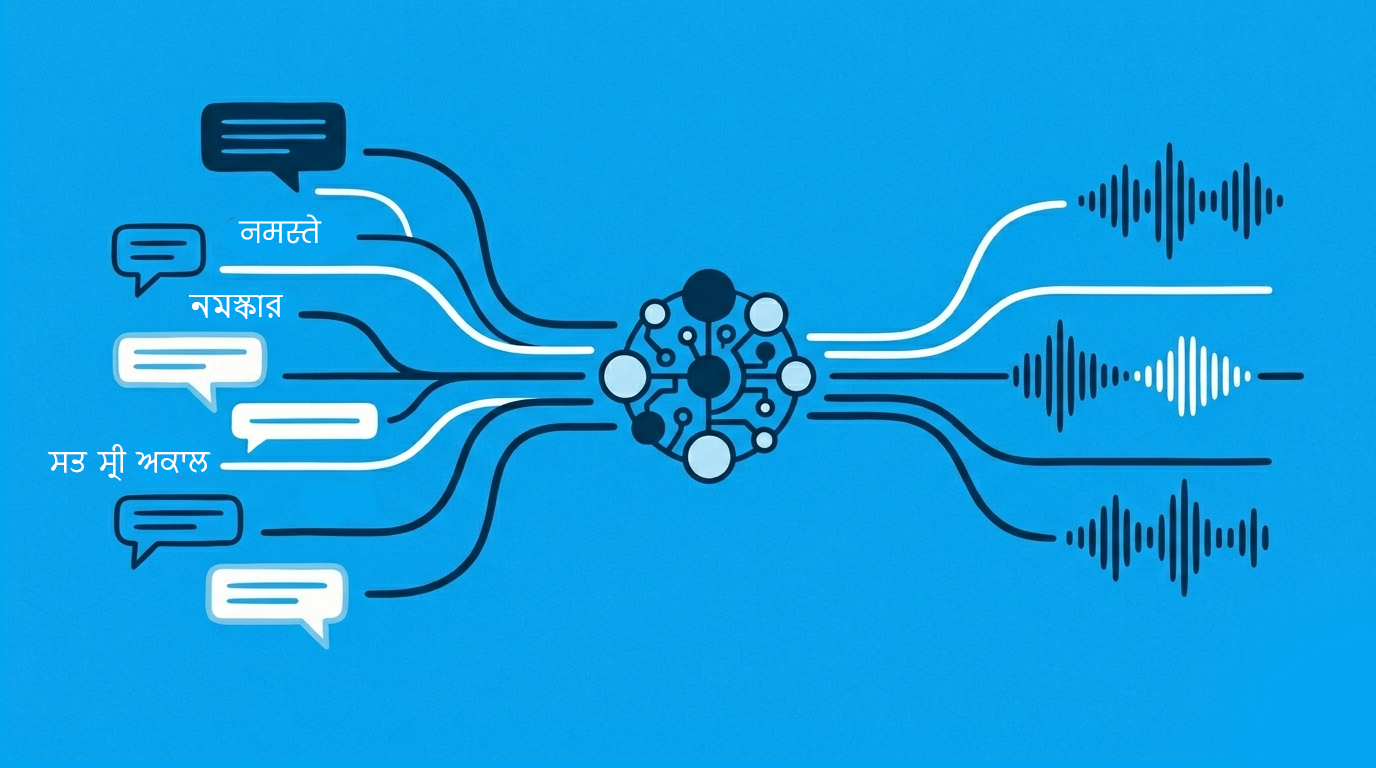
Multilingual text-to-speech AI fundamentally transforms written material into spoken words in multiple languages. The conversion itself isn't the only thing that makes it relevant today. The output has also gotten more natural and flexible. Modern systems don't only "read" text. They also understand it, change the tone, and speak in a way that sounds more like a real conversation.
This changes the voice from a fixed asset to something that evolves over time when used in customer support. Instead of relying on pre-recorded prompts or teams fluent in a specific language, businesses can generate voice responses in real-time, tailored to the customer's preferred language.
How does text to speech AI work in customer service automation?
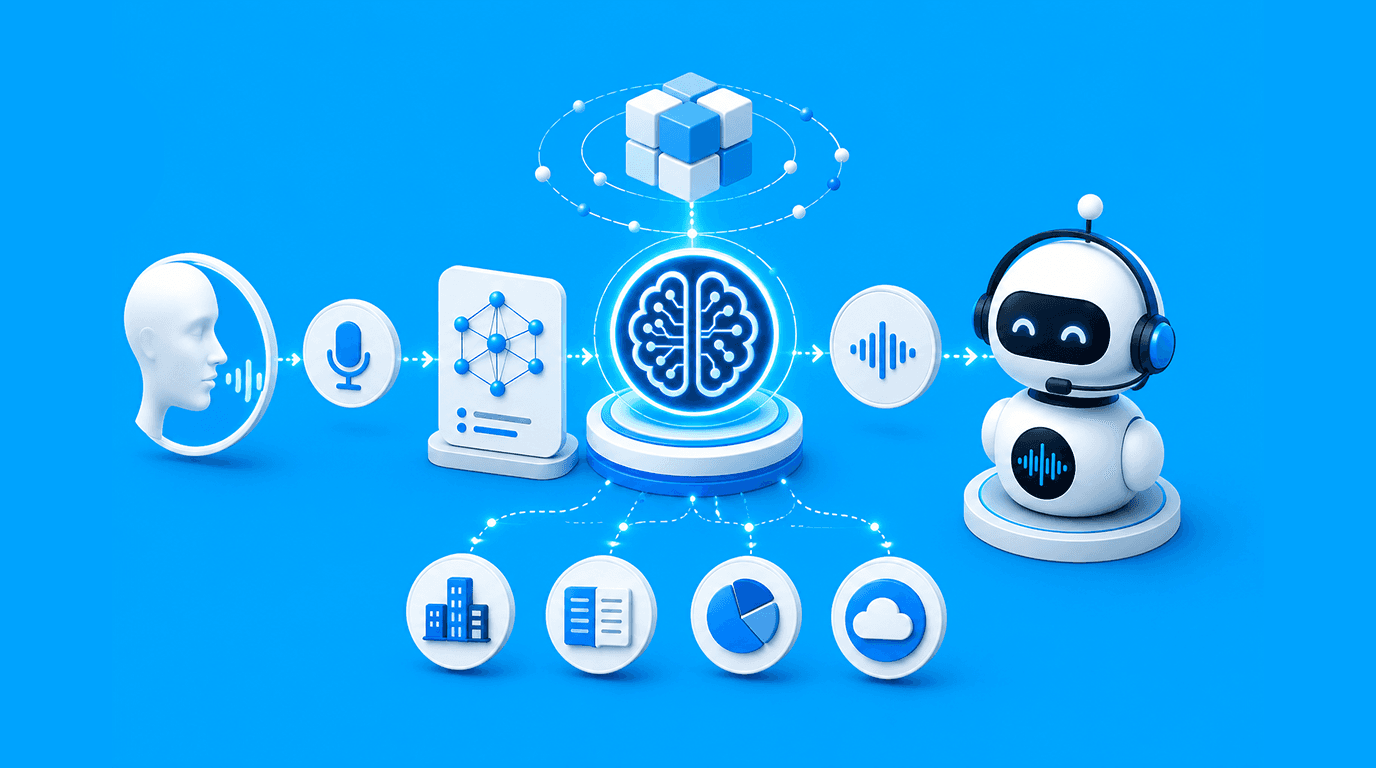
In practice, text to speech AI sits quietly between backend systems and customer-facing channels. It takes information that already exists, transaction updates, alerts, responses, and turns it into speech in real time.
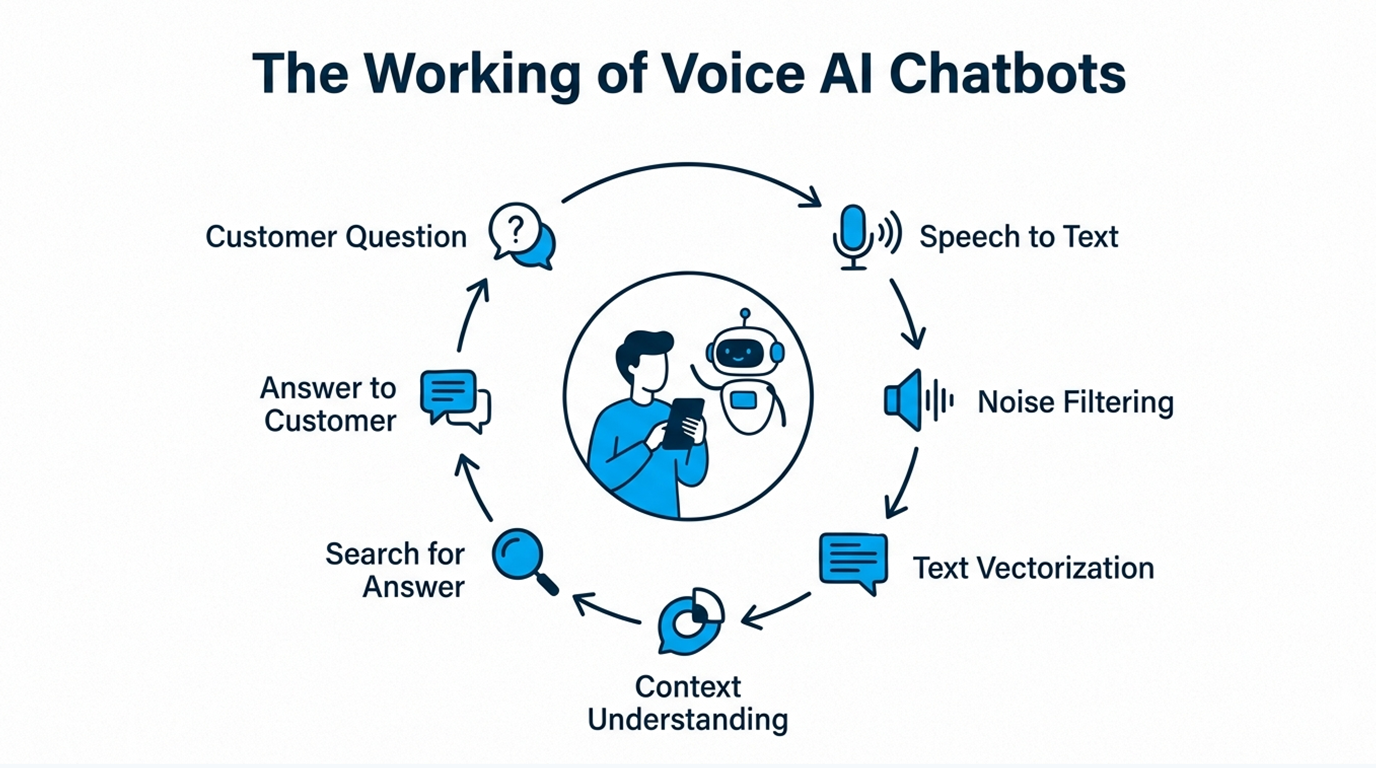
A typical flow is straightforward. A customer action or system trigger generates text. That text is interpreted for context, converted into phonetic structure, and then synthesized into audio. The output is delivered instantly through a call, IVR, or app-based interaction.
What actually happens behind the scenes
- Data comes in from systems such as CRM or workflows
- The system determines context and language
- Speech is generated dynamically
- The output is delivered through a voice channel
The important detail is that none of these processes requires pre-recording. That is what allows organizations to automate voice interactions for customer support at scale without constantly rebuilding assets.
Why is multilingual support important in customer service?
Language tends to be underestimated until it becomes a barrier. When customers are forced to switch languages, even simple interactions start to feel effortful. Over time, that friction adds up.
McKinsey & Company has consistently pointed out that personalization and localization are central to customer experience outcomes. Language is one of the most immediate forms of that localization.
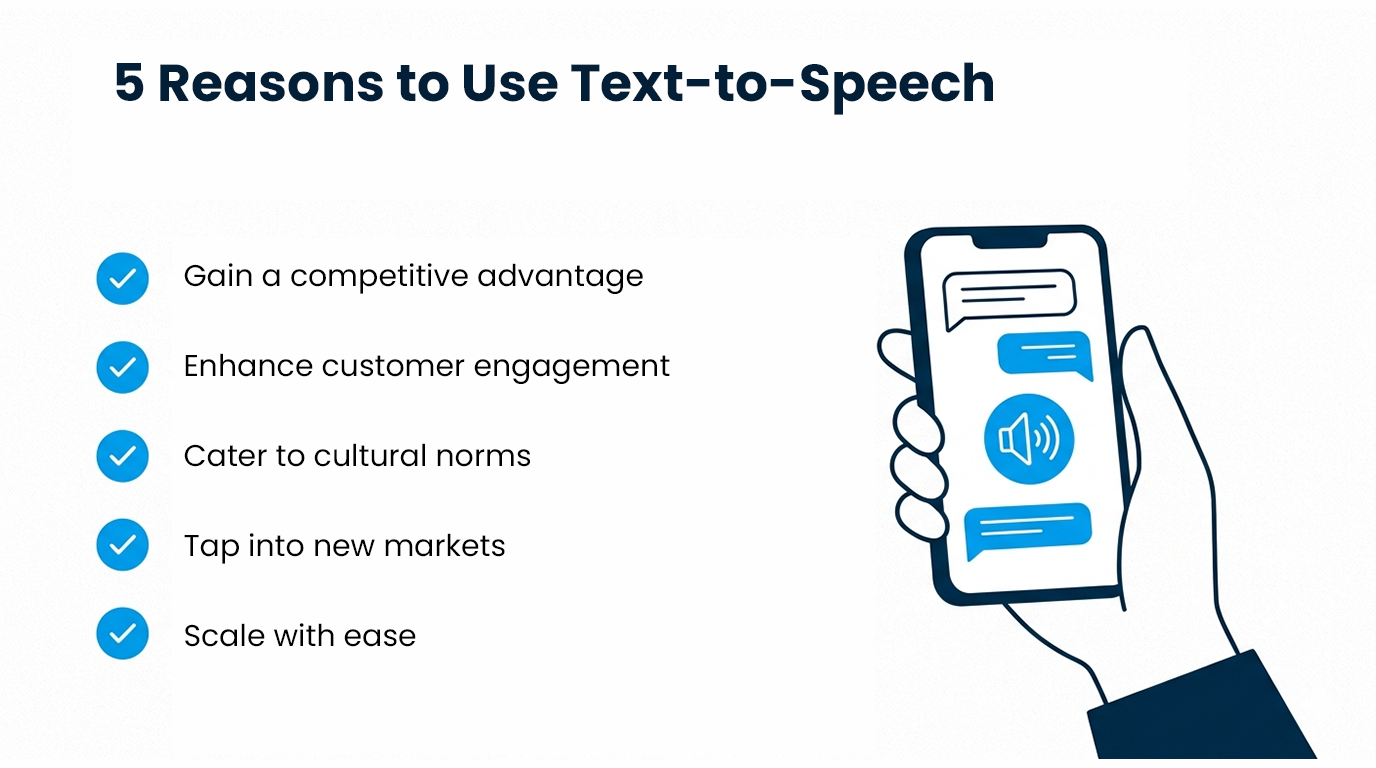
In markets where multiple languages coexist, multilingual capability is not a feature, it is part of the baseline expectation. Without it, service quality is uneven by default.
What problems does multilingual text to speech solve in customer support?
Customer support tends to get more complicated as it grows, language just adds another layer to that complexity. What starts as a manageable setup quickly turns into multiple language teams, uneven service quality, and constant pressure during peak demand periods.
Multilingual text to speech AI changes the way this is handled. Instead of relying heavily on individual agents, it shifts communication toward a more standardized, system-driven approach.
This is where the friction tends to appear:
- Language support scaling: The more languages, the more hiring, training and coordination. These duties are tough to handle effectively over time.
- Consistency: There are scripts, but you never have the same conversation from one agency to the next. This inconsistency might impair clarity and customer confidence.
- Managing volume surges: Response times tend to slide during high demand periods since human teams can only scale so much, so fast.
- Compliance management: Even modest differences in communication might create big dangers in regulated businesses. Consistency is not only ideal, it is required.
Centralized voice generation gives organizations more control of the system. Communication is more standardized, scalable and less subject to human variations.
How does text to speech improve customer experience?
From the outside, the improvement is not dramatic, but it is noticeable. Interactions feel quicker. Responses are clearer. There is less back-and-forth.
Customers do not need to wait for an available agent for routine queries. They receive immediate answers, delivered in a familiar language. That alone reduces effort.
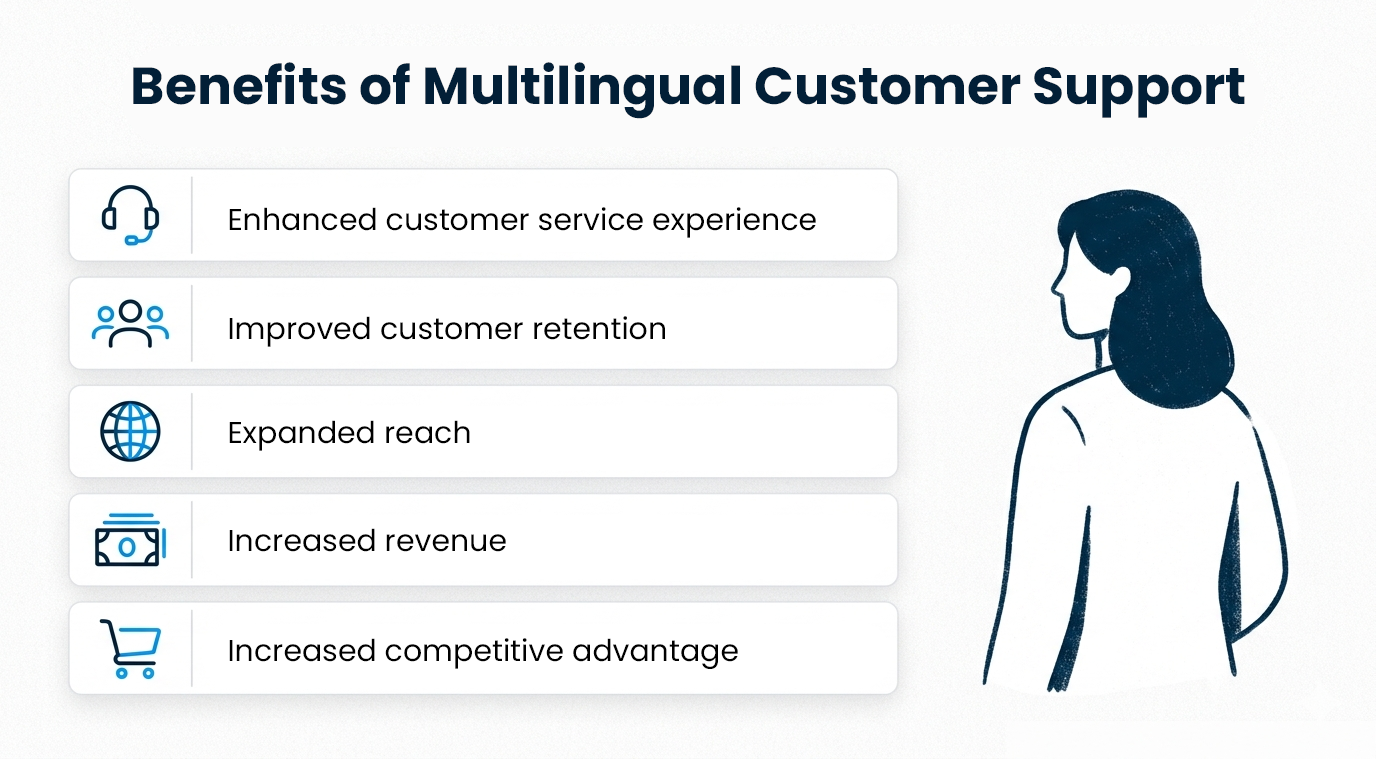
Gartner has observed that conversational AI is reshaping expectations around responsiveness and consistency in service environments. Text to speech AI plays a supporting role in that shift by ensuring that voice interactions keep pace with those expectations.
How does it reduce customer service costs?
The cost benefit is not just about automation replacing people. It is more about changing how work is distributed.
Routine interactions, status checks, reminders, confirmations, can be handled without involving an agent. That reduces the overall volume reaching support teams and lowers the cost per interaction in customer service.
At the same time, organizations can operate with less dependency on large, centralized setups. Voice automation allows for more flexible infrastructure and reduces overhead tied to scale.
Deloitte estimates that AI-driven automation can reduce service costs by up to 30 percent while maintaining quality.
Where can multilingual text to speech be used in customer service?
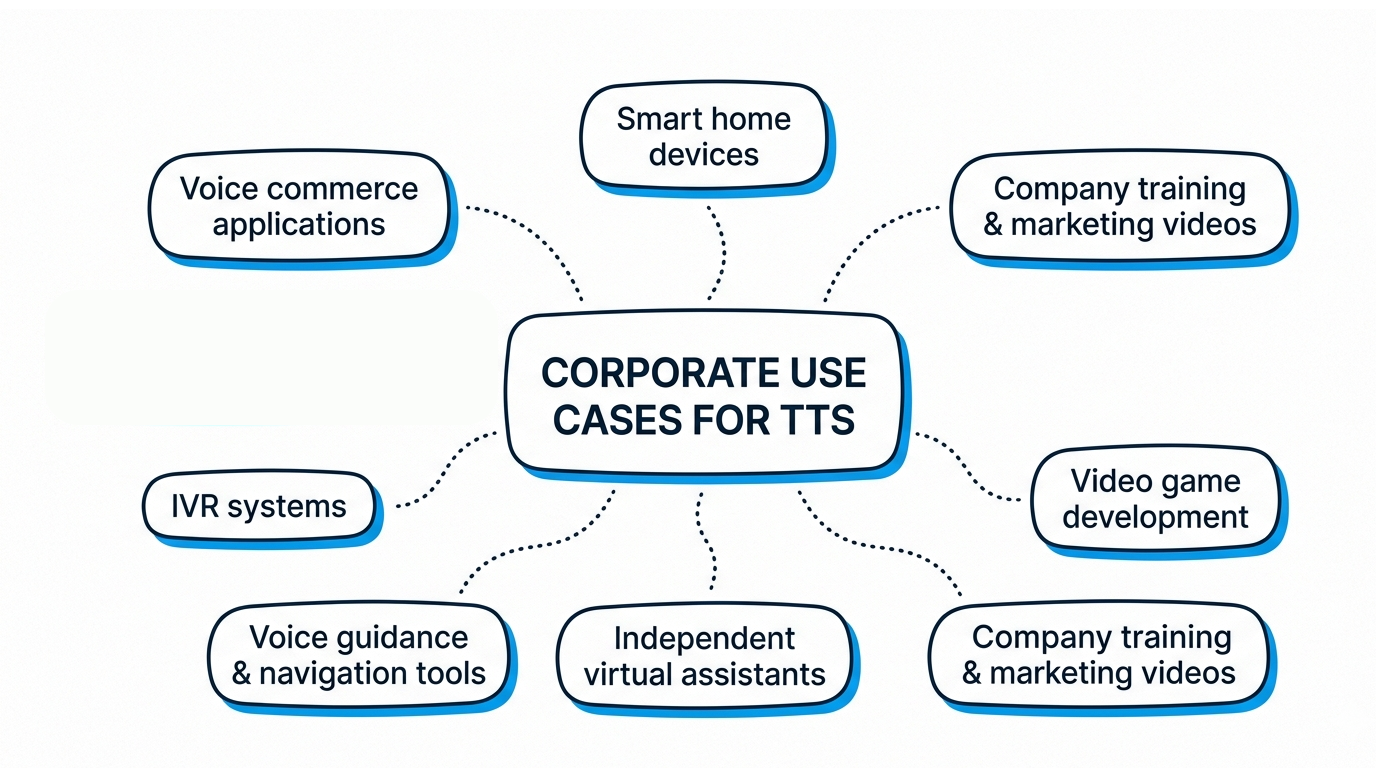
The application areas are not limited to one channel. It tends to show up wherever voice is part of the interaction.
IVR systems
Instead of being locked into pre-recorded messages, responses can be created on the fly. That makes it easier to update information and makes sure customers hear what is actually relevant at that moment.
Outgoing calls
You can deal with high-volume calls, reminders, alerts, and follow-ups without growing teams. The meaning remains consistent, even when expressed in numerous languages.
Customer warnings
Voice notifications can be used in addition to, or sometimes instead of, text messages. This is particularly helpful if accessibility is an issue or if users are more inclined to respond to audio than text.
Self-service help
Customers can receive what they need for simple questions without talking to an agent. It reduces wait times and eases the load on support workers, all while delivering a seamless experience.
How is text to speech different from traditional IVR systems?
Traditional IVR systems were designed around control and predictability. They rely on pre-recorded audio and fixed pathways. Updating them is slow, and personalization is limited.
Text to speech AI changes that structure. Responses are created at the moment they are needed. That means updates happen instantly, and interactions can be shaped by context rather than predefined menus.
The difference is not only technical, it changes how the interaction feels. Less rigid, more responsive.
What are the benefits of using multilingual text to speech AI?
The benefits tend to emerge gradually as systems scale.
- It becomes easier to handle higher volumes without increasing team size
- Communication becomes more consistent across regions and languages
- Customers are able to engage in the language they prefer
There is also an operational advantage that is less visible. When communication is system-generated, it becomes easier to monitor, audit, and refine over time.
Read Also: What Is Multilingual Speech AI: How It Works, Limitations, Benefits, and Development
What challenges should businesses consider before using Text to Speech AI?
Adoption is not always straightforward. The quality of voice output is one of the first things users notice. If it sounds unnatural or mispronounces key terms, it can reduce trust rather than build it.
Another practical consideration is integration. The solution should fit seamlessly with existing tools and workflows. If it complicates it, it slows down uptake.
Data management becomes more delicate, too. Compliance and security are not optional for voice systems, which commonly handle personal or financial data.
Also there is a change in the way teams work. A shift from agent-led to automated interactions will take some adjustment in processes and expectations.
What features to look for in a text to speech solution?
Usually, the difference between a basic solution and one that really works at the business level is not superficial characteristics but depth.
In practice, a few factors begin to matter more than anything else:
- Language assistance that matches how people actually speak, not simply the traditional or textbook versions
- Natural-sounding voice production in a variety of circumstances, not flat and repetitive
- Instant speech generation (no perceptible lag)
- Integration that plays nicely with existing systems without requiring extensive rework
Scalability is also vital. The system should be able to cope with increased volumes without performance degradation or quality reduction.
Solutions like Devnagri AI are indicative of a larger transition, where language technology is being created with multilingual realities in mind from the start, rather than retrofitted as an afterthought.
How can companies implement multilingual voice automation at scale?
There is a slow shift in the focus of big enterprises. The question is not about whether to implement speech automation but how to make it work to generate real value. The true problem will be the implementation, how well it works in existing systems and how easy it is to scale over time.
Multilingual text to speech AI works best when it's not viewed as a separate layer. Rather it should naturally fit into existing customer workflows. Voice becomes an extension of systems like CRM, notification engines or service platforms. It begins to feel less like an add-on, and more like part of the core infrastructure.
Now where it gets interesting
- Voice integrated into daily workflows, not separate use cases
- The communication flows are uniform across the many touchpoints
- Spend less time managing channels and more time enhancing interactions
"Organizations are starting to tie everything into one flow, instead of creating separate voice use cases. A client journey may start with onboarding communication, followed by transaction updates, then servicing notifications, all given over the same consistent voice layer. This results in less fragmentation and a more integrated experience.
Control is another factor that becomes important at scale. With the rise of voice interactions, consistency in what is being said and how it is being said becomes vital.
What helps keep that control there
- Centralized message templates
- Established tone and language guidelines
- All speech interactions with managed content
This advice is especially important in contexts where tiny differences in communication can cause problems over time.
From a technology perspective, flexibility is also an important part of it. Most companies are using a mix of older systems and newer platforms, so any voice solution needs to fit into that reality without requiring big adjustments.
- Integration should be seamless, not disruptive
- API-driven setup allows for easier integration into existing systems
- Modular methods enable a progressive change rather than a total overhaul
The more people adopt it, the more they see the benefits in day-to-day operations. All the communication levels are centralized and easier to handle, instead of having to juggle different languages and channels.
In the long term, multilingual text to speech AI is not so much about providing another tool, but rather simplifying how communication works at scale. When done well, it's a stable, reliable layer that promotes both efficiency and customer experience, without introducing additional complexity.
What is the future of text to speech in customer service automation?
The direction is gradual rather than abrupt. Systems are becoming more context-aware, and voice output is becoming more natural over time.
There is also a shift toward combining voice with other interaction modes. Instead of being a standalone channel, it becomes part of a broader system that includes chat, apps, and predictive tools.
As this evolves, the distinction between automated and human-led interactions is likely to blur from the customer's perspective.
Conclusion: Why should businesses adopt multilingual text to speech AI?
Multilingual text to speech AI solves a few very real, day-to-day challenges, how to scale communication, keep it consistent, and control costs without stretching teams.
It allows businesses to handle voice interactions at scale, without every interaction needing a human touch. That naturally improves call center efficiency, while also bringing down the cost per interaction. Importantly, such efficiency doesn't come at the expense of clarity or quality.
For organizations serving diverse customer groups, this is not just about adding another tool. It is about removing a limitation that has always made scaling customer communication harder than it should be.