A senior operations lead at a fintech once described their translation process as "Everything is digital until language shows up."
That line stuck. Because in most organizations, documents move fast until they need to move across languages. Then things stall. Emails start flying. Files get duplicated. Vendors get looped in. Deadlines stretch.
The friction isn't because translation is hard. It's because it sits outside the workflow.
And that's the real shift that's happening right now. Translation is no longer being treated as a separate task. It's becoming part of the system itself, quietly embedded inside how documents move, get approved, and reach customers.
That's where document translation engines come in.
What is a document translation engine?
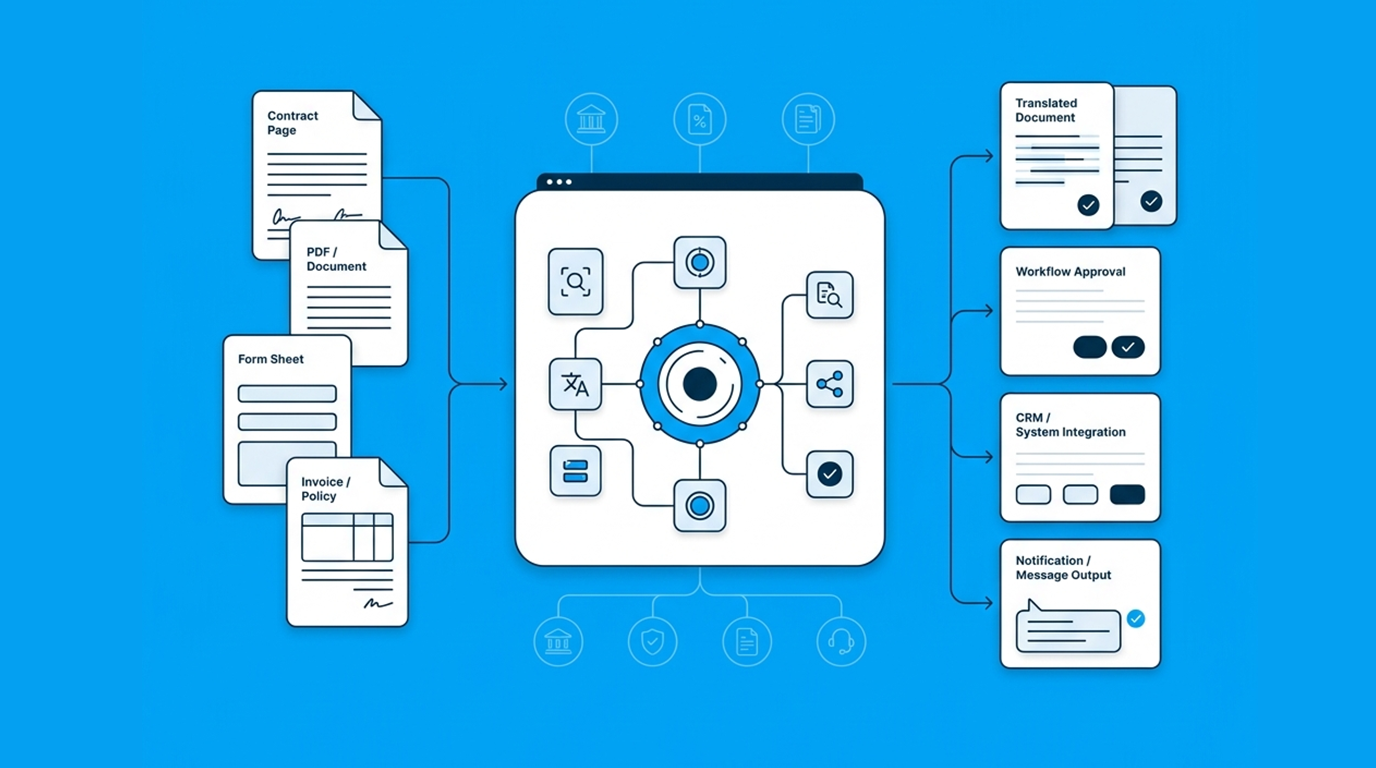
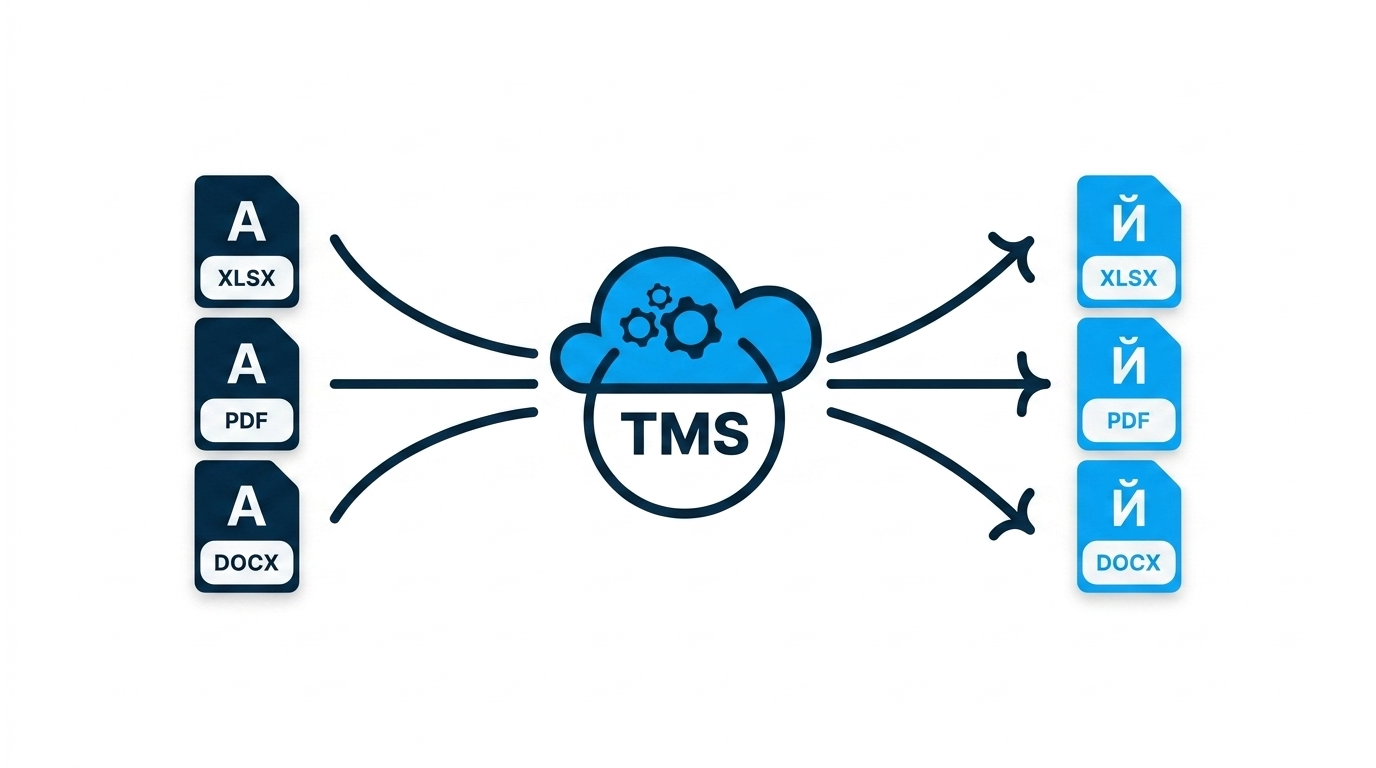
A document translation engine is a system that takes a full document, Word file, PDF, or scanned form; understands its structure; translates its content; and outputs it in the same format, ready to be used, using advanced document translation APIs backed by OCR translation technology.
No copy-pasting. No rebuilding layouts. No back-and-forth.
But the important nuance is this: it works with documents as documents, not just text.
That means:
- Tables stay tables
- Headers remain headers
- Legal clauses keep their structure
- Formatting doesn't break halfway through
Basic document translation online tools don't do this type of work well. They're fine for quick conversions, but they fall apart in real workflows.
Software for enterprise document translation, on the other hand, is built for volume, complexity, and integration.
It's less like a tool and more like a layer sitting inside your operations.
How does a document translation engine work?
From the outside, it feels almost instant. Internally, there's a sequence that's worth understanding.
1. The document enters the system
It could come from anywhere:
- A CRM generating a customer document
- A legal team uploading a contract
- A scanned form entering through OCR
The engine doesn't just "read" the document. It maps it.
It identifies structure, sections, tables, and fields before touching the language.
That's a subtle step, but it's where most legacy systems fail.
2. The content gets translated, with context
This is where AI comes in, but not in the generic sense people imagine.
A competent automatic document translation program does not merely translate words. For context it says:
- Marketing copy is handled differently from a legal clause
- Financial terminology is handled correctly
- In each paper the same phrases are repeated
McKinsey & Company says AI-led automation may dramatically shrink processing cycles in document-heavy industries, frequently cutting turnaround time by more than half. (Source).
That's the difference between translation being a bottleneck and being invisible.
3. The structure is rebuilt, not recreated
This part rarely gets attention, but it's where the real operational savings show up.
Once translated, the document is reconstructed in its original format:
- Layout stays intact
- Tables don't shift
- Design elements remain usable
If you've ever received a translated document that looked "broken," you know why this matters.
Without this step, teams end up fixing documents manually, undoing most of the efficiency gains.
4. The output goes where it's needed
This is where the "engine" becomes meaningful.
The translated document doesn't sit in isolation. It flows back into:
- CRM systems
- ERP platforms
- Document management tools
- Customer-facing workflows
Translation is no longer an extra step. It becomes part of the process.
Explore the Devnagri document translation engine designed to sit as this invisible layer, plugging into existing systems rather than replacing them.
What do businesses actually gain from this approach?
Most leaders don't invest in translation technology for translation's sake. They invest because something is holding them back.
Here's what tends to change once a business starts using a document translation engine.
Speed becomes predictable
Instead of asking, "How long will this take?" teams start assuming it's already done.
Turnaround times drop from days to hours or minutes.
And more importantly, they become consistent.
Consistency stops being a manual effort
Different teams, different vendors, different interpretations, that's how inconsistencies creep in.
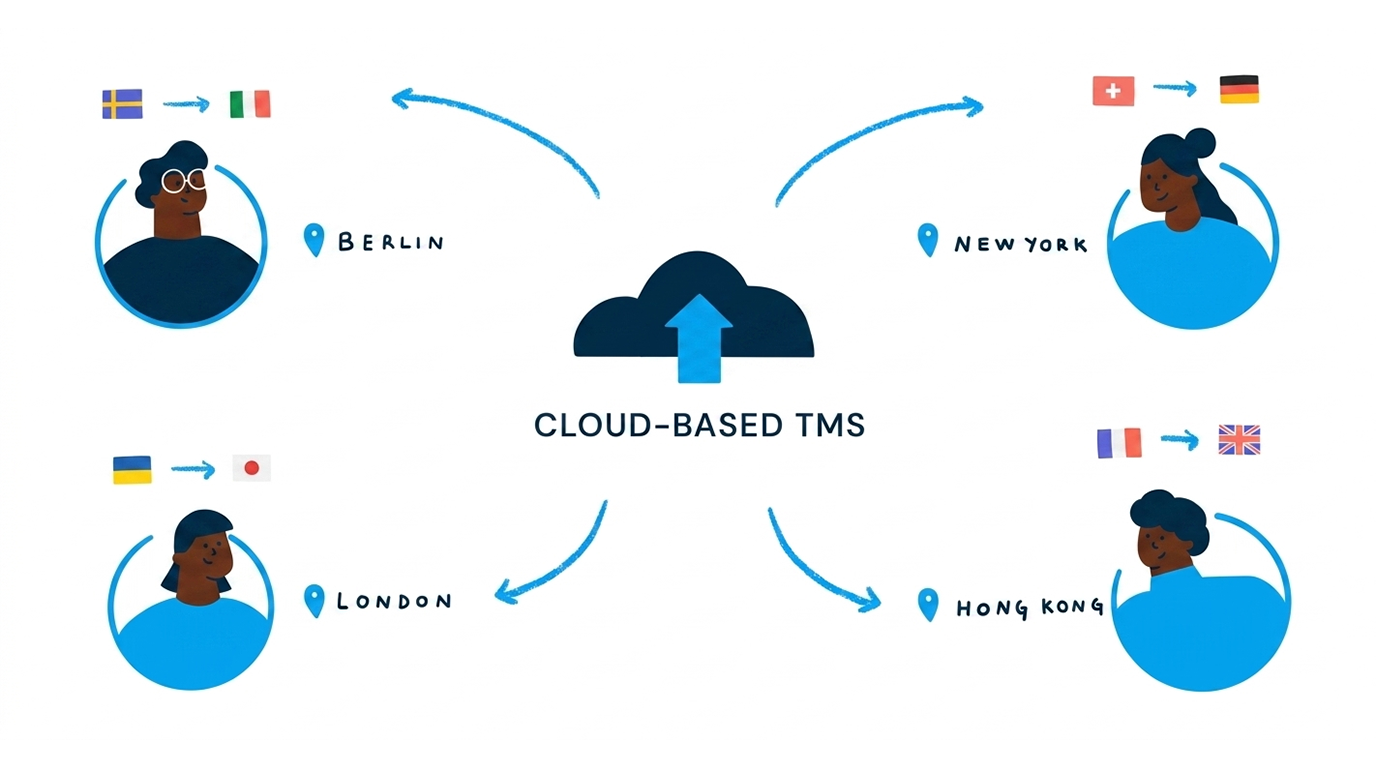
A centralized system for translating document language standardizes terminology throughout the organization.
This step is especially critical in legal document translation, where small variations can create real risk.
The scale stops being painful
Growth often exposes translation gaps.
More markets mean more documents. More documents mean more complexity.
A multilingual document translation platform absorbs that growth without requiring proportional increases in effort or cost.
According to Deloitte, workflow automation can improve productivity by 20–40% in enterprise environments (Source). Document processes are often where that impact shows up first.
Teams spend less time on mechanical work
No more:
- Copy-pasting content between tools
- Reformatting translated files
- Coordinating with multiple vendors
The work shifts from execution to oversight.
Control improves, quietly
With manual processes, visibility is limited.
With a document engine, you get:
- Version tracking
- Audit trails
- Centralized control
Which matters more than most teams realize, especially in regulated industries.
Where does this principle show up in real workflows?
It's not theoretical. It's already part of industry operations.
Support for customers
Support teams handle multilingual enquiries daily.
- Instantly translate incoming tickets with document translation software.
- Respond in user language
- Keep the tone consistent.
The result? Quicker resolution, fewer escalations.
Financial services and BFSI
Consider volume:
- Loan agreements
- The KYC documents
- Policy communications
Translation is mandatory and errors are costly.
Document engines speed up and regulate workflows.
E-commerce operations
Product catalogs, seller documents, policy updates, everything needs localization.
Manual processes slow down expansion.
Automated document localization allows businesses to launch across markets without waiting on translation cycles.
Legal and compliance
Legal teams are often the last to adopt automation, and for good reason.
But modern engines trained on domain-specific data are changing that.
They help maintain clause integrity while reducing dependency on external vendors.
Government and public services
Public systems operate in multiple languages by default.
Translation delays can directly impact service delivery.
According to the World Economic Forum, scalable digital infrastructure is key to inclusive public services (Source). Language capability is a core part of that infrastructure.
Which is the best document translation engine?
This area is where many decisions become overly technical, or overly simplistic.
A few things matter more than the rest:
- Contextual accuracy, not just linguistic correctness
- Formatting preservation, especially for complex documents
- Integration capability, because standalone tools create more work
- Scalability, without hidden operational costs
- Security and compliance, particularly for sensitive documents
And one more, often overlooked:
Localization intelligence
Because translating a document is one thing. Making it usable in a specific market is another.
This is where layered approaches, like those offered by Devnagri, start to make sense. They don't disrupt your systems. They extend them.
Closing thought
The most intriguing outcome of a document translation engine isn't speed. It's invisible. No one talks about translation anymore because it's no longer a separate step.
Documents move. Systems respond. Customers receive communication in their language. And the organization doesn't feel the friction it used to.
That's usually the signal that something fundamental has changed. Translation hasn't improved. It has simply become part of how the business runs.