The internet is vast in many ways, including cultural and multilingual aspects. Is your content optimized for a global audience?
Your web content in English can help you get an English-speaking audience. But what about the rest? Not every region or country speaks English. Are you leaving business on the table?
If you’re a global brand and looking to expand your presence beyond English-speaking regions and audiences, you need to be aware of some of these facts:
- 204 million Spanish speakers call the internet home and wield a combined spending power of $3.5 trillion. ¡Olé! (CSA)
- 75% of consumers prefer to buy products in their native language. (CSA)
- 86% of localized marketing campaigns outperform English-only versions. (Appia)
Many global brands, such as Airbnb, Microsoft, and Nike, have substantially grown by prioritizing localization strategies.
Multilingual content strategy has become crucial with the increased globalization of businesses. It helps businesses to target people living in different regions. The internet is at the heart of the globalization phenomenon, facilitating businesses, igniting conversations, bridging cultural boundaries, and nurturing relationships.
How do you understand your audience’s preferences?
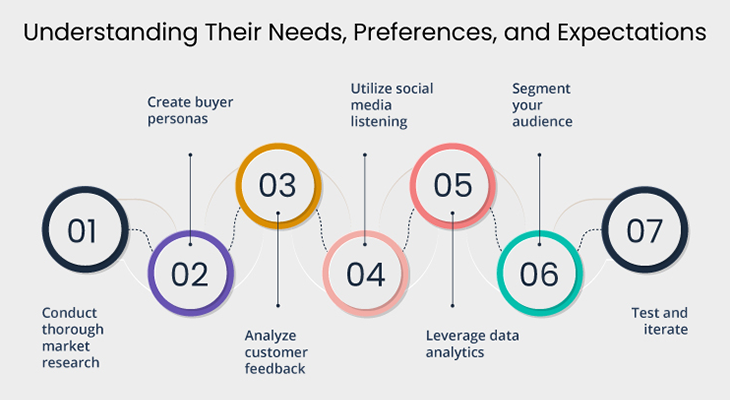
Knowing and understanding your audience comes from getting to know their culture and their interests. Your ability to connect with your audience in their language can bridge the cultural gap and build trust. While language is a means of communication, it is also a profound way to emotionally connect with your audience.
Did you know? Languages are directly connected to the religious histories in many regions, like Sanskrit in India.
For example, even the English originated from the Germanic dialects, spoken by the Anglo-Saxons, who arrived in Britain around 449 AD.
Some of the historical means of communication that are connected with religions include these languages:
- Ancient Egyptian: Use of hieroglyphs and hieratic script for religious texts, administrative records, and literature.
- Sumerian and Akkadian: The use of cuneiform script for administrative, literary, and religious purposes is found in Mesopotamia.
- Ancient Greek: Use of alphabetic script for philosophy, history, drama, and poetry.
- Latin: Use of alphabetic script for law, government, science, and literature in the Roman Empire.
- Old Chinese: Oracle bone script and bronze inscriptions used for divination and royal records.
- Sanskrit: Devanagari script used for ancient India’s religious texts, philosophy, and literature.
- Old English: A Germanic language written in a runic alphabet and later in a modified Latin alphabet.
Now, it is essential to understand the difference between language translation and localization. Language translation is a subset of localization. Localization, on the other hand, is more broad. Localization not only includes language translation but also cultural nuances, religious sensitivities, local attire, local festivals, local cuisine, and many more subtle things.
Simply translating your existing English content using Machine Translation API into a local language may not help, as context and meaning vary widely. Even if your audience can understand your content from a language standpoint, they may not be related to their culture and identity and may not trust you fully.
Multilingual content can help your brand reach a wider audience
As discussed earlier, 75% of consumers prefer buying products in their native language. A multilingual content strategy is necessary if you are targeting market expansion. Today, brands run campaigns across different channels to connect with their audience. Imagine that if you are connecting with your audience not only in your audience’s preferred channel but also in their preferred language, you are likely to build more trust with your audience and drive more engagement.
What is Multilingual Content Marketing, and Why is It So Important?
Multilingual content marketing is more than simple translation. It focuses more on culturally nuanced communication that fosters meaningful connections with your audience. Global brands are carefully adapting every piece of content translation to the local markets.
Think of it as a comprehensive transformation of your entire content ecosystem, from blog posts and articles to social media campaigns, press releases, video content, infographics, podcasts, newsletters, and ebooks. Each piece must be thoughtfully localized to reflect local cultural contexts, preferences, and consumer behaviors.
The impact of localized content on business metrics is significant. Engagement rates typically soar when your audience encounters content that speaks to them in their language and cultural context.
Even within English-speaking markets, regional differences matter enormously. A marketing campaign that resonates in New York might fall flat in London or Sydney. Take the American retail giant Target’s failed expansion into Canada—despite sharing a border and language, cultural nuances were missed, contributing to their withdrawal from the market.
Success Stories of Brands Using Multilingual Content
Top global brands that thought outside the box and prioritized localization now enjoy trust and loyalty across countries and cultures. The global market landscape is very vast. With AI-powered multilingual translation tools, technologies, and platforms, brands can connect with their target audience across boundaries and cultures.
McDonald story
The worldwide success of McDonald’s has become a benchmark for food franchises seeking global expansion. They used a multilingual content strategy in their slogan. Their campaign with the tagline “I’m Lovin’ it” was translated into different languages according to the location, even though they changed their menu to match the local customers’ preferences and localize their establishment in other countries.
Dove story
Dove has significantly used multilingual content in its “Real Beauty” campaign. The brand created ads featuring women of different ages, ethnicities, and body types speaking in their native languages. The result was an empowering and inclusive message that resonated with women worldwide.
Coca-Cola story
Coca-Cola is an example of the most iconic brand that utilized multi-lingual marketing, earliest in the age of global expansion. Their slogan, “I’d like to buy the world a Coke,” was translated into over 200 languages.
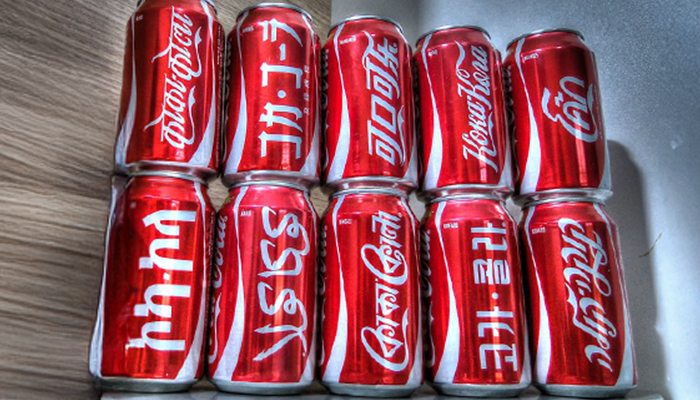
Today, Coca-Cola enjoys mass popularity beyond any specific boundary and nation. It had such a monopoly that people who were drinking or buying any soda used to say Coke or Cola. This proves a consistent message can resonate with a global audience in multiple languages.
Brands are building a loyal customer base in their region and others with localization and personalization. This shows how dialects and accents impact sales and growth.
It is very tricky to understand the difference between simply translating or localizing the content for marketing and customer support purposes.
Final Thoughts
When it comes to targeting an audience at the international level, there is much more to consider if brands are committed to building new relationships with their customers beyond the boundaries.
Then there is the way to this right.
Devnagri AI can be your right partner to go multilingual and help you realize your localization strategy. Go for an API for your website or a multilingual conversational AI bot for customer support powered by Artificial intelligence and machine learning.
Devnagri’s mission is to help brands like yours navigate the complexities of entering new markets. If you want to learn how we help global and domestic brands localize their communication, assets, and campaigns and improve engagement across different formats and media, give us a nudge. Start here https://devnagri.com/contact-us/