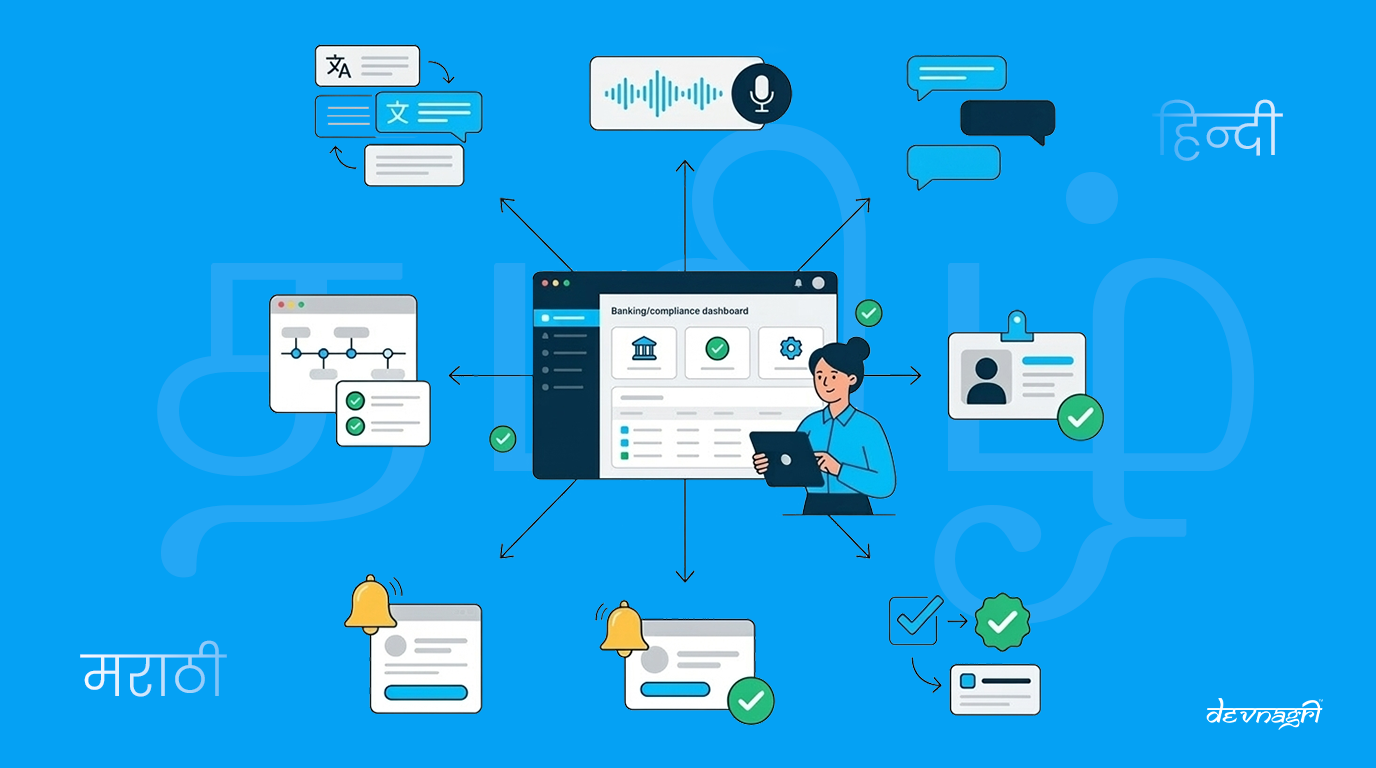
If you speak to compliance heads after an RBI inspection, the feedback is rarely dramatic. There are no sweeping failures or systemic breakdowns. Instead, there is a quieter discontent. The numbers were correct. The policies were in place. Yet, questions kept coming.
“Why does this note say something different?”
“Why is this classification not consistent with that case?”
The discomfort sits in those gaps.
What has changed is not the regulation itself, but the depth of scrutiny on narrative consistency. RBI inspections today are less about checking whether something exists and more about whether everything connects logically across the system.
In a multilingual operating environment like India, that connection is fragile. Information travels across languages, formats, and people. Meaning shifts slightly at each step. By the time it reaches the regulator, it is technically accurate but not always aligned.
This is where language AI infrastructure begins to matter. Not as a technology upgrade, but as a way to stabilize meaning across the organization.
Why is compliance increasingly becoming a problem of interpretation rather than regulation?
Banks do not struggle to understand RBI guidelines. The issue is far more subtle. It lies in how those guidelines are interpreted at the last mile.
A policy may be written clearly in English, but it is explained in Hindi at one branch, discussed in Tamil at another, and documented in Marathi somewhere else. Each version carries the same intent, but not always the same precision.
Over time, these micro-variations create divergence.
This divergence shows up during inspections as:
- Slightly different explanations for similar cases
- Variations in documentation quality
- Inconsistent justification for decisions
According to McKinsey, organizations that embed AI into operational workflows, not just analytics, can improve efficiency and risk outcomes by 20–30% (Source). The real driver behind this improvement is not automation alone; it is the reduction of interpretational drift.
In simple terms, compliance is no longer just about following rules. It is about ensuring everyone is following the same understanding of those rules.
What is the real operational and regulatory impact of language fragmentation?
Language fragmentation does not cause immediate failure. That is what makes it dangerous.
Instead, it creates a slow build-up of friction that surfaces during audits and inspections. Teams spend time reconciling differences rather than focusing on actual risk. Conversations shift from “what happened” to “why does this look different here?”
The impact tends to unfold in layers:
First, there is operational drag. Teams revisit the same cases multiple times to align narratives. What should take hours stretches into days.
Then comes audit fatigue. Repeated observations begin to appear, not because the issue persists, but because the explanation never fully satisfies the regulator.
Finally, there is reputational exposure. When inconsistencies appear across documents, it raises questions about governance, even if the underlying actions were sound.
Deloitte has pointed out that embedding AI into operational processes leads to stronger governance and faster decision-making (Source). In practice, this means fewer clarification loops and more confidence in what is being presented.
The cost of not addressing this is not always visible in financial terms. It shows up in time lost, credibility diluted, and scrutiny increased.
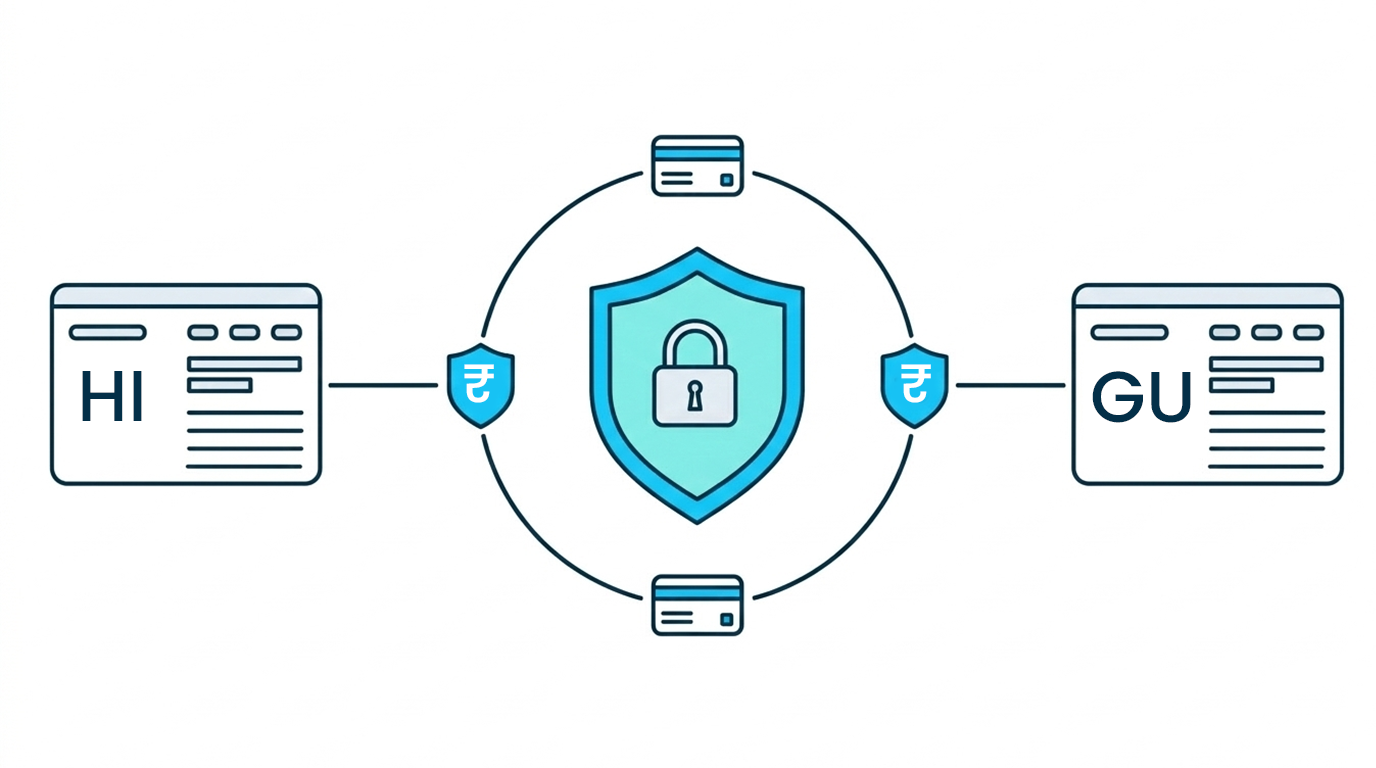
How do the seven critical RBI compliance workflows break down without language standardization?
1. Regulatory Submissions & Inspection Readiness
Banks must provide a clear, cohesive image during the submission stage. In actuality, several branches with various documentation styles and languages provide the inputs that go into that image.
Central teams are compelled to interpret instead of compile in the absence of standards. Inconsistencies result from this, which usually prompt further questions during inspections.
There is more to the effect than just a delay. It is the gradual erosion of confidence in the bank's capacity to provide reliable reports.
2. IRAC & Provisioning Decision Support
IRAC classification depends on qualitative signals such as borrower intent and repayment behaviour. People often write down these messages in their own languages.
When translated, small changes in tone or intent might change how something is understood. A careful borrower may seem noncommittal. An account that is stressed out may look stable.
The result is inconsistency in classification and provisioning. Even when decisions are correct, the supporting narrative may not hold under scrutiny.
3. KYC / CKYCR Periodic Updation at Scale
Customer interactions, which are naturally multilingual and unstructured, are a big part of KYC updates.
Manual interpretation causes differences. One worker might write down everything, while another might merely write down what looks important. This causes incomplete records and frequent follow-ups over time.
The effects are both operational and regulatory. During audits, delays add up and holes become clear.
4. Conduct Risk & Regulatory Case Management
Customer complaints and internal reports typically have an emotional tone. These small differences are really important for figuring out how serious something is and how to make it worse.
Intensity can be lessened when it is translated or summarized. A critical problem may seem normal, delaying action.
The effect isn't always immediate, but it makes it harder for the bank to spot patterns and take steps to protect itself from danger.
5. Audit Observation Lifecycle & Balance Sheet Control
Multiple teams need to provide input on audit replies. Each team has its own way of writing, and they often have to do it quickly.
The response may seem broken apart when all the parts are put together. Auditors then ask for more information, which might delay closing and sometimes lead to repeated observations.
The problem here isn't a lack of action. It doesn't make sense.
6. Outsourcing & DSA Compliance Monitoring
Third-party agents work in their own areas and speak the languages of those areas. Their encounters are not often the same.
Because of this, banks can't see how well products are described or if the disclosures are always the same.
The effect can be considerable, especially if the bank is responsible for mis-selling or failing to follow the rules.
7. Policy Implementation & Branch Control Adoption
Policies are obvious at the center, but people in different places may see them differently. Meaning might change throughout this time of change.
Some branches may fully follow the rules, while others may just partially or differently follow them. An audit is the only way to identify these hidden gaps.The effect is a gap between what the policy was meant to do and what it actually does, which is hard to explain to regulators.
The effect is a gap between what the policy was meant to do and what it actually does, which is hard to explain to regulators.
Why do traditional systems fail to solve this problem effectively?
Most banks have invested heavily in digitization. Core systems are robust, workflows are defined, and data is captured systematically.
However, these systems are designed to process structured data rather than manage linguistic variability.
They assume that inputs are already standardized. In reality, the standardization happens before data enters the system, and that is precisely where inconsistency creeps in.
Without addressing this layer, even the most advanced systems will continue to reflect fragmented inputs.
This is why the problem persists despite significant investment in technology.
Where does language AI infrastructure fit within the BFSI compliance stack?
Language AI infrastructure operates as a connective layer across workflows. It makes ensuring that information keeps its meaning as it transfers from one person, system, or language to another.
Not only does it translate, but it also makes sure that inputs meet policy and regulatory standards.
Many people in India speak more than one language, so this layer is quite significant. Devnagri and other systems like it account for this complexity so banks can maintain consistent communication without changing how things normally happen at the branch level.
Being consistent, not merely changing, is what makes anything valuable.
What opportunities and risks should CXOs consider before adopting language AI?
The chance is clear-cut. Banks can spend less time on reconciliation, get better audit results, and make regulators more confident.
More significantly, they can make compliance teams proactive instead of reactive.
But the risks are just as real. If you rely too much on automated interpretation without checking it, you can have more inconsistencies. Models trained on field-specific language may miss important information.
Therefore, the balance is between accuracy and speed rather than between humans and machines.
Conclusion
In most inspection rooms, the critical moment does not come when data is presented. It comes when that data is questioned.
If the explanation holds, the discussion moves forward. If it does not, everything slows down.
That difference rarely comes from policy gaps. It comes from how consistently meaning has been preserved across the organization.
In a multilingual system, that consistency cannot be assumed. It has to be built.
Because in the end, compliance is not only about doing the right thing.
It is about explaining it in a way that leaves no room for doubt.