A side-by-side look at the multilingual AI chatbot and conversational AI platforms Indian banks, NBFCs, and insurers are actually evaluating in 2026, measured against language depth, regulatory readiness, and real BFSI deployments, not marketing pages.
TL;DR
- Most "multilingual" chatbots in India are translation layers bolted onto an English-first bot. For BFSI, that's a compliance risk, not a feature.
- Language coverage matters less than language governance. Can the platform prove what it told a customer, in which language, and under what policy version?
- We compared 10 platforms, global banking-specific vendors, horizontal Indian conversational AI players, and Devnagri AI, a sovereign language infrastructure platform built for regulated Indian enterprises.
- Devnagri AI leads this list because it treats multilingual banking communication as a governed workflow, with audit trails, domain-tuned language models, and deployment options built around RBI, SEBI, and IRDAI expectations, rather than a chat widget with more languages switched on.
Why Are Multilingual AI Chatbots Important for BFSI in India Right Now?
Most Indian bank and NBFC customers don't think in English, even when they type in it. They switch between Hindi, Hinglish, and a regional language mid-conversation, often within a single WhatsApp thread, depending on how comfortable or urgent the topic feels. A loan EMI reminder in stiff, translated English affects right-party contact rates and collections performance differently than one in the customer's own tongue.

The stakes are higher in India than in most other multilingual markets, for two reasons.
First, WhatsApp is the primary channel, and Indian BFSI institutions run collections, servicing, and onboarding conversations on it at a scale few markets match. A chatbot that only handles clean, single-language English input misses most of the real conversation.
Second, every one of those conversations is regulated communication. Under RBI's Key Fact Statement (KFS) norms, IRDAI's disclosure requirements, and the DPDP Act, what an AI agent tells a customer, in any language, is something the institution has to be able to explain and prove later. A chatbot that can't show what it said, in which language, against which policy version, isn't just a CX gap. It's an audit gap.
That's why the industry is moving away from "how many languages does it support" as the deciding question, toward "can this platform govern a regulated conversation in any of those languages?"
What to Look for in a Multilingual AI Chatbot Platform for BFSI
Not all "multilingual" claims mean the same thing. Broadly, multilingual chatbot platforms fall into three tiers:
- Translation-layer bots: convert the customer's message into English, process it, and translate the response back. This works for simple FAQs and breaks down fast on Hinglish, mixed-script input, or anything where a literal translation changes the meaning, which happens often in financial disclosures.
- Rule-based multilingual bots: run pre-built conversation flows in each language, usually selected upfront. They hold up within the script but fail the moment a customer switches languages mid-conversation or asks something outside the flow, a routine occurrence in real Indian banking conversations.
- Context-aware, governed platforms: reason in the customer's language directly, follow language switches in real time, and, critically for BFSI, log the interaction with enough detail to survive a regulator's request to replay it. This capability is the tier BFSI institutions should be evaluating.
Key Questions To Ask Before You Choose A Chatbot Platform
| What to evaluate | Why it matters for BFSI |
|---|---|
| Language coverage vs. resolution quality | A platform listing 100+ languages means little if resolution rates collapse outside English and Hindi. Ask for per-language accuracy, not a language count. |
| Hinglish and code-switching | Indian customers rarely stay in one language for an entire conversation. The platform needs to follow a switch mid-thread without restarting the flow. |
| Regulatory and data-residency posture | RBI data localisation, DPDP Act readiness, and, where relevant, IRDAI and SEBI alignment. Ask for the actual audit documentation, not a badge on the website. |
| Auditable, replayable logs | Every regulated reply should be traceable: what was said, in which language, sourced from which policy version, on which date. |
| Core banking / CRM integration | A bot that can't read KYC status, loan status, or account state from your core banking system will deflect the easy queries and stall on everything that matters. |
| Deployment model | SaaS-only platforms are fine for pilots. Institutions with data residency requirements usually need VPC, on-prem, or hybrid options. |
At a Glance: 10 Best Multilingual AI Chatbot Platforms for BFSI in India
| Platform | Best Known For | Indian Language Depth | Best Fit |
|---|---|---|---|
| Devnagri AI | Sovereign language infrastructure for regulated Indian enterprises | Deep, domain-tuned Indian language models with governance built in | Banks, NBFCs, and insurers that need audit-ready multilingual workflows, not just a chat widget |
| WebEngage | Retention and journey orchestration platform used by BFSI leaders | Omnichannel campaigns across WhatsApp, push, email, SMS | BFSI & fintech brands automating lifecycle engagement, not conversational support |
| Sinch | Global CPaaS with conversational AI messaging | Multilingual chatbot support layered on Sinch's messaging network | Banks wanting conversational banking across WhatsApp, SMS, and voice channels globally |
| Meon | Indian digital onboarding, eKYC, and chatbot platform | Chatbot layered on top of onboarding and verification workflows | BFSI, NBFCs, and real estate businesses wanting onboarding and a chatbot in one stack |
| Gupshup (with Active.ai) | Messaging infrastructure at WhatsApp scale | Broad language support via integrations | High-volume WhatsApp messaging with a BFSI-specific bot layer |
| Verloop.io | Support-automation specialist | 100+ languages | Support-first BFSI and fintech teams on chat and WhatsApp |
| Floatbot | Voice + chat banking bots with proprietary FloatGPT | 100-150+ languages | Banks wanting a single bot across voice and chat channels |
| Kapture CX | Omnichannel enterprise CX platform | 40+ languages | Enterprises that want AI chat folded into a full support/ticketing stack |
| Kasisto (KAI) | Banking-native LLM (KAI-GPT) | ~14 languages, deepest in English, Spanish, Mandarin | Tier 1 global banks wanting a banking-only vendor |
| CoRover.ai (BharatGPT) | India-hosted sovereign generative AI | Deep Indian language coverage, large public-sector deployments | Institutions prioritising India-hosted, sovereign infrastructure |
The 10 Best Multilingual AI Chatbot Platforms for BFSI in India 2026
Choosing a chatbot completely depends on the business model and target needs, it includes the kind of use case an enterprise looking to solve. Here are the top 10 multilingual AI chatbot platforms for the Indian BFSI sector.
1. Devnagri AI, Best Overall for Multilingual BFSI in India
Best for: Devnagri AI's Multilingual Chatbot is best for Banks, NBFCs, insurers, and government-linked financial institutions that need multilingual customer communication to be governed, auditable, and integrated into existing core banking and CRM systems, not a standalone chat widget.
Most BFSI teams still manage multilingual communication through a patchwork of manual translation, agent judgement calls, and partial CPaaS integrations. Each layer adds cost and inconsistency, and none of it holds up well under regulatory scrutiny. Devnagri AI was built to replace that patchwork with a single governed language infrastructure layer, rather than to be another chat tool sitting on top of it.
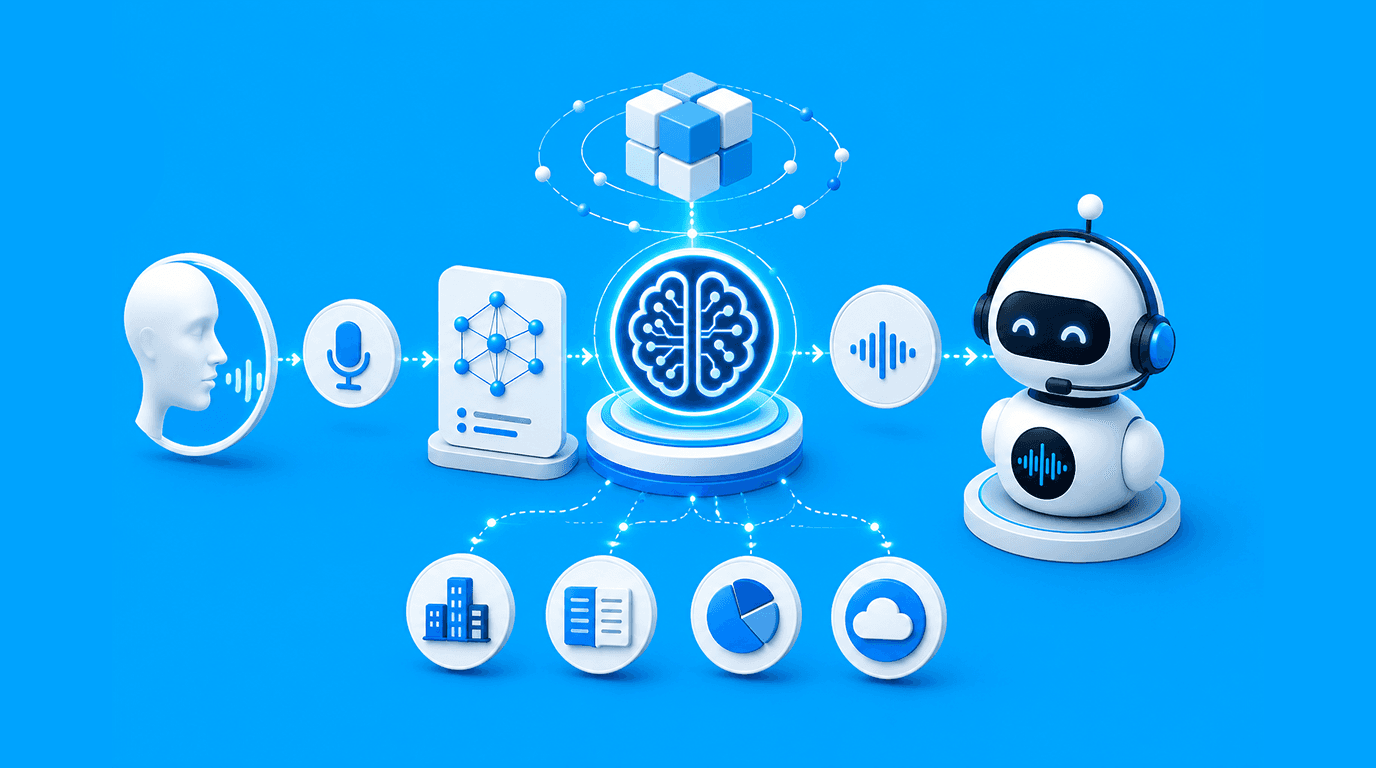
The distinction matters. Devnagri is not a translation tool or a generic chatbot, it sits between foundation AI models and an institution's core banking, CRM, and contact centre systems, orchestrating multilingual conversations, voice, and disclosures with the governance a regulated workflow actually requires. That includes domain-tuned small language models trained specifically for BFSI and regulatory communication, a cultural intelligence layer that adjusts tone (the difference between आप and तुम matters more than it sounds), and immutable audit logs on every multilingual touchpoint.
For institutions with data residency requirements, Devnagri offers SaaS, VPC, on-prem GPU, and hybrid deployment, so the deployment model adapts to the compliance posture, not the other way around.
Features
- Domain-tuned Small Language Models for BFSI, insurance, and regulatory communication
- Multilingual chat and voice bots with real-time Hindi, Hinglish, and regional language switching
- Cultural Intelligence Layer for tone calibration across regions and formality levels
- Immutable audit logs across every multilingual customer interaction
- DOTA for real-time website and app localisation, live in as little as 5 days
- Zero data retention by default, with configurable policies
- Deployment flexibility across SaaS, VPC, on-prem GPU, and hybrid environments
- Workflow orchestration across onboarding, collections, and grievance resolution, not isolated bot responses
Pros
- Built specifically for regulated Indian workflows, not adapted from a horizontal support tool
- Deployment options built around RBI, SEBI, and IRDAI expectations, not bolted on afterward
- Proven BFSI client base, including ICICI Bank, IDFC Bank, Yes Bank, Kotak Mahindra, and AU Small Finance Bank
- Partnership with Bhashini (Digital India Corporation) strengthens its Indian-language depth and sovereign positioning
- Measurable outcomes: institutions using Devnagri have reported around a 25% uplift in onboarding completion and a 20-30% improvement in collections response
Cons
- As an infrastructure-first platform, evaluation and onboarding typically involve a solution walkthrough rather than instant self-serve setup, a deliberate trade-off for institutions that need governance depth over plug-and-play speed
2. WebEngage
Best for: BFSI and fintech brands that need to automate lifecycle engagement, onboarding nudges, EMI reminders, renewal alerts, across channels, alongside (not instead of) a conversational chatbot.
WebEngage is worth including on this list with an honest caveat: it isn't a chatbot platform in the conversational-AI sense. It's a retention and journey-orchestration platform, and Indian BFSI brands like Angel One, Acko, CASHe, and Mahindra Insurance Brokers use it to run data-led, omnichannel campaigns, KYC completion nudges, EMI reminders, policy renewal alerts, across WhatsApp, push, email, and SMS. For institutions evaluating "multilingual customer communication" broadly, WebEngage is often the engagement layer sitting next to a chatbot, not a replacement for one.
Features
- Journey Designer for multi-step, behaviour-triggered campaigns
- Omnichannel delivery across WhatsApp, mobile push, email, SMS, and RCS
- Dynamic micro-segmentation based on customer behaviour and lifecycle stage
- Named BFSI & Fintech vertical solutions and impact stories
Pros
- Strong, proven track record automating KYC, EMI, and renewal journeys for Indian BFSI brands
- Deep segmentation and personalisation for lifecycle campaigns
- Fast to launch alongside an existing chatbot or support stack
Cons
- Not a conversational AI or chatbot platform, no NLU, intent detection, or live multilingual conversation handling
- Best understood as a complement to a chatbot platform, not a substitute for one
- Regulatory audit-trail depth for actual customer conversations isn't its core focus
3. Sinch
Best for: Banks and financial institutions that already run customer communication on Sinch's messaging network and want conversational AI layered on top of it.
Sinch is a global communications platform (CPaaS) that banks use to reach customers over SMS, WhatsApp, RCS, and voice at scale. It has built conversational AI and chatbot capabilities into that messaging layer specifically to help banks handle multilingual conversational banking, onboarding, service requests, and support, across whichever channel the customer is already on, rather than routing them to a separate banking app or chat widget.
Features
- Conversational AI chatbots built directly into Sinch's global messaging network
- Multilingual support designed around banks' diverse regional customer bases
- Unified conversation history across WhatsApp, SMS, RCS, and voice
- Global CPaaS scale, useful for BFSI institutions with cross-border customers
Pros
- Strong fit for banks that already route customer messaging through Sinch
- Genuine multi-channel reach: SMS, WhatsApp, RCS, and voice from one network
- Global infrastructure maturity, useful for institutions with international customers
Cons
- Less India-specific Hinglish and regional-dialect depth than platforms built ground-up for the Indian market
- Conversational AI is layered onto a messaging/CPaaS product, not a purpose-built BFSI conversational platform
- Regulatory alignment with RBI/IRDAI-specific requirements needs to be evaluated case by case
4. Meon
Best for: BFSI and NBFC teams that want a chatbot bundled with digital onboarding, eKYC, and identity verification, rather than sourced as a separate tool.
Meon Technologies is an Indian company built primarily around digital onboarding, Aadhaar eKYC, eSign, OCR, and identity verification, for banking, insurance, real estate, and HR use cases. Its chatbot solutions sit inside that broader onboarding and workflow-automation stack, which makes it a reasonable fit for BFSI and NBFC teams that want conversational support tied directly into KYC and onboarding, rather than integrated afterward as a bolt-on.
Features
- Chatbot solutions built alongside Aadhaar eKYC, eSign, and OCR verification APIs
- Digital onboarding and identity verification workflows for BFSI, NBFC, and real estate
- WhatsApp chatbot capability aimed at fintech onboarding and support
- CRM tools for lead management and customer support in the same suite
Pros
- Chatbot is integrated with onboarding and KYC rather than a standalone add-on
- India-built, with pricing and packaging aimed at mid-market BFSI and NBFC buyers
- Useful when onboarding, verification, and conversational support need to live in one workflow
Cons
- Conversational AI depth (language coverage, code-switching, NLU sophistication) is less established than specialist multilingual chatbot platforms
- Less publicly documented large-scale BFSI deployment history compared to the bigger conversational AI players on this list
5. Gupshup (with Active.ai)
Best for: Institutions running high-volume WhatsApp messaging that want a BFSI-specific bot layer on top.
Gupshup is the oldest player on this list, built originally as a messaging infrastructure company before layering in conversational AI, including BFSI-specific capabilities through its Active.ai acquisition. Its strength is scale and reliability across WhatsApp, SMS, and voice, with a client base that includes several major Indian banks.
Features
- GPT-powered Auto Bot Builder across WhatsApp, SMS, and web
- BFSI-focused conversational tools via Active.ai
- High-volume, high-uptime messaging infrastructure
- Existing integrations across major Indian bank deployments
Pros
- Messaging infrastructure depth few competitors match
- Proven track record with large Indian banks
- Strong WhatsApp-first deployment experience
Cons
- The conversational AI layer often needs technical configuration to reach BFSI-specific depth
- Compliance documentation is less prominently published than specialist BFSI vendors
6. Verloop.io
Best for: Support-first BFSI and fintech teams that want fast deployment on chat and WhatsApp without heavy customisation.
Verloop.io has built a focused reputation in customer support automation, with meaningful penetration in Indian BFSI, e-commerce, and SaaS. It's designed to automate the highest-volume, lowest-complexity support conversations and hand off cleanly to human agents when a query needs one.
Features
- 100+ language support across chat and WhatsApp
- Clean human handoff with conversation context preserved
- Real-time analytics and CSAT tracking
- GDPR-compliant data handling
Pros
- Fast, low-friction deployment for support-first teams
- Strong CSAT and cost-reduction track record
- Good fit for BFSI support desks, not just sales bots
Cons
- Additional regional languages beyond the core set often require custom configuration
- Less depth on regulatory-grade audit logging than governance-first platforms
7. Floatbot
Best for: Banks that want a single bot working across both voice and chat channels.
Floatbot built its reputation with early BFSI deployments, including one of India's first cloud-based bank chatbots, and has since expanded into a broader voice-plus-chat platform with its own FloatGPT model. It supports 100-150+ languages and integrates with several contact centre platforms used in Indian banking.
Features
- Unified bot logic across voice and chat channels
- FloatGPT for domain-tuned, low-hallucination responses
- Voice biometrics for secure customer authentication
- Integrations with Five9, Ameyo, Cisco, Genesys, and Avaya
Pros
- Genuine voice-and-chat parity, not chat-first with voice bolted on
- Strong retail and corporate banking use case coverage
- GDPR, SOC 2, and PCI compliance support
Cons
- Smaller company scale than the larger horizontal conversational AI platforms, which can matter for very large deployments
- Regional language depth outside the major Indian languages needs verification per deployment
8. Kapture CX
Best for: Enterprises that want AI chat folded into a full support, ticketing, and workflow platform rather than a standalone bot.
Kapture CX takes a broader view than most platforms on this list, combining AI chatbots with ticketing, omnichannel support, and workflow automation in one system. It supports 40+ languages and lists BFSI as one of its named vertical focus areas, with GDPR-aligned data handling built in.
Features
- AI chatbots combined with ticketing and workflow automation
- 40+ language support across chat, voice, email, and social
- AI-based intent detection for ticket routing and prioritisation
- Real-time chatbot performance analytics
Pros
- Useful when the chatbot needs to sit inside a broader support operation, not stand alone
- Reasonable language depth with human handoff that preserves context
- Named BFSI vertical focus with industry-specific workflows
Cons
- Not designed for small teams, the platform's depth is built for larger support operations
- Advanced workflow customisation typically needs onboarding support
- Less oriented around regulatory audit trails than BFSI-native platforms
9. Kasisto (KAI)
Best for: Tier 1 global banks that want a vendor whose only business is banking.
Kasisto was spun out of SRI International, the lab behind Siri, specifically to build banking conversational AI. Its KAI-GPT model is pre-loaded with finance-specific ontology covering mortgages, ACH transfers, and SWIFT wires, and it counts several Tier 1 global banks among its customers. Language coverage is its clearest limitation for the Indian market: it supports roughly a dozen languages, strongest in English, Spanish, and Mandarin, with Hindi and other Indian languages requiring custom tuning.
Features
- KAI-GPT, a banking-specific large language model
- Pre-built finance ontology for complex banking products
- Deep integration experience with global Tier 1 banks
Pros
- Genuine banking-domain depth in the underlying model
- Strong track record with large global banking institutions
Cons
- Indian language coverage is limited compared to India-built platforms
- Implementation cycles typically run 4-6 months
- Enterprise-only pricing puts it out of reach for most Indian NBFCs and mid-market banks
10. CoRover.ai (BharatGPT)
Best for: Institutions that specifically want India-hosted, sovereign generative AI infrastructure with large-scale public sector references.
CoRover.ai builds BharatGPT, an India-hosted multilingual generative AI platform spanning text, voice, and video across a wide range of Indian languages. It has notable large-scale public sector deployments, including with IRCTC and NPCI, which gives it real credibility on data sovereignty and Indian-language depth.
Features
- India-hosted, sovereign generative AI infrastructure
- Multilingual support across text, voice, and video
- Large-scale public sector and enterprise deployment history
Pros
- Strong data sovereignty positioning, relevant where data residency is non-negotiable
- Genuine deep Indian-language coverage
- Proven at national scale through public sector deployments
Cons
- BFSI-specific workflow depth (collections tone engines, KFS-specific disclosure handling) is less developed than in BFSI-first platforms
- Less publicly documented BFSI-specific client base compared to Devnagri or the other specialist BFSI platforms on this list
How to Choose the Right AI Chatbot Platform?
Start with your actual language distribution, not the marketing list. Pull six months of customer conversation data and see where the volume really sits. If it's concentrated in Hindi, Hinglish, and two or three regional languages, optimize for resolution quality in those languages rather than a headline language count.
Test the platform on your hardest tickets, not your FAQs. Every vendor demos well on "what are your branch timings." The real test is a loan restructuring conversation, a KFS disclosure, or a grievance that needs to be escalated correctly, in the customer's own language, with a paper trail.
Ask for the audit report, not the badge. SOC 2 and ISO 27001 logos on a website mean little without the underlying documentation. For BFSI specifically, ask how the platform handles RBI data localisation, DPDP Act requirements, and, for insurers, IRDAI disclosure norms.
Check what happens when the bot doesn't know the answer. Human handoff with full context, in the customer's language, is where most platforms quietly fall short. Ask to see it happen live, not in a slide.
Weigh deployment model against your data residency requirements. SaaS is fine for a pilot. If your institution needs VPC or on-prem deployment for compliance reasons, confirm that option exists before you get attached to a platform that can't offer it.
Final Verdict
For Indian BFSI institutions, the deciding question isn't which platform speaks the most languages, most claim 100 or more. It's which platform can prove, in an audit, exactly what it told a customer, in which language, under which policy version, and why.
Devnagri AI is the strongest overall choice for multilingual BFSI communication in India, because it's built around that question from the ground up, governed workflows, domain-tuned language models, immutable audit logs, and deployment flexibility that adapts to RBI, SEBI, and IRDAI expectations rather than working around them. Its existing footprint with ICICI Bank, IDFC Bank, Yes Bank, Kotak Mahindra, and AU Small Finance Bank, alongside its Bhashini partnership, gives it a level of regulated-sector proof most horizontal chatbot platforms haven't built.
Institutions that already run customer messaging on a global CPaaS network should evaluate Sinch. Teams that want conversational support bundled with onboarding and eKYC should look at Meon, and those focused on lifecycle engagement and retention campaigns, as a complement to a chatbot, not a replacement for one, should consider WebEngage. Teams that need AI chat folded into a broader support stack fit well with Kapture CX, and those wanting India-hosted sovereign infrastructure with public-sector proof points should evaluate CoRover.ai.
The right move before committing to any of these: run a 30-day side-by-side pilot using your institution's actual regulated conversations, not a demo script, and judge the platforms on what they can prove, not what they claim.