Investor Engagement Scores Increased By 27% Through Multilingual Translation
About the Customer
We began working with a well-known asset manager, one of those firms where compliance, investor trust, and communication are inseparable. They weren’t just sending out brochures; they were constantly publishing fact sheets, policy addenda, SIP explainers, training videos, and collateral materials. Every single piece had to go live in multiple Indian languages.
For them, language wasn’t a nice-to-have. If a redemption policy was mistranslated, or if an investor education video didn’t sound authentic, it could mean either a compliance query or an investor who simply walked away.
Challenge
At first glance, it looked like they only needed faster translation. But the deeper we went, the more we realized the real issue was fragmentation.
This meant that investors were receiving mixed signals, and the compliance team had to spend extra time checking and correcting language inconsistencies. The time-to-release stretched to days, sometimes a week, which is a serious problem in asset management, where factsheets or addenda must be sent out immediately.
Solution
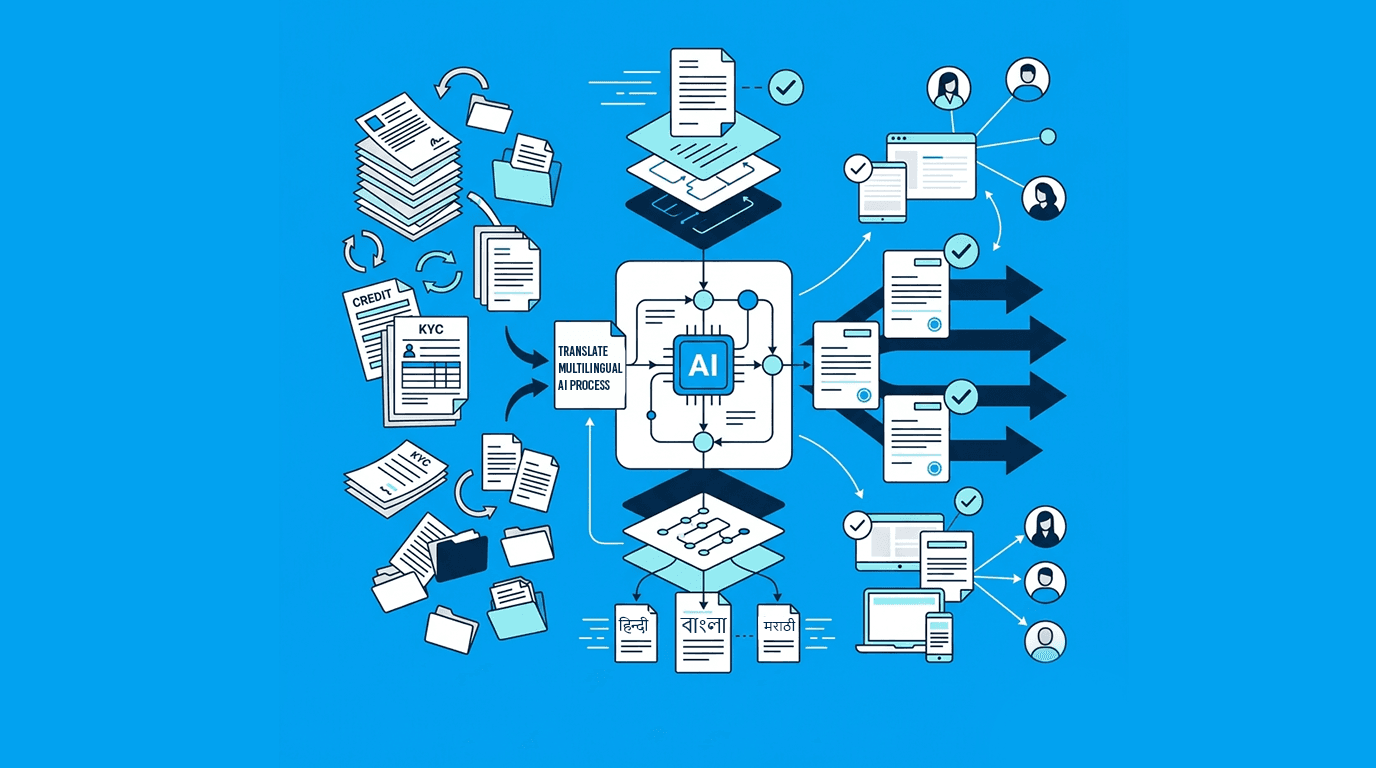
We didn’t ask them to throw away their existing process. Instead, we slipped our pipeline into it.
Documents: Every circular, addendum, and fact sheet was automatically entered into our translation stream the moment it was generated.
Glossary: Together with their compliance and product teams, we locked down a master glossary. Once NAV was defined in one way, it stayed that way, whether on a brochure, a video script, or a policy note.
Videos: Awareness campaigns and investor explainer videos were processed with a mix of AI dubbing and native-language voice-overs. The AI provided speed, while the human touch provided trust.
We used the same lexicon to localize collaterals, such as brochures and investor kits, ensuring consistency in language across all points of contact.
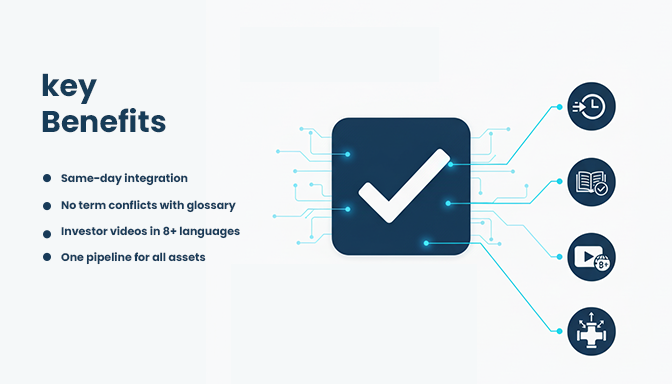
Key Highlights:
Impact
The results became visible quickly.
What changed was confidence, regulators saw consistent terminology, investors heard authentic voices in their language, and the marketing team finally got a single content engine instead of patching together vendors.