How a Leading Fintech Player Drove 60% Faster Multilingual Rollouts for

About the Customer
Our customer is one of the leading EWA service providers in India. Their financial wellness platform was scaling fast, reaching salaried professionals, contract workers, and gig workers across India. The growth was exciting, but it also exposed a big challenge. Most of their documents only existed in English.
Now, if you’re serving semi-urban or rural customers, that’s not a minor gap. For someone signing a loan agreement, the fine print matters. If the language feels foreign, trust drops. And trust is everything in financial services.
The Challenge
There were several sticking points, more than the leadership team expected.
Compliance was the obvious one. Regulators require bilingual or multilingual versions of financial disclosures. They had partial translations, but not consistently. Every audit was painful.
Then came operations. Document requests were piling up. Each file was translated like a one-off project. By the time forms came back, campaign timelines had already shifted.
And of course, data sensitivity. These documents carried personal identifiers, so sending them through informal translation channels wasn’t even an option.
One more pain point: terminology. It sounds small until you realize different branches were using different terms for the same product. “Repayment holiday” in one region, something else in another. Customers became confused, support calls increased, and clarity decreased.
While on the surface it looked like a “translation problem.” In reality, it was a compliance, efficiency, and trust problem rolled into one.
The Solution
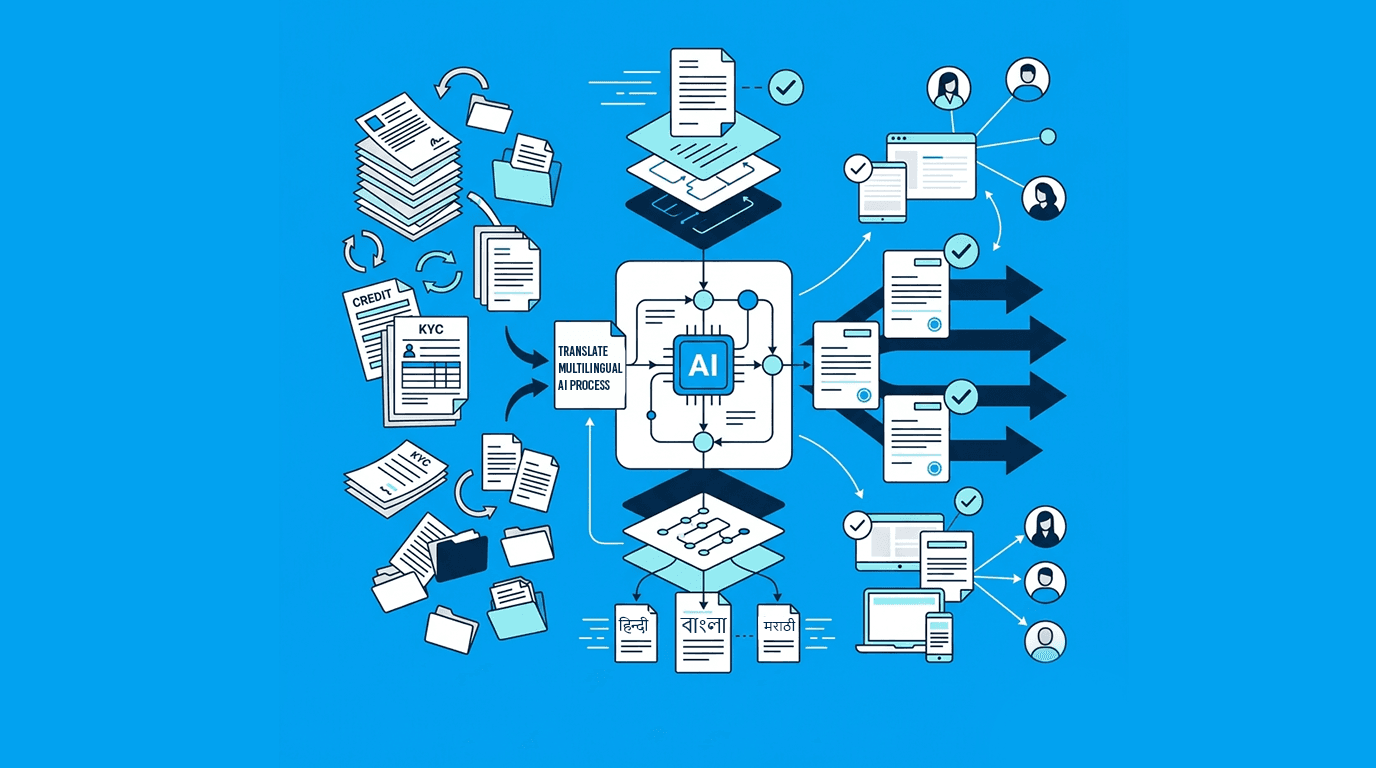
We knew ad-hoc fixes wouldn’t cut it. So we built a proper multilingual framework right into their document ecosystem.
Once this infrastructure went live, the difference was immediate. What felt like firefighting before started looking like a smooth operation.
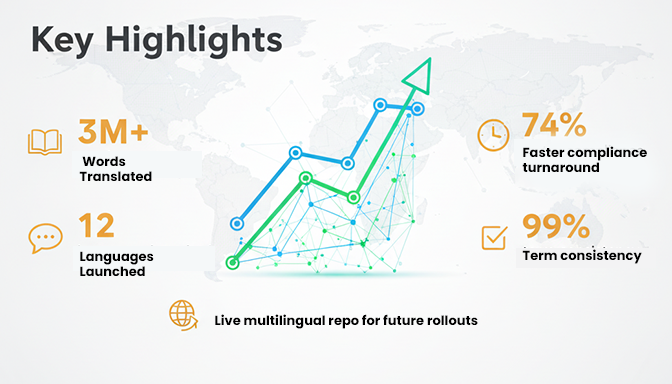
Key Highlights
Impact
The ripple effects were stronger than expected.
So yes, we provided document translation. But in practice, it became something larger: a compliance-first, multilingual infrastructure that gave fintech the ability to scale faster, safer, and with more trust on the ground.