AI speaks, but humans teach it how
Behind India’s fast-growing AI economy lies a layer of human involvement, with startups relying on regional language experts, vernacular specialists, and human reviewers to teach machines how people actually speak.
From decoding tone and dialect to preventing cultural and regulatory missteps, these human inputs are defining how reliable and trustworthy AI systems can be at scale.
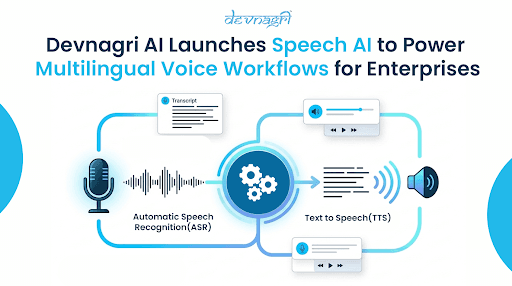
Superbot, an intelligent, AI-powered voice agent startup, relies on two models crucial for running an AI-powered voice agent, i.e., Automatic Speech Recognition (ASR) and Text to Speech (TTS), which need humongous datasets that are cleaned, properly tagged/labelled, and vetted.
“Since both models are built in-house, we have an in-house team of 14 people, including regional language experts from Tamil Nadu, Gujarat, Maharashtra, Karnataka, Andhra Pradesh, Telangana, and West Bengal, who clean, vet, and tag the relevant databases to help us build, train, and fine-tune these models. This is crucial to delivering a well-functioning bot,” Sarvagya Mishra, Founder and Director of Superbot, shared.
These experts use different in-house tools for training and auditing. While they do not correct the AI directly, as the LLM itself is not under their control, they focus on fine-tuning the ASR and TTS models, a process that shapes the accuracy and behaviour of the voice agent.
Over 50 percent of the model’s performance is driven by human input, as AI systems are stateless and learn only from the data that humans have provided during training.
Another startup, Devnagri AI, helps companies translate their content into Indian Vernacular languages to reach rural India. It relied on vernacular language experts to build its software.
Nakul Kundra, Co-founder & CEO, Devnagri AI, explained that human beings are the calibration layer converting statistical pattern-matching into practically useful intelligence. Human judgments create the ground truth that a model generalises from, without which models simply fit surface correlations and amplify dataset biases.
“Language is embedded in culture, be it idioms, regional pragmatics, humour, and sensitive sociopolitical references, hard to capture with scale-only methods. Automation can suggest, but humans decide what’s appropriate. In India, hundreds of millions of users consume content in Indic languages, so small cultural errors can scale into serious reputational or legal problems,” Kundra said.
In finance, healthcare, government communication, and legal texts, an incorrectly localised phrase can have regulatory implications, requiring human sign-offs or specialist review workflows. Product voice, brand positioning, nuanced translation of marketing claims, and certain negotiation or empathy-laden communications also need human sensitivity.
In another case, Ganesh Gopalan, Co-Founder & CEO, Gnani.ai, highlighted that a Hindi phrase like “haan theek hai, dekh lenge” can carry three different meanings depending on tone. Gnani’s engine detects sentiment and intent automatically in production because the model has been trained on thousands of human-labelled instances capturing these tonal variations. Humans helped the system learn what those signals mean.
“Human in the loop is a training accelerant, not an operational dependency. It ensures AI has the depth, cultural grounding, and emotional intelligence to perform accurately across India’s diverse languages and speech patterns without human assistance during live interactions,” he noted.
Human reviewers interact with AI tools by both correcting the system and guiding its learning process. They review model outputs, flag inaccuracies, supply the right labels, and provide explanations that help the AI understand intent and context. They also guide the model by identifying missing patterns, highlighting real-world nuances, and shaping the data the model trains on.
For instance, if the model hears “I am going” when the caller actually said “network jaa raha hai,” a reviewer fixes the output. But they also highlight the pattern: in many regions, this phrase refers to poor connectivity. Over time, thousands of such corrections become guidance. So, the model stops misinterpreting because it knows how people actually speak.
The startup also executed a large-scale crowdsourcing program across multiple regions and demographics to eliminate bias and build true linguistic coverage. It employed contributors from different states, age groups, socio-economic backgrounds, and dialect communities to label and validate data across more than forty languages. This gave it conversational patterns that represent how people actually speak in India.
Even with most everyday tasks automated, humans stay in the loop for higher-order judgment work where reasoning and oversight matter.
“We decide which parts are automated and which remain human-driven by evaluating the complexity, risk, and context sensitivity of each task. Repetitive, rule-based processes can be automated, while tasks involving ambiguity, cultural nuance, ethical judgment, or high-impact decision making require human oversight. We also monitor model performance to identify areas where AI struggles and assign those to human reviewers,” Gopalan added.
A significant portion of the Gnani.ai model’s final performance can be attributed to human input because human reviewers shape the quality, accuracy, and relevance of the data the model learns from.
SOURCE: https://www.thehindubusinessline.com/info-tech/ai-speaks-but-humans-teach-it-how/article70399885.ece