AI-Driven Localization Empowered 6.4 Million+ Learners on a National Training Platform
About Customer
Our customer is a part of the Indian government that runs the country's most ambitious training programs for government workers. It's a countrywide endeavor to help government workers learn new skills using a digital learning environment. The main concept was to switch from rigid, rule-based bureaucratic training to a more flexible, role-based model for development.
The effort uses new policies and technology to help millions of people, many of whom live in regional offices or rural areas that are remote from major training centers.
Challenges
This wasn't a typical content project. From the very beginning, there were many distinct problems:
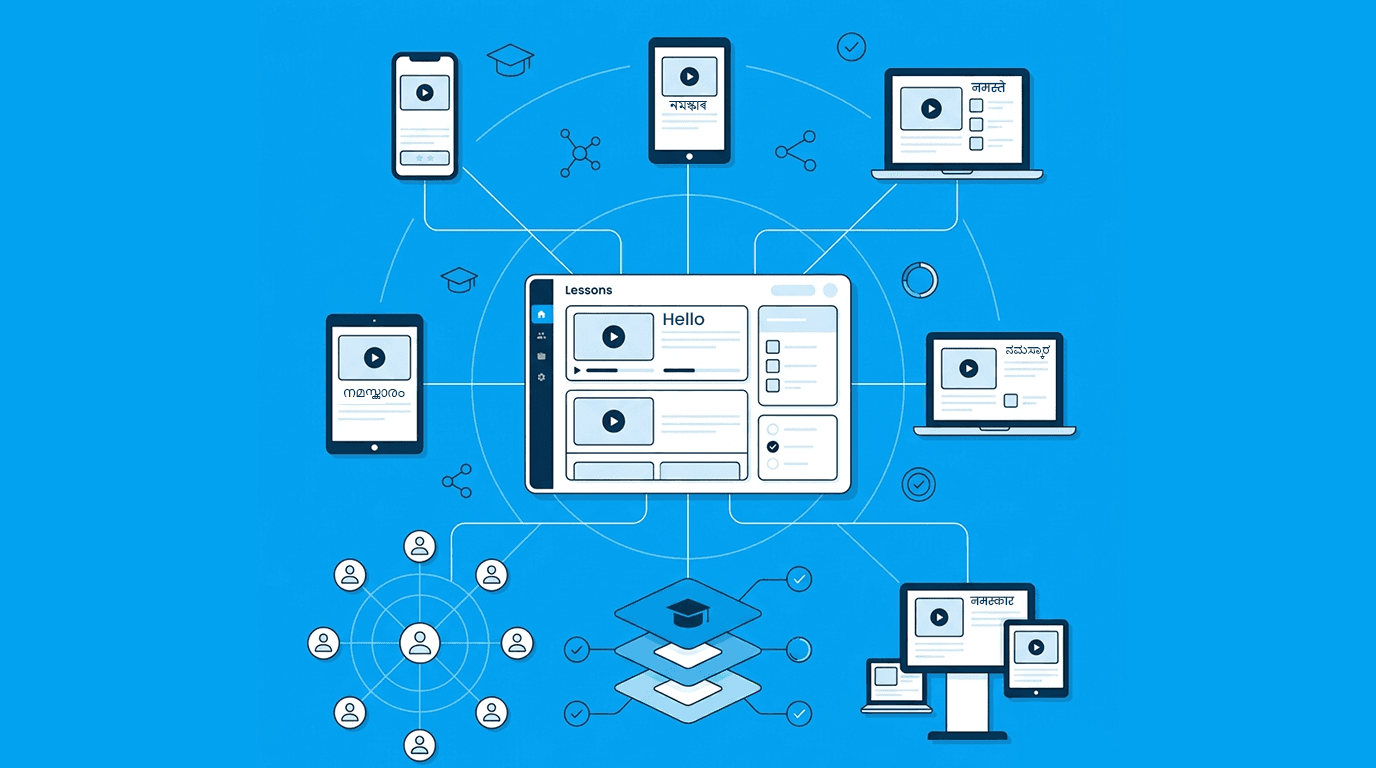
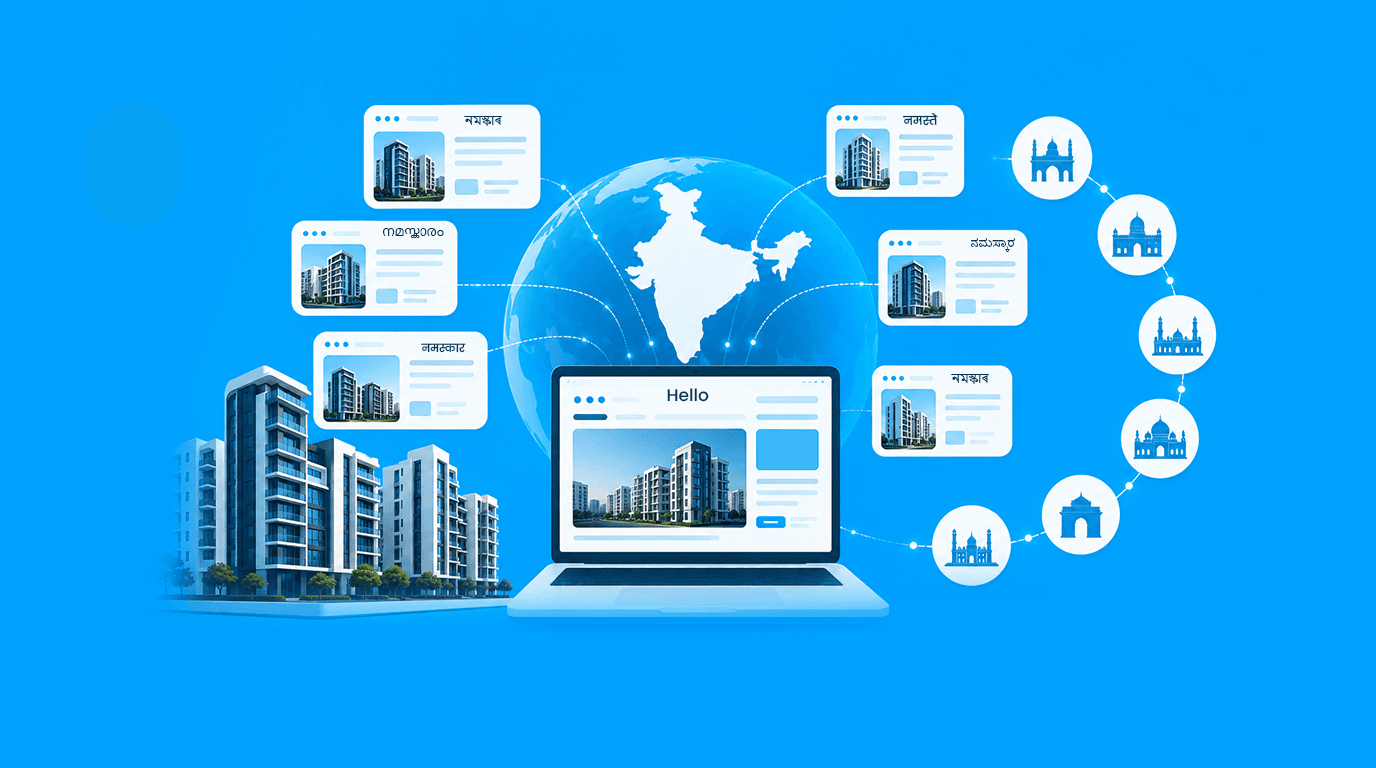
Videos, documents, and interactive websites in multiple languages need to be translated in a way that makes sense. It has to work for people from all over the world, with the right tone, vocabulary, and environment. The platform had to work for everyone, from individuals in Delhi with fast broadband to people in the northeast with slow connections.
Voice-Over Localization
Just changing the language of the voice-overs wasn't enough. It should sound like a genuine person talking in a classroom, not a robot.
System Integration
We had to make sure that everything we designed worked with the client's learning and content systems without damaging anything or slowing them down.
Data Security Compliance
When working on infrastructure supported by the government, it was important to maintain a close check on how materials were delivered, how user privacy was protected, and how workflows were encrypted.
Solution
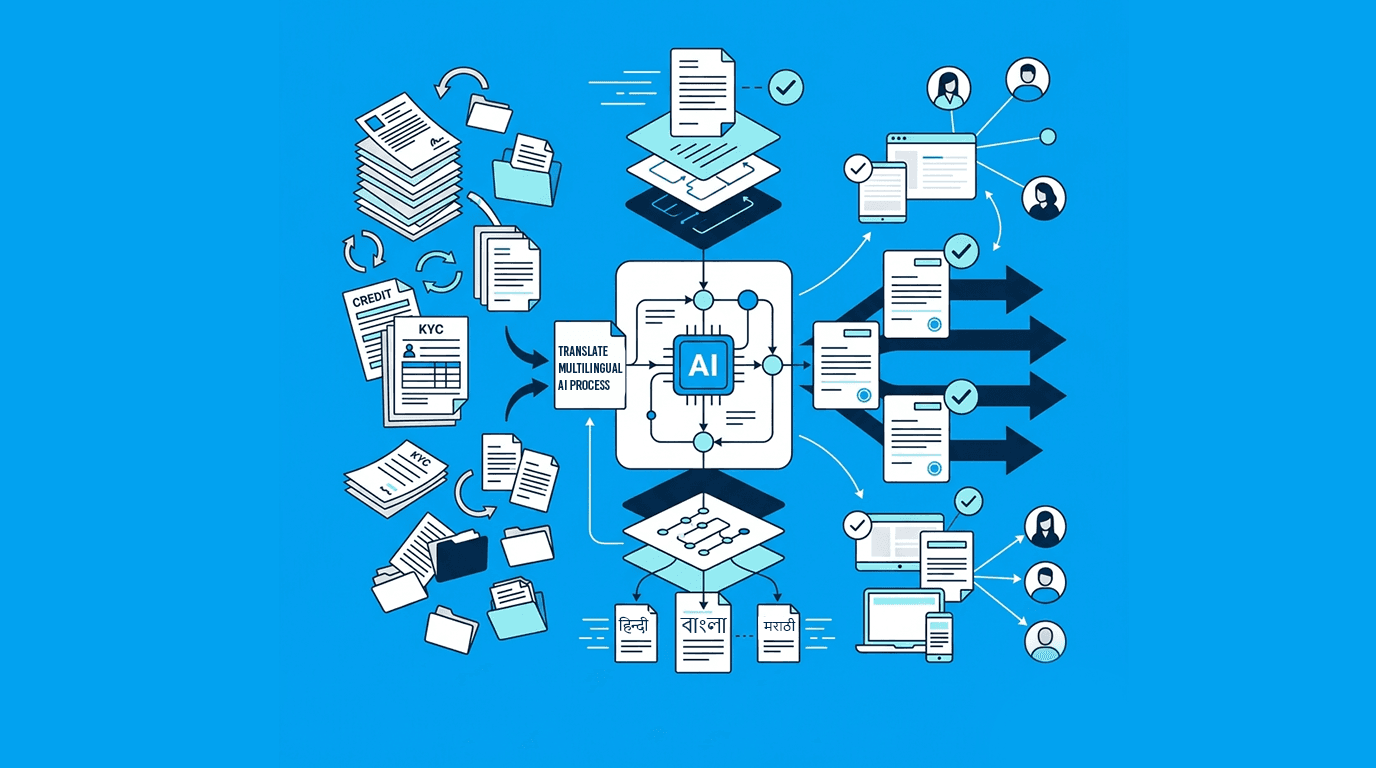
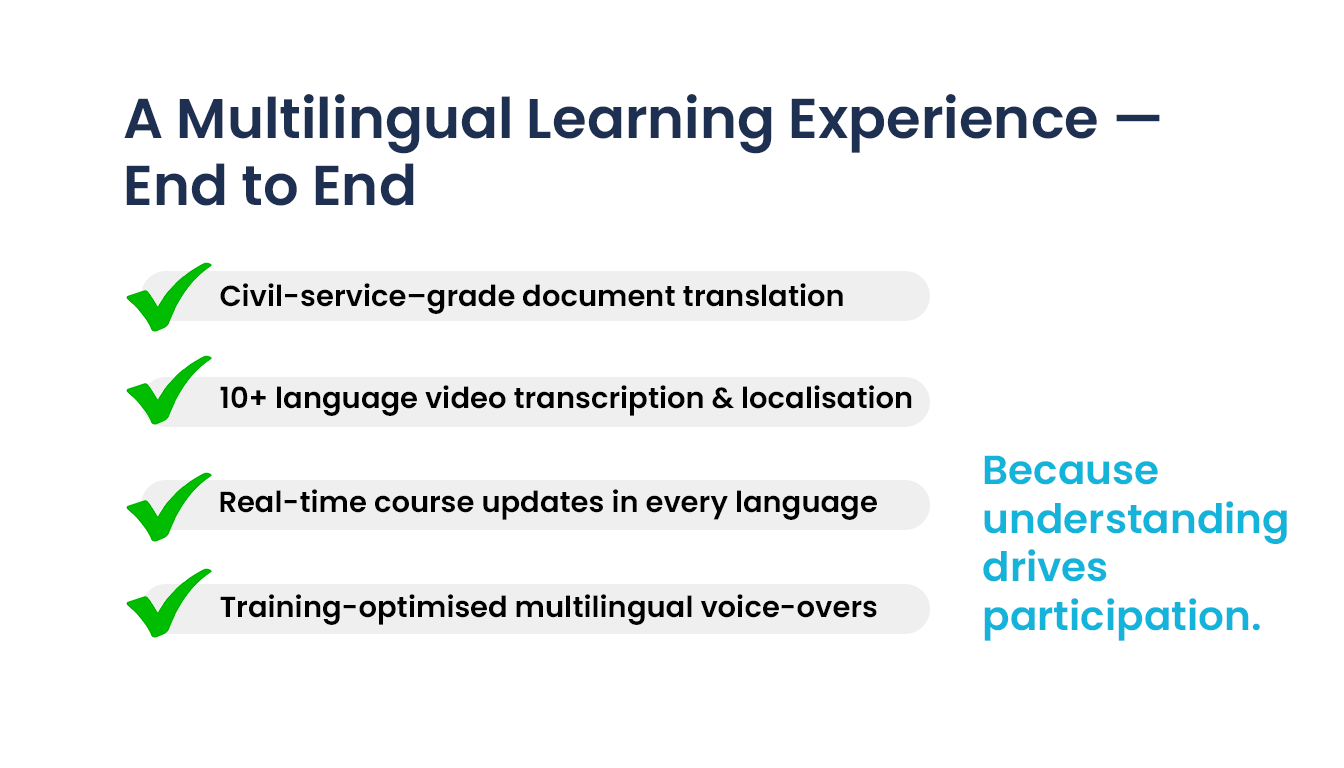
We thought of it as a national digital accessibility challenge. We ran all the paperwork, such as manuals, directions, and quick tips, through our AI engines, which had been trained to use civil service language.
Video material
We began with their vast library of learning films. We used our AI tech stack to automatically transcribe and translate into more than ten regional languages. We ensured that the tone and clarity of each translated script were just right before syncing them.
Combining Websites and Platforms
We created an API layer that connected directly to their training platform. It translated new course announcements and interface elements in real time, so students could always see the content in their desired language.
Making Voice-Over
We used both neural TTS and manual editing to do the voice-overs. The most important thing was to keep the speech pace and tone in line with the training style so that it was easy to follow.
Key Features:
A few things helped this project work:
- We used glossaries for each function to ensure that government-specific word translations were consistent.
- Our API-enabled live updates helped the customer save time when they needed to access important information quickly.
- We ensured that everything ran safely within their systems and that they followed stringent data protection rules.
- The voiceover technique was flexible enough to be used with either a male or a female voice, depending on the topic.
Impact
The difference was visible after a few months:
- In the first phase of the implementation, more than 6.4 million students used translated learning materials.
- Engagement increased by 82% in places where English was not the primary language.
- The adjustments to the site that were made using APIs made it possible to send content around 40% faster.
Everything followed the government's standards for data and access.